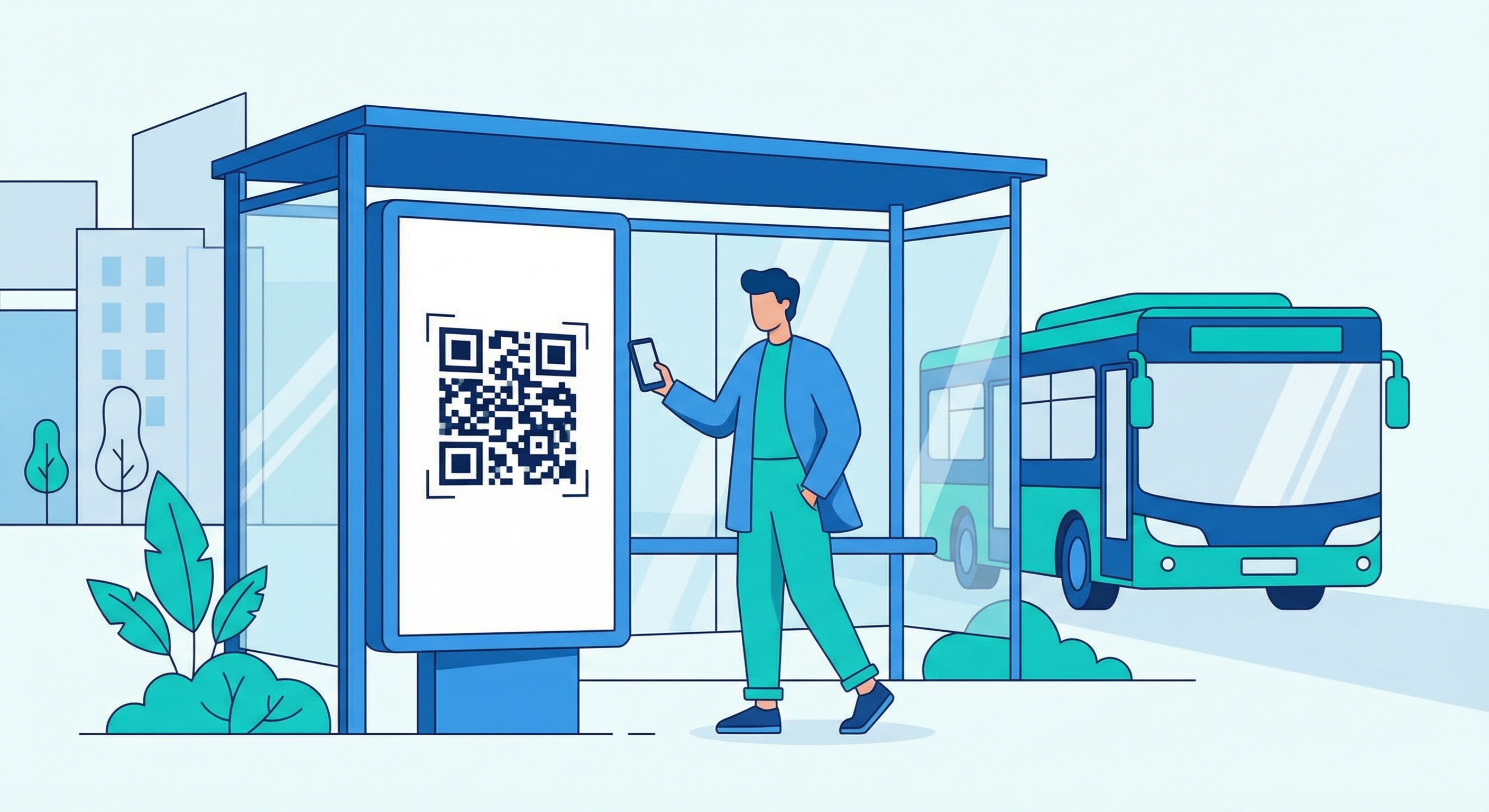

The global mobile ticketing market — driven largely by QR code adoption — was valued at $2.0 billion in 2024 and is projected to reach $3.6 billion by 2030, growing at a 10% CAGR as transit authorities worldwide replace paper tickets and cash payments with smartphone-friendly alternatives. From subway gates in Tokyo to bus stops in Sydney, QR codes are transforming how millions of passengers pay fares, access real-time schedules, report issues, and navigate their cities.
This guide covers everything transit authorities, transport operators, and mobility planners need to know about deploying QR codes for public transport in 2026 — including the most effective use cases, real-world examples, step-by-step setup with Supercode, and best practices for maximising scan rates and passenger adoption.
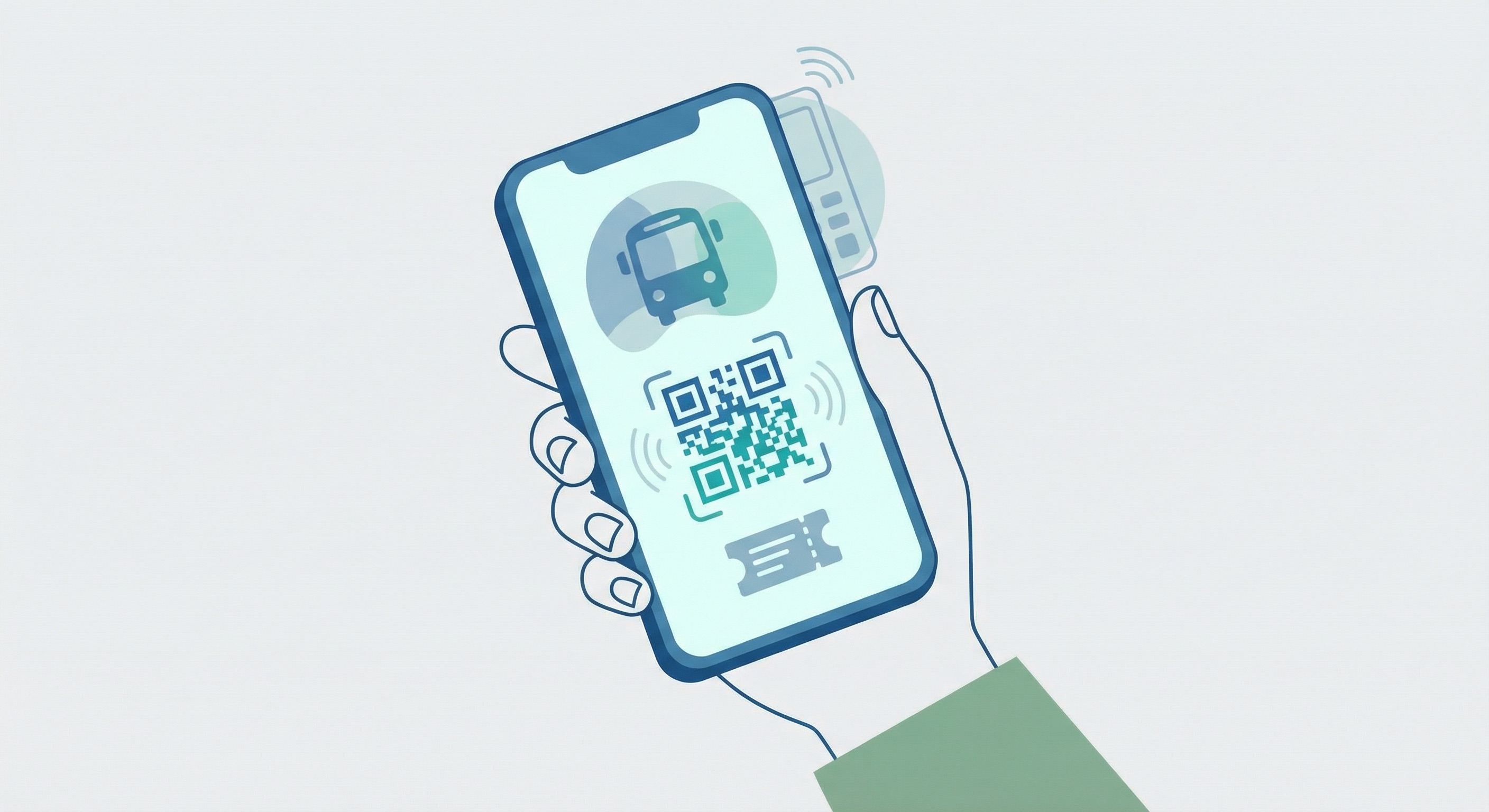
QR code ticketing allows passengers to purchase, store, and validate tickets entirely on their smartphones — no physical card readers, no cash, no queuing at ticket machines. Passengers scan a QR code on their phone at a turnstile or onboard validator, and their fare is automatically deducted. This frictionless experience reduces boarding times, cuts operational costs for transit agencies, and mirrors the contactless payment behaviours passengers already use in retail and restaurants. A survey by Interac found that 50% of transit riders said contactless payments would make paying for transit much more convenient, and 55% agreed it would reduce ticket queue wait times.
Placing QR codes at every bus stop, rail platform, and ferry terminal gives passengers instant access to live departure times, service disruptions, and route maps — without requiring a dedicated app download. Transport for NSW has rolled out QR codes across its entire bus network, linking each stop's unique code to real-time departure data. Passengers simply scan the code with any phone camera to see the next services. Paired with dynamic QR codes, transit operators can update the destination URL instantly — so the same printed code can point to emergency timetables, event-day schedules, or service alerts without reprinting.
Single-use paper tickets and printed timetables represent a significant environmental cost for large transit networks. QR code ticketing eliminates both: passengers carry digital tickets on their phones, and stop information is accessed via scan rather than printed leaflets. For transit agencies with sustainability mandates, this is a measurable win — fewer consumables, lower printing costs, and a reduced carbon footprint across thousands of daily journeys. It also aligns with the growing expectation among commuters for environmentally responsible public services.
One of the most powerful advantages of dynamic QR codes in transport settings is the ability to change what they link to at any time. A QR code printed on a bus stop panel can link to the standard timetable today, redirect to a disruption notice tomorrow, and point to a special event schedule next week — all without touching the physical sign. This makes dynamic QR codes ideal for transit environments where schedules, routes, and service information change frequently. Operators manage everything from a central dashboard, eliminating costly reprinting across hundreds of locations.
Traditional passenger satisfaction surveys require staff time, printed materials, or expensive intercept research. QR codes linked to feedback forms can be placed at every stop, on every seat, and inside every vehicle — collecting real-time service data from thousands of passengers daily at virtually no marginal cost. Research by the University of South Florida found that Madrid transit passengers who used QR code surveys provided higher-quality feedback data than face-to-face surveying, at a fraction of the cost. This data directly informs service improvements, frequency adjustments, and maintenance prioritisation.
Transit QR codes don't have to be purely operational. Dynamic codes placed on high-traffic routes can link to partner promotions — discounts at nearby retailers, food delivery offers, or loyalty rewards for frequent riders. Some operators have used QR-based discount campaigns to attract new passengers and build social media followings. For commercial transit operators, these codes represent additional inventory that can be monetised through advertising partnerships, turning every vehicle interior and bus stop shelter into a targeted marketing channel.
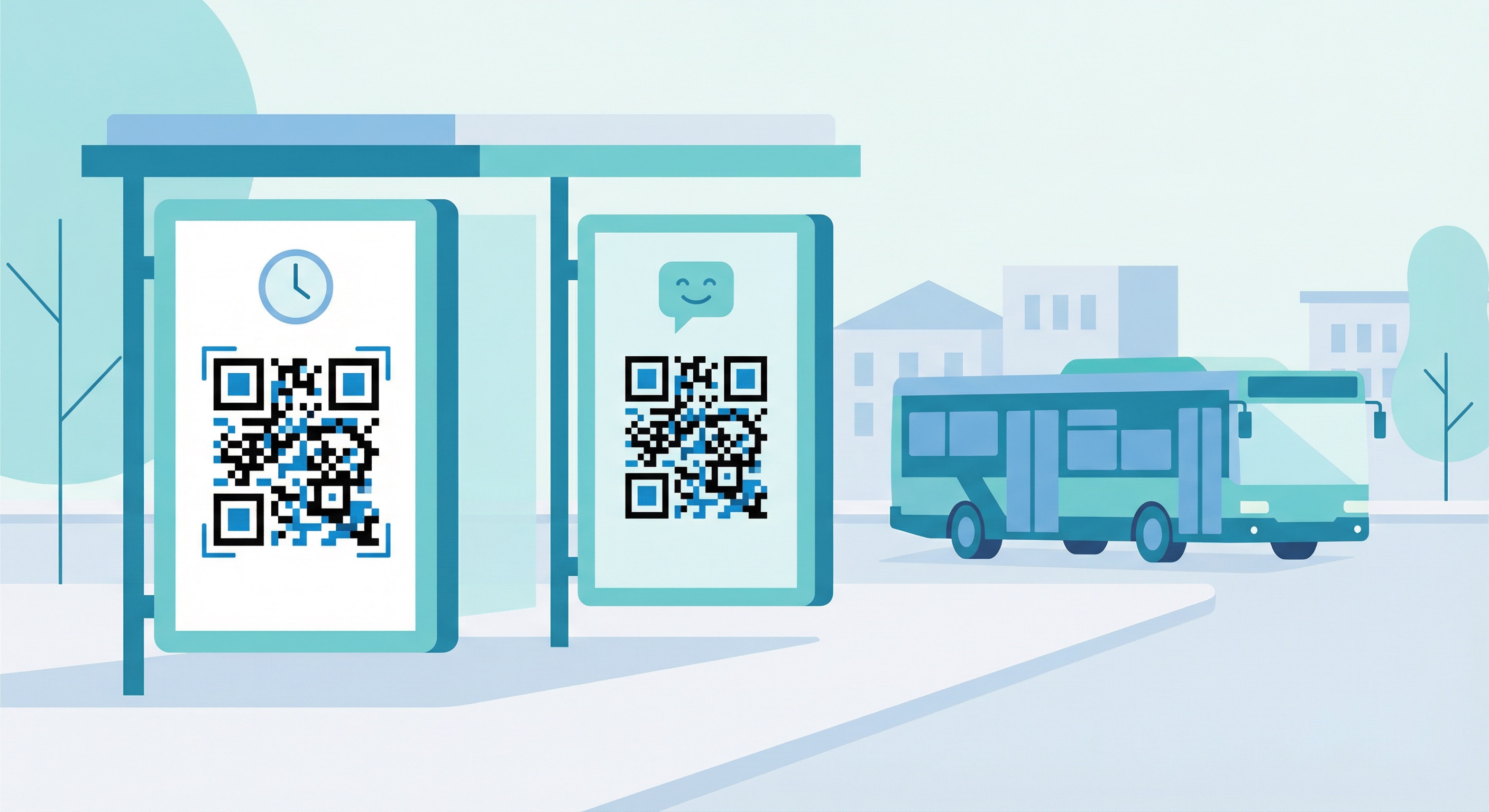
The most transformative application of QR codes in public transport is end-to-end ticketing. Passengers purchase a fare through a transit app or website, receive a URL-based or image QR code on their phone, and scan it at the gate or onboard reader for validation. In March 2025, Tokyo Metro launched full QR code ticketing across its network, allowing passengers to purchase 24-hour passes online and scan for entry at automatic gates — marking one of the world's largest metro networks making QR its primary digital ticketing channel. Thailand's Thai Smile Bus also launched QR payments via PromptPay in March 2025, adding to Bangkok's multi-modal payment ecosystem serving approximately three million passengers daily. For bulk QR code generation, transit operators can issue unique single-use QR tickets at scale, perfect for event-day services and tourism passes.
Every transit stop becomes a smart information point when fitted with a QR code. Transport for NSW has implemented unique QR codes at bus stops across New South Wales, each linking directly to that stop's live departure page showing real-time vehicle positions and service updates. The network's open data API handles over 100 million API hits weekly, demonstrating the scale at which QR-enabled real-time information can operate. This application pairs naturally with digital display QR codes at larger stations and interchanges, where screens and printed codes work together to serve passengers with and without smartphones.
QR codes linked to feedback QR codes can be placed at the exit of vehicles, on platform benches, and at interchange points — capturing satisfaction data at the moment passengers complete a journey. This is far more effective than post-journey email surveys. A short, mobile-optimised survey linked from a QR code can cover cleanliness, punctuality, driver courtesy, and accessibility in under two minutes. The QR code feedback approach achieves significantly higher response rates than traditional methods because the process is immediate and frictionless. Results feed directly into service improvement dashboards, helping operators identify routes or vehicles that need attention before issues escalate.
Public transport is often the first touchpoint for visitors to a city. QR codes at transit hubs, tourist corridors, and airport transfer stops can link to city guides, attraction maps, multilingual route planners, and audio tours — all accessible without downloading an app or purchasing a printed guide. This application connects naturally with QR codes for tourism and QR codes for city tours, creating a seamless visitor experience where every transit touchpoint becomes a gateway to the city's attractions. Transit authorities working with tourism boards can co-brand QR codes with local destinations, adding value to both services.
Email QR codes and WhatsApp QR codes placed on vehicles and at stations give passengers a direct, low-friction channel to report lost items, service concerns, or safety issues without navigating through contact centre menus. For emergency communications — service suspensions, security alerts, or medical incidents — SMS QR codes are particularly valuable because they work even in underground tunnels and areas with limited data connectivity, requiring only a basic mobile signal. Operators can pre-populate the SMS with route numbers and stop IDs, routing messages directly to the relevant operations team.
Bus rear panels, interior seat-backs, and station shelter advertising are established out-of-home formats. Adding QR codes to these placements transforms static ads into measurable digital campaigns. Operators and their advertising partners can track exact scan volumes per route and time of day, optimise placements based on real engagement data, and offer passengers exclusive offers redeemable via scan. This mirrors the growth of QR codes on billboards and street advertising in the broader out-of-home market, where QR codes have become a standard performance measurement tool. Transit vehicle QR codes extend this to mobile inventory moving through city streets.

Creating professional QR codes for transit deployment takes minutes with Supercode's QR code generator. Here are the QR code types best suited to public transport applications, followed by a step-by-step setup guide.
See Supercode pricing plans for options suitable for transit authorities of all sizes, including enterprise plans for multi-agency networks.
Where you place QR codes is as important as what they link to. For bus stops, place codes at eye level on shelter panels at a 1–1.5 metre scanning distance. On vehicles, interior seat-back codes work well for passengers sitting or standing nearby; exterior rear-panel codes serve pedestrians and drivers at traffic stops. At stations and interchanges, display-mounted QR codes alongside digital boards achieve the highest visibility. Avoid placing codes behind glass panels that create glare, and always include a short call-to-action text frame such as "Scan for live departures" to drive scan rates. Learn more about placement strategy in our QR code marketing guide.
Transit environments present unique size challenges. The standard rule is a minimum of 2.5cm (1 inch) per 10cm (4 inches) of scanning distance — so a code intended to be scanned from 50cm needs to be at least 12.5cm square. For stop shelter panels scanned from 1 metre, aim for at least 15cm × 15cm. For rear vehicle panels visible from 3–5 metres, codes should be 30cm or larger. Use high-error-correction QR codes (Level H) that remain scannable even if the code is partially obscured by weathering, dirt, or vandalism. Our QR code printing guide covers resolution, materials, and weatherproofing for outdoor installations.
Underground subway stations and tunnels often have limited or no mobile data coverage. In these environments, SMS QR codes are the only reliable option — they only require a basic voice/SMS signal, not 4G or 5G data. Pre-populate the SMS with route numbers, station names, and the nature of the communication (lost and found, service query) so passengers can submit information without typing. This is particularly relevant for lost and found reporting, where a stranded passenger may have no data connection but can still send a text.
Dynamic QR codes are non-negotiable for any content that changes — timetables, service alerts, route maps, and event schedules all require dynamic codes. With Supercode, you can update the destination URL in seconds without reprinting or replacing the physical code. This is especially valuable for transit operators running planned engineering works, diversions, or temporary service suspensions: update the code's destination the night before, and every passenger who scans it the next morning gets accurate information. For posters and billboard advertising that take weeks to produce and install, dynamic codes protect your investment against content becoming outdated.
Supercode's analytics dashboard shows you exactly which codes are being scanned, when, on what devices, and from which locations. For transit networks, this data is operationally valuable: low scan rates at a particular stop may indicate poor placement or inadequate size; high feedback scans on a specific route flag service issues before they generate formal complaints. Use the data to A/B test placement heights, frame designs, and call-to-action copy — optimising your QR code deployment the same way you would any marketing campaign. Set up UTM parameters to feed transit QR scan data into your organisation's analytics platform alongside other customer touchpoint data.
QR code ticketing works by allowing passengers to purchase or receive a digital ticket containing a unique QR code — either in a transit app, via email, or on a website. When boarding, the passenger displays the QR code on their smartphone screen. A validator scanner (at a gate, turnstile, or onboard reader) scans the code to verify it is valid and unspent. The system marks the ticket as used in real time, preventing duplicate scanning. For static validation (e.g., a conductor checking via phone camera), the same process applies. Dynamic QR codes used in ticketing are single-use and expire after validation, ensuring fare integrity.
Yes — with the right QR code type. SMS QR codes work anywhere there is a basic mobile signal, without requiring a data connection. For pre-purchased digital tickets stored as images on a passenger's phone, the QR code is simply a static image that can be scanned offline by a validator — no internet required at the point of scanning. Real-time information QR codes (linking to live timetables) do require data connectivity to load the destination page, so these are best suited for surface stops rather than underground stations.
A feedback QR code linked to a short mobile-optimised survey form is the most effective approach. Keep surveys to three to five questions to maximise completion rates. For qualitative feedback without a structured form, an email QR code that opens a pre-addressed message works well for detailed complaints and suggestions. For urgent operational issues — particularly in areas with limited data — an SMS QR code with a pre-populated message template gives passengers a quick, reliable channel regardless of connectivity.
With Supercode, each QR code has its own analytics dashboard showing scan volume, device type, time of day, and location data. To track by stop or route, create a unique QR code for each deployment location and organise them into folders by route or district. This gives you a granular view of engagement across your entire network without any additional tagging. For more advanced attribution — such as connecting QR scans to fare purchases or app downloads — use UTM parameters in the destination URLs, which feed data into Google Analytics or your BI platform.
Yes — this is one of the key advantages of dynamic QR codes. With Supercode, you can change the destination URL of any dynamic QR code at any time from the dashboard, and every scan after that change will go to the new destination. The physical code printed on your signage or vehicle never needs to change. This is essential for transit operations where timetables, routes, and service information change frequently. Note that static QR codes cannot be updated after creation — always use dynamic codes for any operational content that may change.
As a general rule, allow at least 2.5cm of code size per 10cm of expected scanning distance. For a stop shelter panel intended to be scanned from 1 metre away, the QR code should be at least 25cm × 25cm. For codes on vehicle rear panels visible from a distance of 3–5 metres (e.g., at traffic lights), aim for 35–50cm. Always add a quiet zone of at least 4 modules around the code, use a high-contrast colour combination (dark on light), and choose Level H error correction to ensure the code scans reliably in outdoor conditions including direct sunlight and partial weathering. See our complete printing guide for outdoor transit applications.
From contactless ticketing and real-time passenger information to feedback collection and commercial partnerships, QR codes give transit authorities a flexible, low-cost toolset for transforming the passenger experience. As cities around the world accelerate their shift to smart mobility — with networks in Tokyo, Sydney, Bangkok, and Los Angeles already leading the way — deploying QR codes across your transit network in 2026 is one of the highest-ROI steps an operator can take.
Supercode's QR code platform gives transit teams everything they need: bulk code generation for stop-by-stop deployment, dynamic codes for live operational content, branded design tools aligned with your agency's guidelines, and a real-time analytics dashboard to track engagement across every route and stop. Whether you're running a single bus corridor or a multi-modal metropolitan network, Supercode scales to meet your requirements.
Explore all industry use cases, check pricing plans for transit authorities, or start creating your first QR codes for free today.
Head to our FAQs section or reach out to us directly on info@supercode.com
Sign up for free

