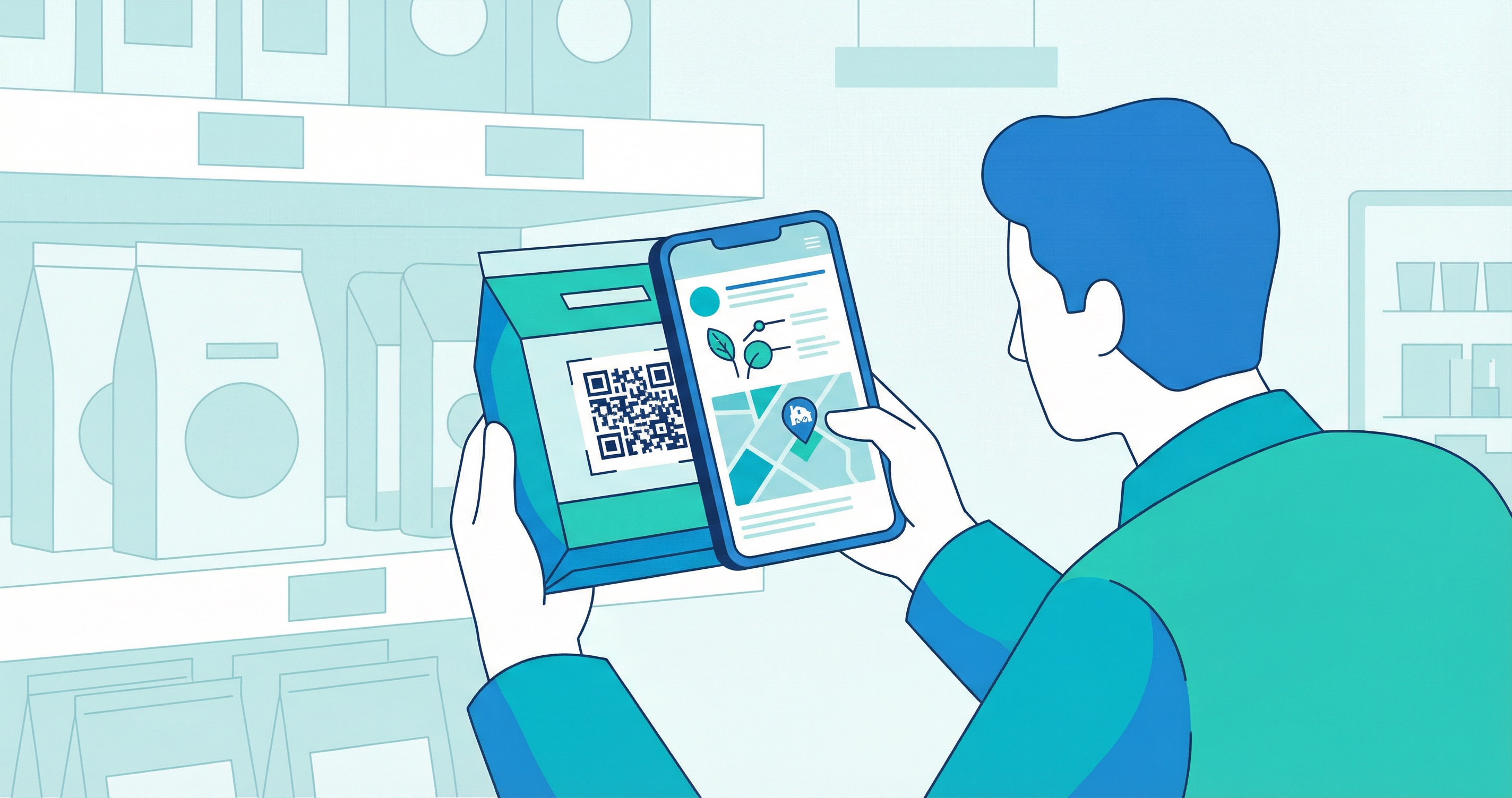

QR codes on food packaging have moved from a novelty to a business necessity. In 2025, QR code usage on packaging grew 44% year-on-year, and 60% of shoppers now scan QR codes before making a purchase — seeking ingredient origins, allergen details, and sustainability credentials. At the same time, new EU Packaging and Packaging Waste Regulation (PPWR) requirements — with compliance deadlines beginning in August 2026 — are making digital packaging passports a regulatory reality for food and beverage brands selling into European markets.
Whether you run a food startup, a large FMCG brand, or manage packaging for a retail chain, adding QR codes to your packaging is one of the most cost-effective ways to build consumer trust, reduce print waste, and capture first-party data. This guide covers the benefits, real-world applications, market data, step-by-step creation, and best practices for QR codes on food packaging in 2026.
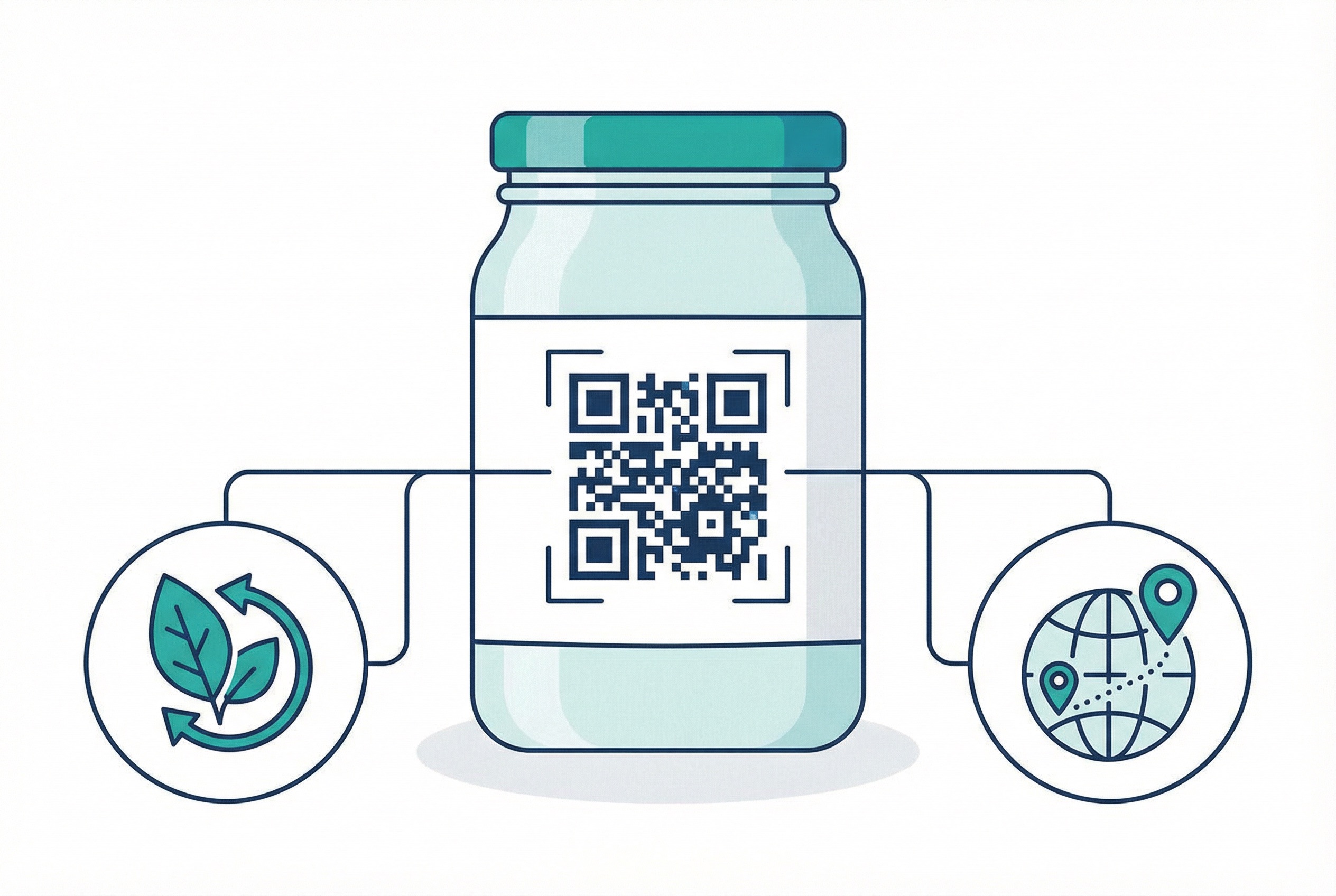
Traditional food labels must cram regulatory requirements, ingredient lists, nutritional panels, and marketing copy onto limited physical space — often requiring larger, more expensive packaging. QR codes on food packaging let you shift detailed information off the label and onto a digital destination, enabling a cleaner, more minimal design while using less ink and paper. This is especially powerful for brands pursuing sustainable marketing goals or preparing to meet EU eco-design standards.
Modern consumers — especially millennial and Gen Z shoppers — actively research what goes into their food. According to NielsenIQ's 2025 Consumer Transparency & Tech Report, 60% of shoppers scan QR codes for product information before purchase. Brands that provide ingredient origin maps, farm certifications, allergen detail pages, and supply chain traceability via QR code report a measurable lift in purchase intent. One premium pet nutrition brand achieved a 17% higher likelihood of purchase simply by linking packaging QR codes to sourcing and certification data. For food businesses, conscious consumers increasingly reward this transparency with loyalty.
A branded QR code is a marketing asset, not just a functional element. Using Supercode's design tools, you can create QR codes in your brand's colors, with your logo embedded at the center, and with custom frames and CTAs ("Scan for recipes", "Scan to trace your coffee"). Branded QR codes consistently outperform plain black-and-white codes — research shows a 25-40% higher scan rate for custom-designed codes. Placement on packaging should be clear and prominent: front panel for high engagement, back label for regulatory and traceability content.
QR codes on food packaging create a direct channel to your most engaged customers — people who have already purchased your product. Use plain text QR codes for static discount codes, or URL QR codes linking to personalised loyalty portals. Brands that personalise QR experiences by product variant report 5.6x longer dwell time on landing pages. This is an ideal channel for seasonal campaigns, product launch cross-sells, and subscription re-order nudges, particularly in wholesale and B2B contexts like office supplies or gym nutrition.
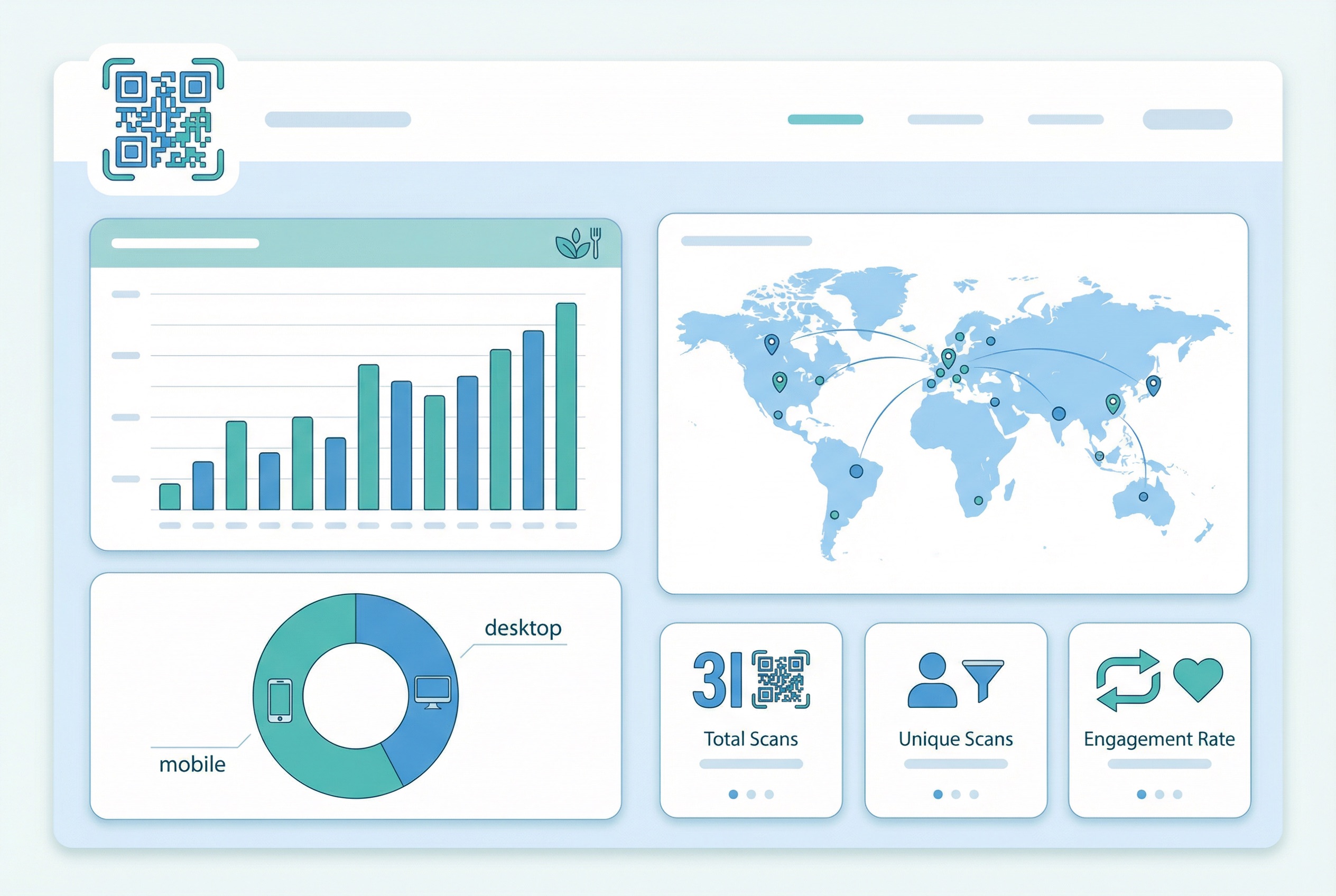
Every scan of a dynamic QR code is a data point. Supercode's analytics dashboard records scan location, time, device type, and cumulative performance — data that static printed campaigns simply cannot provide. 58% of marketers now integrate QR packaging data into campaign reporting (Adobe Digital Experience Report 2025), enabling tighter attribution between packaging touchpoints and downstream revenue. Scan data can also inform retail ranging decisions, regional promotion targeting, and reorder scheduling.
The EU's Packaging and Packaging Waste Regulation (PPWR) entered into force in February 2025, with packaging compliance requirements — including digital packaging passports — beginning in August 2026. While food and beverage products themselves are exempt from the EU Digital Product Passport mandate, the packaging must include machine-readable data on material composition, recyclability, and disposal pathways. QR codes are the natural delivery mechanism for these requirements. Brands using dynamic QR codes can update the linked destination whenever regulations change — without reprinting labels — giving them a significant compliance agility advantage. Fashion brands face similar pressures: see our QR codes for fashion and QR codes on clothing guides for the EU DPP textiles angle.
Space on physical packaging is always limited — especially for smaller SKUs, sachets, and single-serve items. A PDF QR code linking to a full ingredient specification sheet, or a URL QR code pointing to a dedicated product page, solves this instantly. Hershey's now uses QR codes on packaging to provide extended nutritional information, allergen warnings, and artificial flavor advisements — far more detail than physical label space allows. For brands selling across multiple regions, the same QR code can link to locale-specific regulatory content, updated in real time without any label changes.
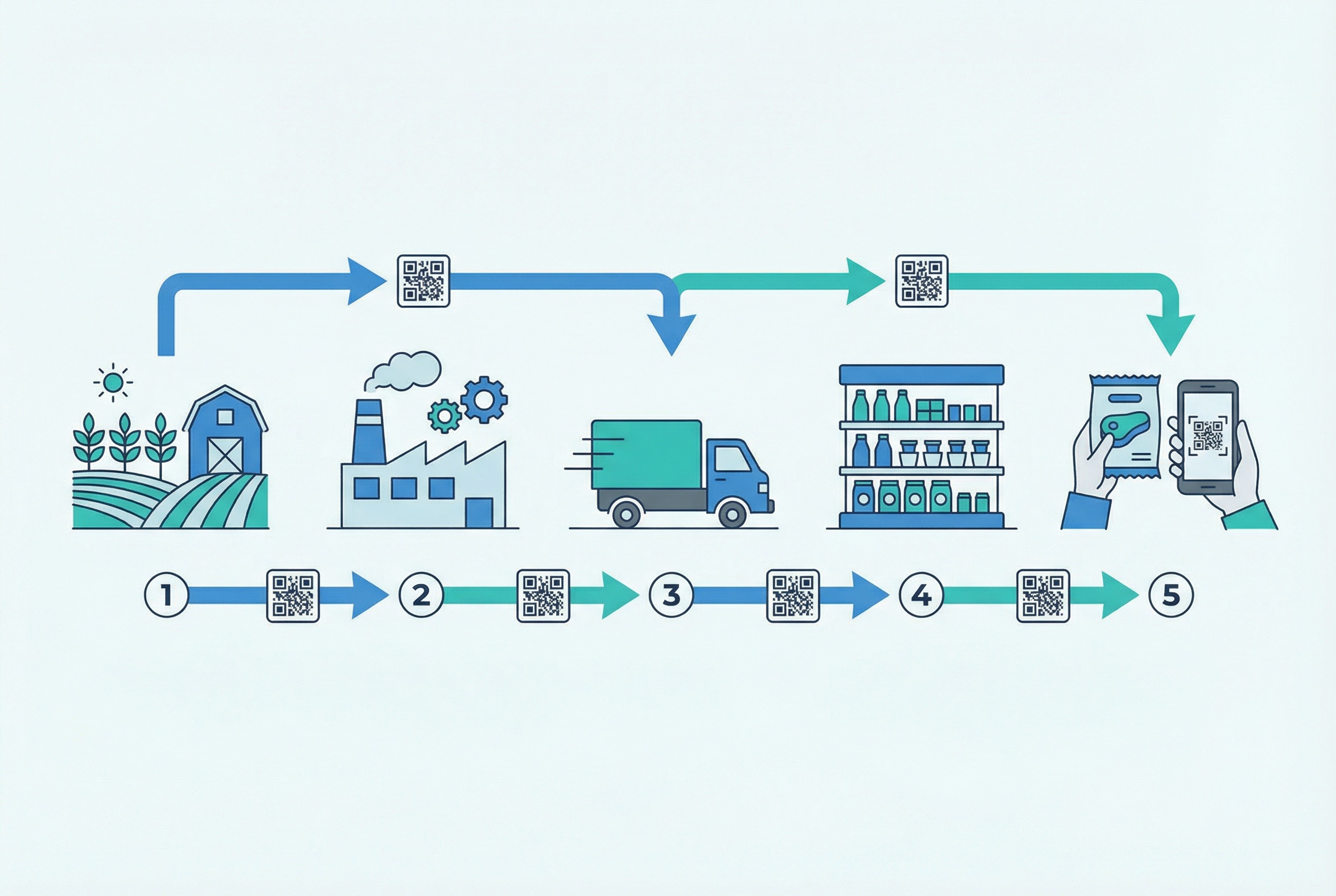
Starbucks places QR codes on the back of its retail coffee bean packaging, allowing consumers to trace every bag from farm to shelf — a practice the company has maintained for over twenty years. This level of supply chain visibility is increasingly expected, not just admired. For food brands, QR-enabled traceability can document farm certifications, processing facility audits, cold chain data, and distribution route — all accessible to consumers and regulators via a single scan. This is closely aligned with the conscious consumer movement, where provenance and ethical sourcing directly influence purchasing decisions. Pair food packaging traceability with your healthcare QR code strategy if your products carry health or pharmaceutical claims.
QR codes on food packaging create a frictionless reorder path — especially valuable for subscription-prone categories like coffee, supplements, baby food, and specialty ingredients. A single scan takes consumers directly to your product page, a pre-filled cart, or a subscription sign-up form. This is particularly powerful in wholesale and B2B contexts: office supply managers, gym operators, and hospitality procurement teams can reorder entire pallets by scanning packaging on the last unit. Dynamic QR codes let you update the destination URL when SKUs change, seasonal variants launch, or promotions expire — without touching the physical packaging.
Packaging that drives social follows turns every purchase into an ongoing relationship. A social media QR code on your packaging can direct consumers to your multi-profile hub — Instagram, TikTok, YouTube — with a single scan. Seasonal campaigns work particularly well here: scan for exclusive behind-the-scenes content, farmer interviews, or live cooking demos. For food brands targeting restaurants or food service businesses, linking packaging to a wholesale portal or trade account sign-up page is equally effective.
Kellogg's and Green Mountain Coffee ran a campaign where scanning a cereal box QR code and submitting three receipts unlocked a free 12-pod coffee pack. Heinz embedded a Trivial Pursuit mobile game inside a ketchup bottle QR code, offering location-specific discounts alongside the game — driving measurable footfall back to restaurants. Fyffes placed QR code stickers on individual bananas, allowing consumers to accumulate points redeemable for prizes. Use plain text QR codes for static promo codes, or dynamic URL QR codes for time-limited flash sales that you can activate and deactivate without reprinting. Track redemption performance in Supercode's analytics dashboard.
Scan-to-recipe functionality adds tangible value to the unboxing and cooking experience. Whether linking to a dedicated recipe microsite, a YouTube playlist, or a downloadable PDF cookbook, recipe QR codes encourage repeat scanning (and repeat purchases). The dynamic QR format means you can refresh seasonal recipe content — pumpkin spice in autumn, BBQ sauce pairings in summer — without changing the label. Cross-link these campaigns with your QR codes for menus strategy if your brand also supplies to restaurants or food service outlets.
Scan-to-enter competitions are a proven tactic for driving awareness and building first-party data. Brands from Nestlé to Coca-Cola use QR-linked competitions to create purchase urgency and collect opt-in consumer profiles. Using feedback QR codes, you can also capture structured consumer reviews, NPS scores, and ingredient preferences directly from packaging — data that feeds product development and localisation decisions. Pair gamification campaigns with WhatsApp QR codes for conversational entry mechanics that feel personal and direct.
The data confirms that QR codes on food packaging have crossed from experimental to essential:
These figures point to one conclusion: food brands that implement QR codes now will be ahead of both consumer expectations and regulatory requirements by the time the market matures.
Match the QR code type to your campaign objective. Here are the most useful types for food packaging:
Log into Supercode, choose your QR code type, and enter your destination URL or content. Then use Supercode's design tools to match the code to your brand: apply your brand colors, embed your logo, add a custom frame with a CTA ("Scan for recipes" or "Trace your ingredients"), and adjust the pattern style. Always choose Level H error correction when printing on curved or textured surfaces — it allows up to 30% of the code to be obscured while still scanning successfully.
Test your QR code at the exact size it will appear on packaging — including on mock-ups of curved bottles, bags, and small sachets — across multiple devices and scanning apps. The QR code printing guide recommends a minimum size of 2cm × 2cm for packaging scanned at arm's length, larger for codes placed on surfaces consumers approach from a distance. Test in low-light conditions, as food packaging is often scanned in kitchens, cupboards, and shop aisles with variable lighting.
Use Supercode's folder system to organise QR codes by product line, campaign, SKU, or region. Share folders with your packaging design agency, marketing team, and compliance department for collaborative management. This is especially important for brands managing bulk QR code programmes across hundreds or thousands of SKUs.
After packaging goes live, monitor scan performance in Supercode's dashboard: scan volume by region, peak scan times, device types, and campaign-level aggregates. Use these insights to refine your linked content, run A/B tests on destination pages, and attribute packaging engagement to sales outcomes. Dynamic QR codes allow you to update the destination at any time — if your recipe page moves, your promotional offer expires, or your regulatory destination changes, simply update the link without reprinting a single label.
Minimum recommended size is 2cm × 2cm for standard consumer packaging scanned at close range. For smaller formats (sachets, lids, spice jars), confirm the minimum quiet zone (the white border around the code) is preserved — at least 4 modules wide on all sides. For curved surfaces like bottles and cans, test at the actual surface curvature, as a flat-proof code may distort when wrapped. Consult the QR code printing guide for DPI, bleed, and substrate recommendations.
Food packaging has a long lifecycle — from print run to shelf to consumer pantry, a label may be in market for 12–24 months. Using dynamic QR codes means you can update the destination URL at any point: when an ingredient changes, when a promotional offer expires, when new regulatory content is required, or when you want to run a seasonal campaign over existing stock. This is particularly important for EU PPWR compliance, where digital packaging passport content may need updating as material or recycling data changes.
Consumer scan rates increase substantially when a QR code is accompanied by a clear, benefit-led CTA: "Scan to see where this was grown", "Scan for 10% off your next order", or "Scan for 50 recipes". Place the CTA directly in the QR code's frame using Supercode's design editor, or print it as a label element directly above or below the code. Never print a bare QR code with no context — consumers who don't know what to expect are far less likely to scan. See more guidance in our QR code marketing strategy guide.
The QR code module color must maintain at least 4.5:1 contrast ratio against the background. Dark modules on a light background is the most reliable combination. Avoid placing QR codes on photographic or heavily patterned areas of the label. If your brand palette uses light colors, place the code in a dedicated white or light-toned panel. Use Supercode's QR code design guide to test color combinations before finalising artwork.
Set calendar reminders to audit your packaging QR codes every six months: confirm destination URLs still resolve, content is current, and analytics data is being captured. Use scan data to identify packaging formats with low engagement — investigate whether placement, sizing, or CTA copy needs improvement. For brands managing multiple SKUs or seasonal lines, Supercode's bulk QR code tools and folder management system make large-scale auditing efficient. Connect scan analytics to your broader sales optimisation strategy to measure the revenue contribution of packaging QR programmes.
A QR code on food packaging can link to virtually any digital content: full ingredient lists and allergen declarations, nutritional annexes, supply chain and provenance maps, recycling and disposal instructions, brand stories and farm interviews, loyalty portals, recipe collections, promotional offers, and customer service contact channels. The content can be updated at any time using a dynamic QR code, without changing the physical packaging. This makes QR codes far more flexible than any static label element.
The minimum recommended size for a QR code on food packaging is 2cm × 2cm (approximately 0.8 inches square) for close-range scanning. Smaller formats such as sachets or lids may require a slightly larger code relative to the available label area to ensure reliable scanning. Always preserve a quiet zone — a clear border at least 4 modules wide — on all four sides of the code. For curved surfaces like bottles and cans, test the code on a physical prototype before approving print files.
In the EU, QR codes are not currently mandated on food products themselves, but the EU Packaging and Packaging Waste Regulation (PPWR) — with compliance deadlines beginning in August 2026 — requires packaging to carry machine-readable data covering material composition, recyclability, and traceability. QR codes are the most practical technology for delivering this digital packaging passport. Beyond the EU, regulators in India, Chile, and several US states are expanding QR-based labeling requirements for food and pharma products. Brands that adopt QR codes now are building compliance infrastructure ahead of the curve.
A static QR code encodes the destination permanently at creation — once printed, it cannot be changed. A dynamic QR code stores a short redirect URL that points to your actual destination; you can change the destination at any time in Supercode's dashboard without altering the printed code. For food packaging — where promotional content changes seasonally, ingredient lists may be updated, and regulatory destinations may shift — dynamic QR codes are strongly recommended. They also enable scan analytics, which static codes do not support.
With dynamic QR codes created in Supercode, every scan is automatically logged in your analytics dashboard. You can see total scans, unique scans, scan location (city and country), device type, and time-of-day breakdown. Use UTM parameters on your destination URLs to connect packaging scans to Google Analytics, CRM events, or e-commerce transactions. For multi-SKU programmes, create separate QR codes per product variant to compare engagement by line.
Yes. Dynamic QR codes are particularly valuable for recall scenarios. If a batch recall is issued, you can update the QR code destination to a dedicated recall information page, with batch number look-up, return instructions, and customer service contact details — reaching consumers who have already purchased the product without any media spend. SMS QR codes can also pre-populate a text message to a recall hotline, providing immediate contact even without internet access. Pair this with healthcare and pharma QR code practices for tightly regulated food categories.
QR codes on food packaging are no longer optional for brands that want to compete on transparency, sustainability, and consumer engagement in 2026. With EU PPWR digital passport requirements arriving in August 2026, smart packaging adoption growing at nearly 18% annually, and 60% of shoppers actively scanning before purchase, the case for action is clear.
Supercode makes it straightforward to create branded, trackable, dynamic QR codes for any packaging format — from a single artisan product to a global FMCG portfolio. Explore our pricing plans or sign up for free and create your first food packaging QR code in under two minutes.
Head to our FAQs section or reach out to us directly on info@supercode.com
Sign up for free

