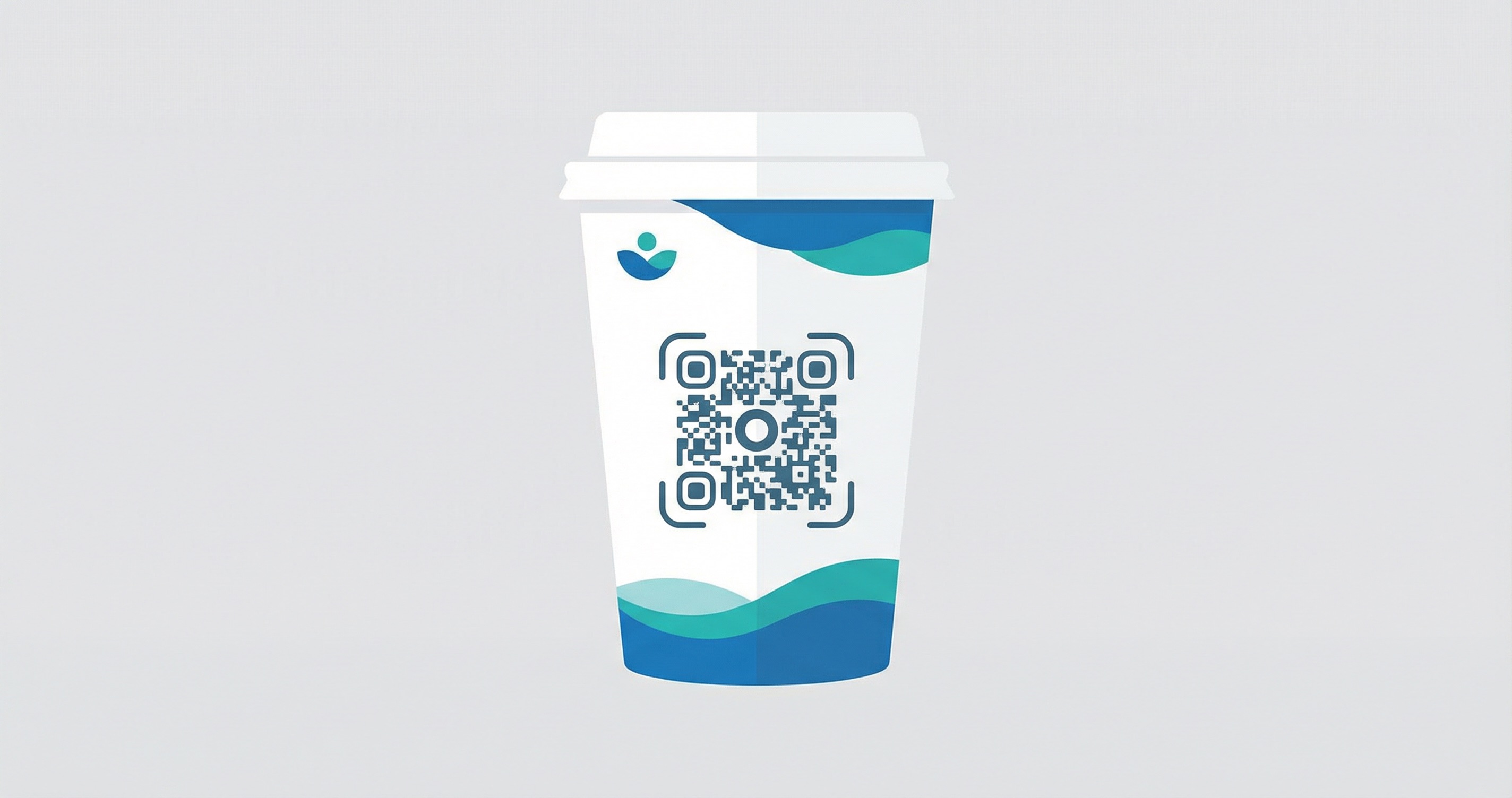
Every time someone picks up a cup — whether it is a takeaway coffee, a branded mug at a trade show, or a personalised tumbler from a corporate welcome kit — they hold a physical object that travels with them, sits on their desk, and gets used again and again. In 2026, forward-thinking brands are turning that everyday touchpoint into a dynamic digital channel with QR codes on cups. The global QR code market reached $13.04 billion in 2025 and is growing at a 17% compound annual growth rate, with over 2.2 billion people scanning QR codes worldwide — and drinkware represents one of the most underutilised placement opportunities available.
This guide covers the key benefits, applications, best practices, and step-by-step instructions for adding QR codes to cups, mugs, tumblers, and wine glasses. Whether you run a coffee shop, manage corporate gifting, or plan branded events, you will find actionable strategies to turn every drink into a brand experience.

Cups are one of the most universal consumer items across demographics — everyone drinks. A QR code on a takeaway coffee cup from a busy café reaches students, professionals, parents, and retirees within a single morning rush. Unlike a digital advertisement that targets a narrow segment, a branded cup with a QR code is a physical canvas with no audience ceiling. Coffee shops, convenience stores, and fast-food chains collectively serve hundreds of millions of cups each day, making drinkware one of the most cost-effective media placements available to restaurants, hospitality venues, and retail brands alike.
Consumers in 2026 want to know where their products come from. A URL QR code on a coffee cup can link directly to a sustainability page, a supply chain transparency portal, or a video showing the journey of the coffee beans from farm to cup. Specialty coffee brands use this approach to build emotional connection and trust — turning a disposable cup into a storytelling medium. The same principle applies to drinkware brands that want to highlight ethical manufacturing, recycled materials, or community partnerships.
Paper loyalty cards get lost, forgotten, or damaged. A QR code printed on a cup links customers directly to a loyalty app or digital rewards programme, letting them earn points with every purchase simply by scanning. This frictionless experience removes the barrier between a happy customer and a repeat visitor. According to Bitly's State of QR Codes 2025, 33% of consumers are most likely to scan a QR code when there is a discount or promotional offer involved — making cups an ideal trigger for loyalty engagement.
Modern QR codes are no longer black-and-white squares. Supercode's design tools allow you to customise colours, add a logo, select a frame style, and incorporate a clear call to action — all while maintaining perfect scannability. A QR code on a mug or tumbler can be designed to complement your brand palette, making it an attractive part of the drinkware design rather than an afterthought. Research from Bitly shows that 49% of marketers consider adding a business logo the single most valuable aspect of QR code customisation.
Dynamic QR codes allow you to change the destination URL at any time after printing. If you have already printed 10,000 cups for a seasonal campaign but want to redirect the link to a new promotion, a new video, or an updated landing page, you can do so instantly from your Supercode dashboard — with no additional printing cost. Dynamic codes captured 65% of the QR code market share in 2024 and are growing at a 19.2% CAGR, precisely because of this flexibility. They are the only recommended option when printing at scale on physical drinkware.
Every scan of a dynamic QR code generates data: total scans, unique devices, geographic location, time of day, and the device type used. For a coffee shop running a seasonal cup campaign, this means knowing exactly how many customers engaged, from which locations, and at which times. For a corporate gift campaign, it reveals which offices and regions had the highest engagement. This level of insight transforms a passive branded object into an active marketing analytics tool.

Coffee shops are among the most natural adopters of QR codes on cups. A QR code on a paper takeaway cup can link to the café's digital menu, a loyalty rewards portal, seasonal drink recipes, or a social media follow page. Starbucks Indonesia, for example, partnered with local artists to create Instagram stickers and filters accessible via QR codes on cups — offering discount codes for specialty drinks to customers who shared stories using the filters. This kind of campaign drives both in-store repeat visits and social media reach simultaneously. QR codes on cups work seamlessly alongside digital menu QR codes to create a fully connected café experience.
A branded mug with a QR code is a thoughtful, practical corporate gift that keeps delivering. New employee welcome kits, client onboarding packages, and conference speaker gifts can all include a personalised mug where the QR code links to a welcome video, a company resource hub, or a curated digital experience. According to PPAI's Product Power 2026 research, 73% of consumers use branded drinkware daily — meaning a QR-enabled mug keeps your brand in a recipient's hands day after day, far beyond the initial gifting moment.
Personalised cups with QR codes are a memorable favour for weddings, birthdays, baby showers, and corporate parties. A wine glass engraved with a couple's monogram and a QR code linking to their wedding website, a shared photo gallery, or a personalised video message from the bride turns a functional item into a lasting keepsake. For corporate events, cups with unique QR codes can drive scavenger hunts, reveal contest entry forms, or unlock exclusive content — turning every drink into an interactive experience.
Seasonal cup designs are a well-established tradition in the F&B industry. Adding a dynamic QR code to seasonal drinkware extends the campaign digitally without additional print runs. A winter mug collection can link to hot drink recipes; a summer tumbler can connect customers to a competition entry page or a festival playlist. Because dynamic QR codes allow you to change the destination at any time, the same printed cup design can serve multiple seasonal purposes across the year — maximising print investment and keeping the digital content fresh. Explore how food packaging QR codes apply similar seasonal content strategies.
Hotels, casual dining restaurants, and bar venues use branded cups and glassware as an additional QR code surface beyond table tents and menus. A branded pint glass with a QR code can link to a feedback form, a social media page, or a loyalty programme sign-up. Guinness famously printed a white QR code on clear pint glasses that only became visible — and therefore scannable — when the glass was full, creating a viral campaign moment. For restaurants already using menu QR codes, cups represent a natural extension of the digital touchpoint ecosystem.
Tumblers, reusable water bottles, and branded mugs are perennial hits at trade shows, conventions, charity runs, and sporting events. Adding a QR code to giveaway drinkware transforms a passive item into an active lead generation tool: winners and recipients scan to register their prize, access exclusive content, or enter further competitions. This approach connects well with merchandise QR code strategies and leisure venue engagement campaigns where physical branded items are distributed at scale.
The commercial case for QR codes on drinkware is backed by strong data across the broader QR code and promotional products industries:
Creating a QR code for your cups, mugs, or tumblers on Supercode takes minutes. Here is the full process:
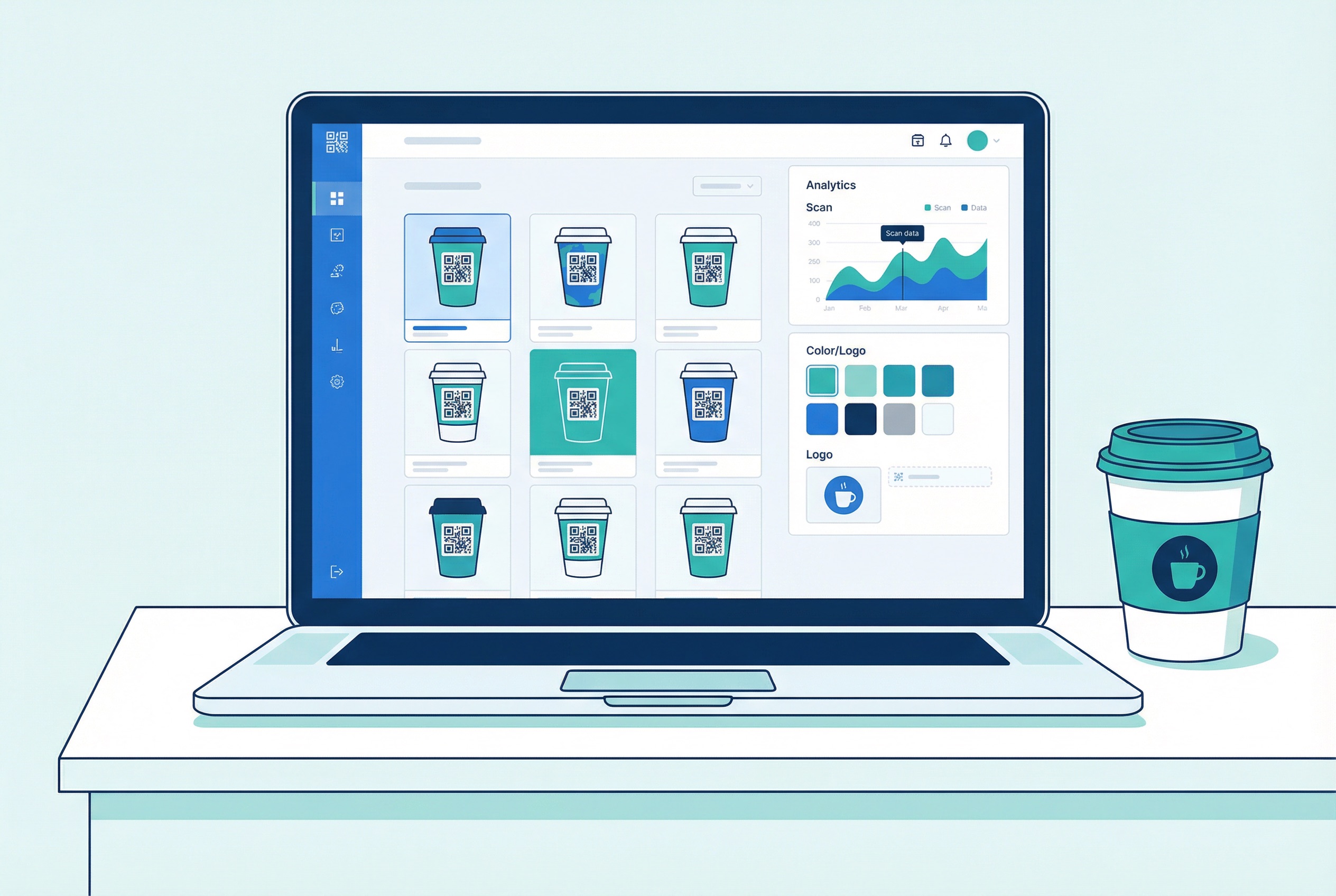
Start by selecting the type of content your QR code will deliver. For cups, the most effective options are:
If you are printing QR codes for a large batch of cups across multiple campaigns or locations, Bulk QR Code generation lets you create hundreds of unique codes from a CSV upload in a single session.
Use Supercode's QR code design tools to customise colours, add your logo, select a frame style, and add a call-to-action message like "Scan for a reward" or "Find out where your coffee comes from." Custom-designed QR codes generate up to 25-40% higher scan rates compared to plain black-and-white codes — so investing a few minutes in design pays real dividends in campaign performance.
Use Supercode's folder system to organise codes by campaign, season, or cup type. You can share folders with your marketing and print partners, making it easy to manage multiple drinkware campaigns across different outlets or event series simultaneously. Explore the full Supercode product features to see how the dashboard streamlines campaign management at scale.
Always test your QR code with multiple devices — both iOS and Android — and in varying light conditions before sending artwork to print. A QR code that scans perfectly on a flat screen may behave differently when printed on a curved cup surface or a textured mug glaze. The Supercode printing guide covers everything you need to know about file formats, bleed specifications, and surface considerations for drinkware printing.
Provide your QR code as a high-resolution SVG or PNG to your cup printer. Dynamic QR codes can be used across entire print runs — if you need to redirect the link later, you simply update the destination in your Supercode dashboard without any new artwork. This makes dynamic codes especially valuable for seasonal cups, corporate gifts, and long-running loyalty campaigns.
After launch, monitor performance in the Supercode analytics dashboard. Track total scans, unique visitors, scan time and date patterns, and geographic distribution. Use this data to optimise campaign timing, test different content offers, and measure the ROI of your drinkware investment. For a deeper dive into tracking strategy, read the QR code tracking guide.
Static QR codes are fine for one-off personal gifts, but any cup printed in quantity — takeaway cups, event drinkware, corporate merchandise — should always use a dynamic QR code. The ability to update the destination URL without reprinting protects your print investment and gives you the flexibility to run seasonal campaigns, A/B test landing pages, and fix errors without waste. Read more about the differences in our dynamic vs static QR codes guide.
On standard takeaway coffee cups, aim for a QR code of at least 2 cm x 2 cm (approximately 0.8 inches square). On larger surfaces like reusable tumblers or ceramic mugs, a 3-4 cm code provides a more generous scanning target. The general rule is that a QR code should be no smaller than 1/10th of the scanning distance — so if customers are expected to scan from about 20 cm away, a 2 cm minimum applies. Refer to the printing guide for detailed size specifications by material and surface type.
QR codes must have high contrast to scan reliably — typically a dark code on a light background. Avoid placing QR codes over patterned or highly textured areas of a cup design. White cups and light-coloured sleeves are ideal surfaces. If your cup design has a dark background, consider using a white or light-coloured QR code on a contrasting panel. Always test contrast under the specific lighting conditions where the cup will be used (indoor café lighting, outdoor events, dim restaurant lighting).
Place the QR code in a prominent, flat area of the cup — ideally on the front face, clear of seams, handles, and curved edges. On takeaway paper cups, a flat panel area near the bottom third of the cup (where text and logos typically appear) works well. On ceramic mugs, the opposite side from the handle provides a clean, stable surface. Avoid the very top or bottom rims where the cup curves most sharply, as this can distort the code geometry and cause scanning failures.
A QR code without context is easy to ignore. Adding a short call-to-action phrase — "Scan to earn rewards," "Find your coffee's origin," or "Scan for a personalised message" — dramatically increases scan rates. According to Bitly's research, 84% of consumers are more likely to scan a QR code when its purpose is clearly explained. Use the frame field in Supercode's design tool to add this message directly as part of the QR code design, rather than relying on surrounding cup artwork.
For most standard takeaway and disposable cups, a minimum QR code size of 2 cm x 2 cm (about 0.8 inches square) is recommended. For larger reusable tumblers and mugs, aim for 3-4 cm to ensure comfortable scanning from a natural hand-held distance. The code should always appear in a flat, high-contrast area of the cup, away from seams and curved edges that can distort the code geometry. See the QR code printing guide for full size specifications by surface type.
Yes. Paper takeaway cups are one of the most common and effective surfaces for QR codes. The key requirements are a smooth, printable area with strong contrast (dark code on a light background), a minimum size of 2 cm, and a dynamic QR code format so you can update the destination if needed. Printed QR codes on paper cups work with all standard phone camera QR scanners. Always request a test print before running a full production batch to verify scannability on the actual cup material and print finish.
Yes. All modern smartphones — both iOS (from iPhone 11 onward) and Android (from Android 9 onward) — can scan QR codes natively through the built-in camera app with no additional app required. Older devices may require a dedicated QR scanner app. To maximise compatibility, ensure your QR code has sufficient size and contrast, and test with both iOS and Android devices before print production. Supercode generates codes that comply with the ISO/IEC 18004 standard, ensuring universal compatibility.
The most effective QR code content for cups depends on the context. For coffee shop cups: loyalty programme sign-ups, digital menus, or origin stories. For corporate gift mugs: welcome messages, onboarding portals, or company resource hubs. For event drinkware: competition entry forms, event schedules, or personalised video messages. For promotional merchandise: discount codes, social media pages, or brand videos. The common thread is relevance — scan rates are highest when the purpose of scanning is clearly signalled and the reward for scanning is immediately apparent.
Yes — if you use a dynamic QR code. Dynamic codes store the destination URL on Supercode's servers rather than encoding it directly into the code itself, meaning you can update the link at any time from your dashboard. This is essential for printed drinkware: if a campaign ends, a URL changes, or you want to redirect to a new seasonal promotion, you can do so instantly without reprinting. Static QR codes, by contrast, permanently encode their destination and cannot be changed after printing.
Supercode's analytics dashboard automatically tracks every scan of a dynamic QR code in real time. You can view total scans, unique device counts, scan time and date patterns, geographic location data, and device type (iOS vs Android). For a cup campaign, this data lets you measure engagement rates by location or outlet, identify peak scanning times (morning rush vs afternoon), and calculate cost-per-scan across your print run. Read the full QR code tracking guide for a deep dive into analytics best practices.
From takeaway coffee cups and corporate gift mugs to event tumblers and seasonal glassware, QR codes turn everyday drinkware into powerful brand engagement tools. With Supercode, you can design, customise, and deploy QR codes for any cup or drinkware format in minutes — with dynamic code flexibility, real-time analytics, and professional design tools included on every plan. Explore our pricing plans or dive into more material use cases across the Supercode blog and solutions hub.
Head to our FAQs section or reach out to us directly on info@supercode.com
Sign up for free