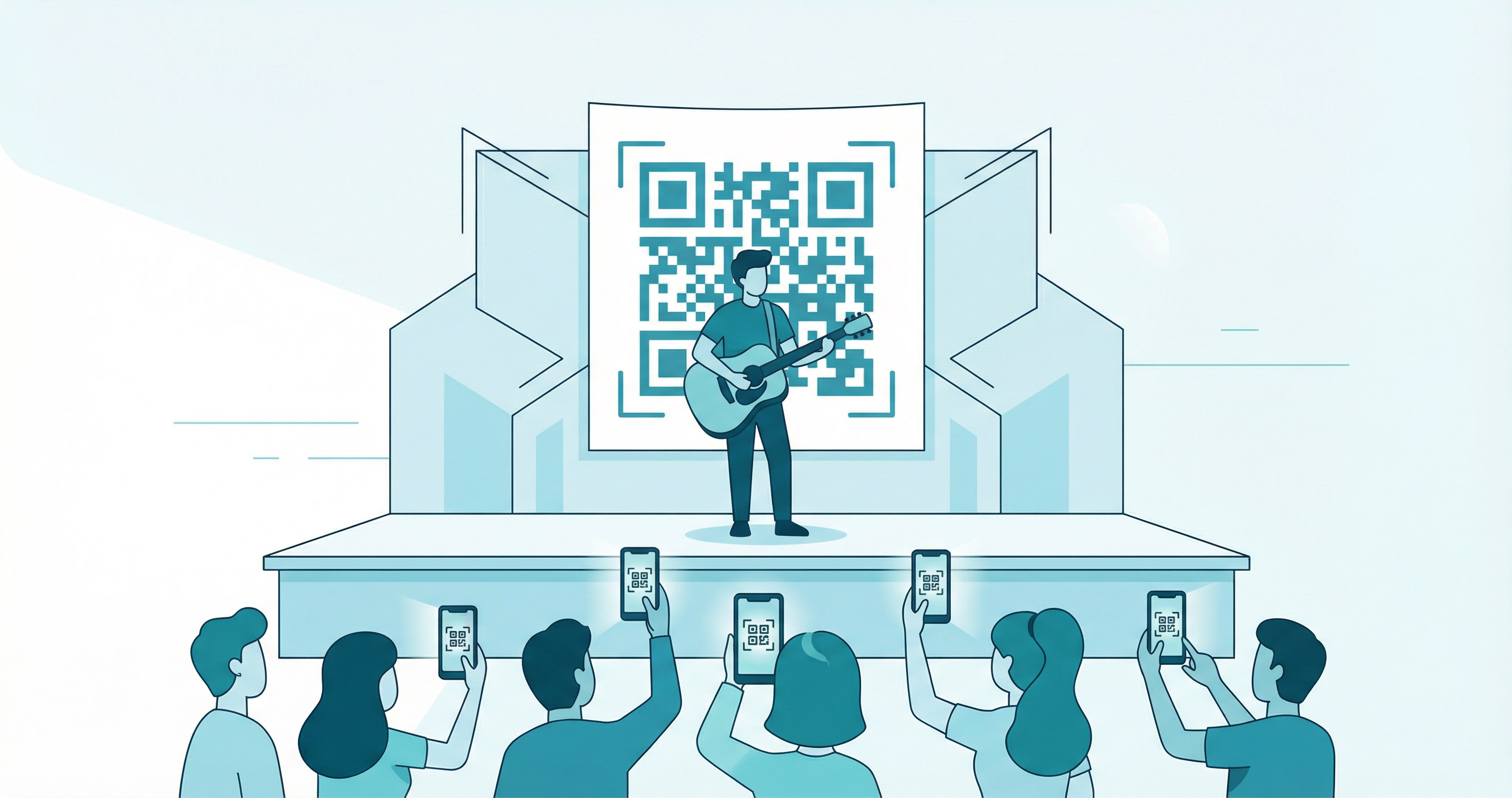

The global live music market generated $31.2 billion in revenue in 2023 and is projected to reach $38.3 billion by 2030 — a creative industry that thrives on connection, community, and memorable experiences. For musicians and artists operating in this space, QR codes have become one of the most powerful tools available: a single scannable code that bridges the physical and digital worlds, turning a concert poster, a merchandise tag, or a gallery wall into an interactive gateway.
In 2026, QR code marketing for musicians and artists goes far beyond ticketing. These codes build fan relationships, drive merchandise sales, grow social media audiences, authenticate artwork, and deliver real-time analytics. This guide covers every major application, best practice, and step-by-step creation method to help you make the most of QR codes in your creative career.
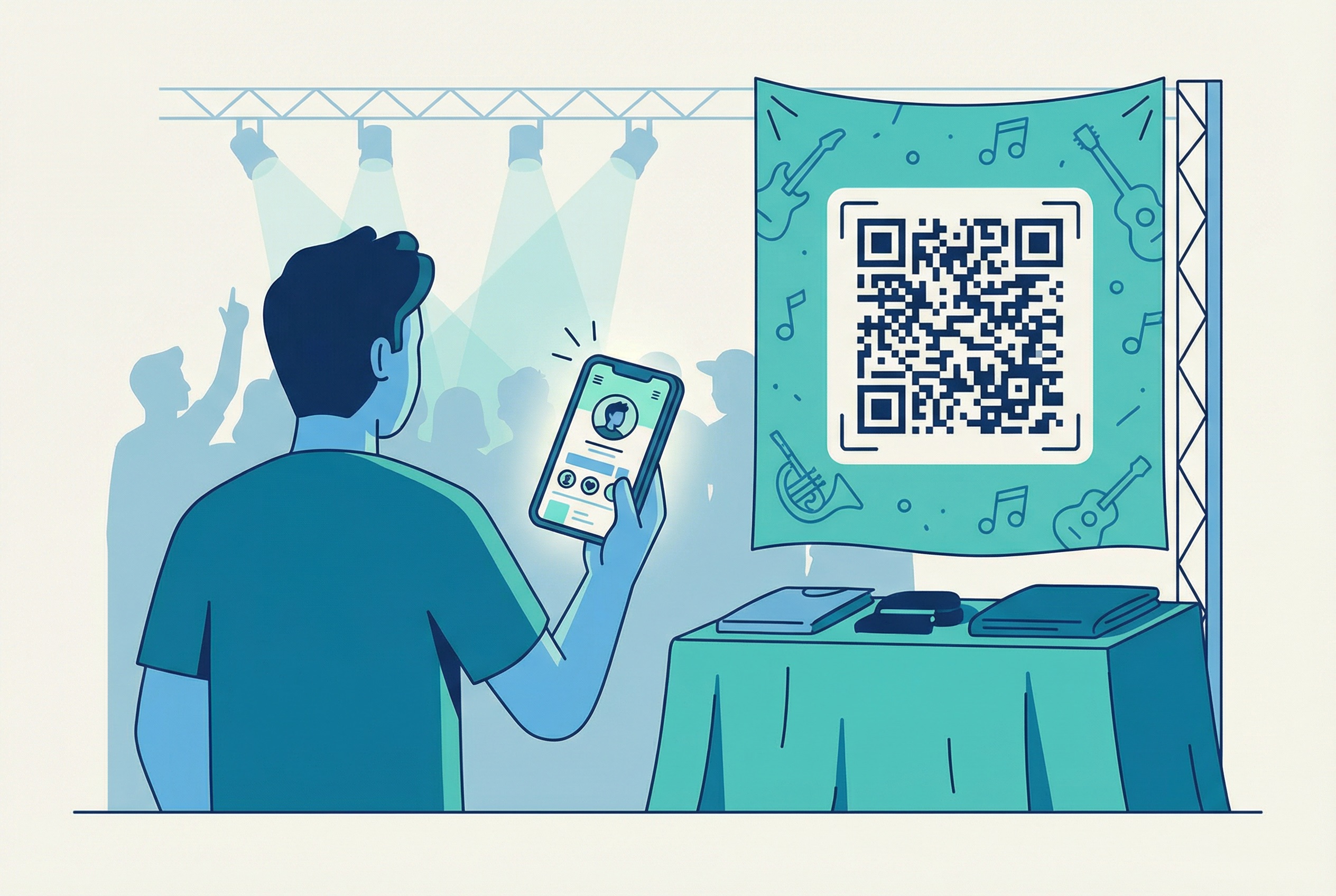
Every poster, flyer, merchandise item, and venue surface can become a direct line to your online world. A URL QR code on a concert poster drives fans straight to your Spotify profile, pre-save link, or website — capturing attention at the moment of peak interest. With dynamic QR codes, you can update the destination after printing, so the same physical code can point to your latest album one month and your upcoming tour dates the next, without any reprinting.
Building a following requires removing every barrier to connection. Social media QR codes let fans scan and follow instantly — no typing, no searching, no friction. Display them on stage banners, merch tables, and posters so fans can connect with you at the exact moment they are most engaged. According to Bitly's 2025 QR code marketer survey, 39% of consumers scan QR codes specifically to access exclusive content — making live events the ideal moment to capture new followers. Pair this with a strong social media QR code strategy and you will see sustained growth long after the show ends.
Merchandise tables at venues are busy and chaotic. A well-placed QR code on merchandise — on a hang tag, inside the sleeve, or stitched into the lining — links fans to your online store so they can buy sold-out sizes later, browse more designs, or leave a review. For visual artists, QR codes on clothing and apparel items link to purchase pages, limited edition drops, and authentication certificates, extending the value of every garment sold.
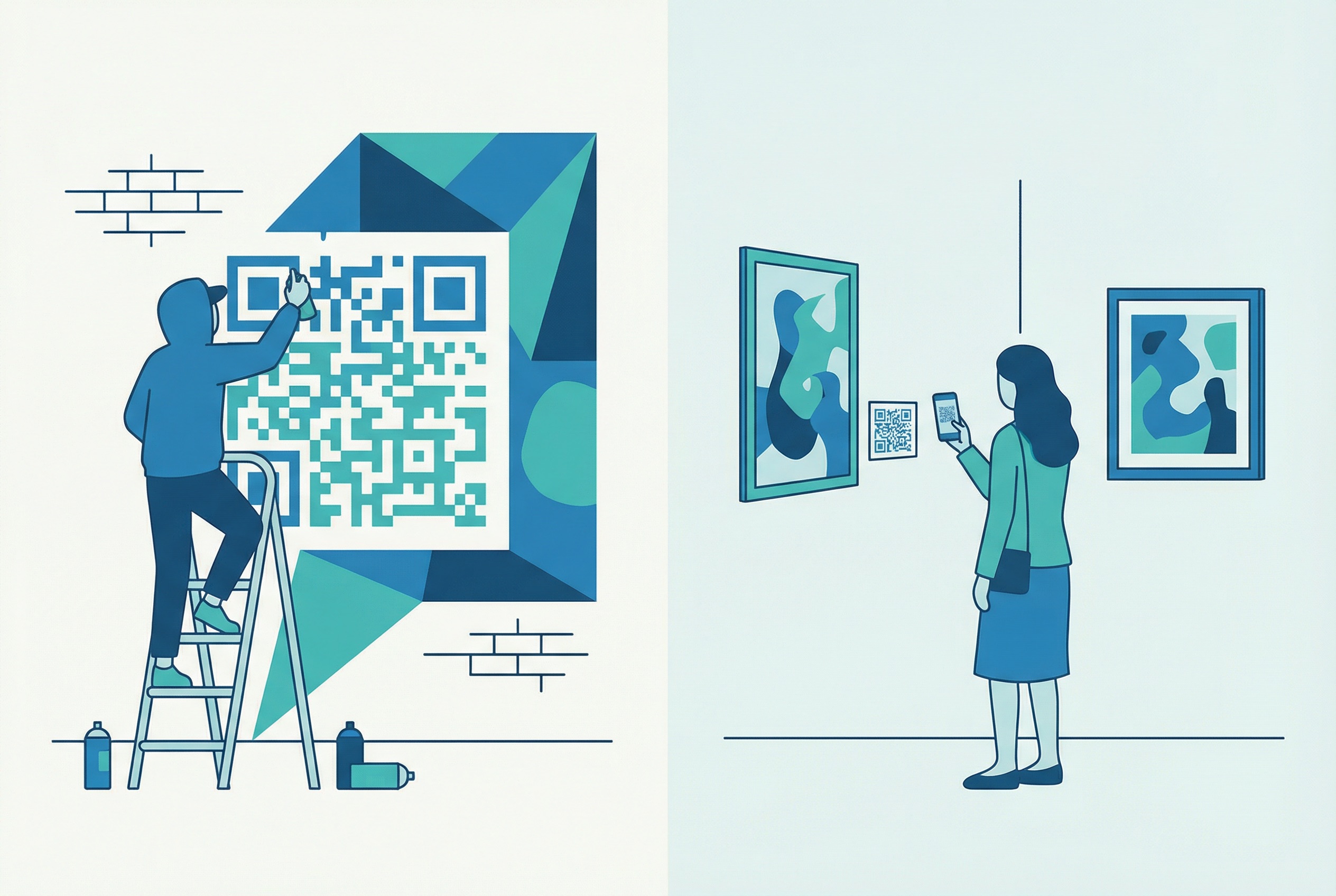
Gallery walls have limited space. A QR code placed next to an artwork is a compact, elegant solution — linking visitors to the full artist statement, material list, creation process video, and purchase enquiry form. Museums have recognised this value: Nubart reports that QR code adoption in museums jumped from 35.4% pre-pandemic to 97.9% post-pandemic and has remained high as visitors now expect digital enrichment alongside physical exhibits. Research from Footnote shows the Cleveland Museum of Art saw average object viewing time increase from 2–3 seconds to 15 seconds after introducing mobile digital tools — demonstrating that richer digital context produces significantly deeper audience engagement.
Tour dates change. Albums drop. Links expire. With dynamic QR codes, you update the destination without creating a new code or reprinting materials. A concert poster that stays up for weeks can promote presale tickets one week, redirect to the setlist on the night of the show, then point to the live recording afterwards — all without touching the physical print. This flexibility is one of the strongest arguments for choosing dynamic over static codes for any ongoing campaign.
For visual artists, QR codes serve as tamper-proof digital certificates of authenticity. A URL QR code embedded in a piece or attached to a certificate of authenticity links to a provenance record, edition details, and artist verification page. If the buyer resells the piece, the QR code travels with it — providing traceability throughout the artwork's ownership history. This adds tangible value for collectors and builds long-term trust in your work.
Dynamic QR codes give you scan analytics: how many scans, from which locations, on which devices, and at what times. This is invaluable intelligence. Which city scans your posters the most? Which merchandise item generates the most link clicks? Use QR code tracking to answer these questions and make smarter decisions about where to concentrate your promotional budget. See our QR code statistics 2026 report for the broader industry data behind this shift.
QR code ticketing is now the industry standard for live events. According to data from Wifitalents, 95% of major venues have transitioned to digital-first ticketing, and 90% of fans say QR mobile tickets reduce the risk of lost or stolen tickets. Bulk QR codes make it straightforward to generate unique codes for every ticket at scale — essential for festivals and sold-out tours. Each code is unique and scannable only once, giving your team instant entry verification and eliminating counterfeit paper tickets. See our full guide on QR codes for events for a comprehensive look at event-specific ticketing workflows.
Project your social media QR code on stage between sets, or place it on every table, bar surface, and exit point. Include a clear call-to-action: "Scan to follow us on Instagram." Fans are primed at live events — they have just experienced something memorable and want to stay connected. This is the highest-intent moment to convert a casual attendee into a long-term follower. Link multiple platforms to one code so fans choose where to connect with you. For the full strategy, see our guide on QR codes for social media marketing.
Display a merchandise QR code at your merch table that links to your full online shop — so fans who miss out on a sold-out size or colour can purchase later. Use a secondary QR code for fans to sign up to your mailing list, offering an incentive like a free download or exclusive track. This converts a one-night purchase moment into an ongoing direct relationship between you and your most engaged fans.
Street artists are using billboard and street advertising QR codes to add interactive layers to public work — linking passersby to the story behind the piece, a making-of video, or a direct donation page. Artist P-Boy famously integrated a Bitcoin donation QR code into his street murals, earning over $1,000 in contributions from people who appreciated his public art. The QR code becomes part of the artwork itself, not just an accessory to it. Artist Felipe Pantone took this further, painting the largest QR code mural in the world in Hasselt, Belgium, using 403 spray cans — demonstrating the creative potential of the medium.
Use a QR code to offer something exclusive — a B-side, a demo, a behind-the-scenes video — available only to those who scan. This "scan to unlock" mechanic rewards your most engaged fans and builds lasting goodwill. Before an album release, link the code to a pre-save page on Spotify and Apple Music to boost first-day streaming numbers. Because dynamic codes can be updated, the same code on existing posters or clothing can redirect to fresh exclusive content each month without any reprinting.
vCard QR codes are a modern upgrade to the paper business card for artists and musicians. A single scan transfers your full contact information, website, social links, and portfolio URL directly to the recipient's phone — no typing required. Print it on the back of postcards, add it to your press kit, or embed it in your EPK (electronic press kit) PDF. For galleries, an email QR code on artwork labels lets collectors immediately send an enquiry with the piece pre-populated in the subject line.
Visual artists partnering with galleries can transform the visitor experience by placing QR codes beside each piece. Link to the artist's statement, a creation process video, audio commentary in multiple languages, or a form to register interest in purchasing. This mirrors what leading museums now implement at scale. Smaller galleries adopting the same approach can deliver a world-class visitor experience without expensive audio guide hardware or printed materials. See also: QR codes for leisure venues and QR codes for tourism.
Print a URL QR code on your show programme, vinyl record inner sleeve, or merchandise linking fans to the full lyrics, song meanings, and the context behind each track. This deepens fan connection and gives your audience something to engage with between shows. For vinyl releases, a QR code on the sleeve bridging the analogue-digital divide — linking to a digital booklet with liner notes, credits, and production stories — is a feature fans genuinely value.
These figures reflect a broader shift: audiences now expect digital layers alongside physical experiences. Musicians and artists who use QR codes effectively are meeting this expectation while building measurable fan relationships. For the complete picture on global QR adoption trends, see the QR code statistics 2026 report.
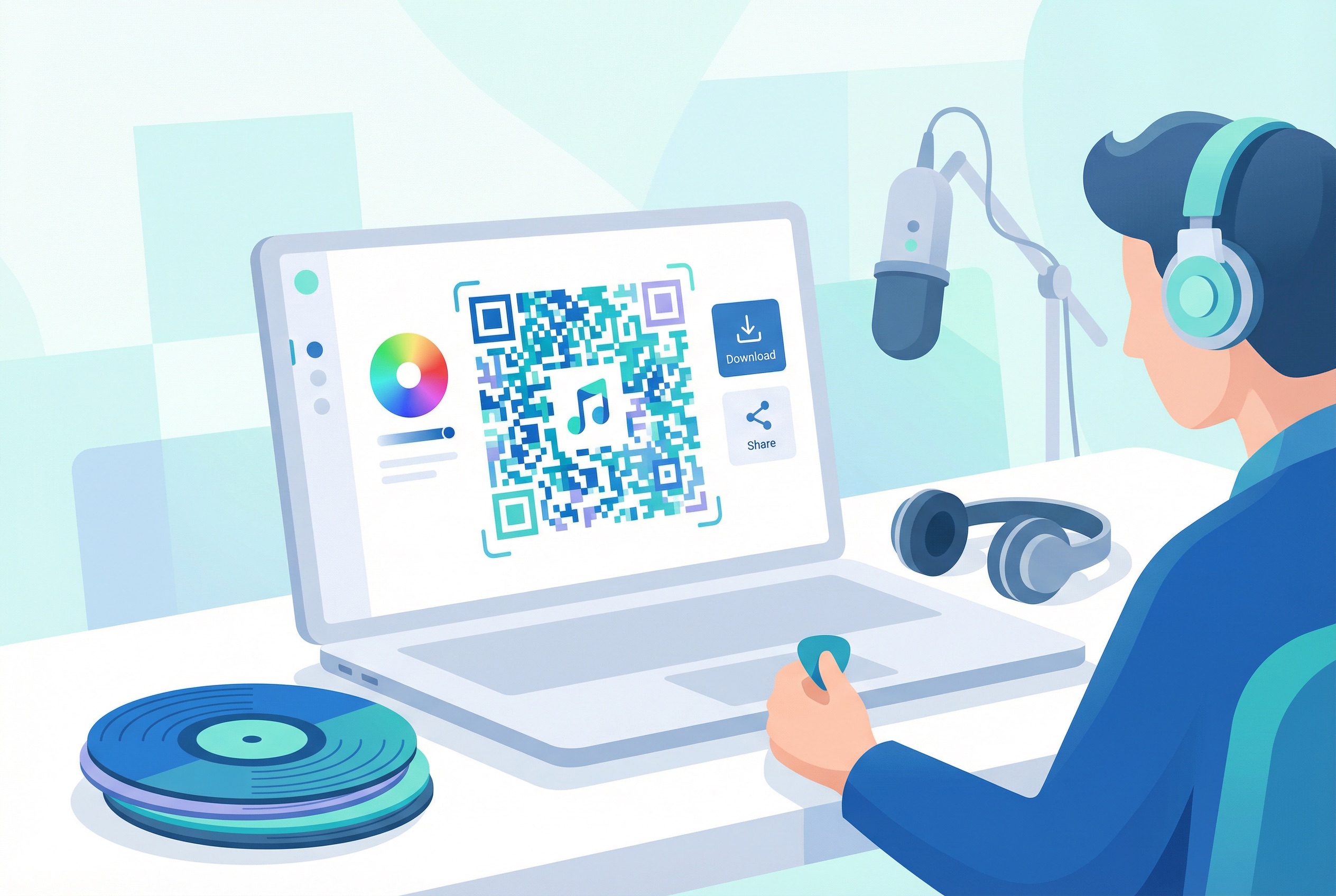
Supercode's QR code generator supports every type a musician or artist will need. Here are the most relevant options:
Log into Supercode, select your QR code type, and enter the destination URL or content. Dynamic codes — recommended for most artist use cases — allow you to change the destination at any time without reprinting. Read the complete guide on how to create a QR code if you are starting from scratch.
Supercode's design tools let you build a QR code that fits your visual identity. Add your logo or band artwork to the centre, choose custom colours that match your brand palette, select dot and frame styles, and add a call-to-action frame with text like "Scan for free download" or "Follow us." A branded QR code earns 30–45% more scans than a standard black-and-white code. Follow the guidelines in our QR code design guide to ensure scannability alongside visual impact, including colour contrast ratios and logo sizing rules.
Create separate folders in your Supercode dashboard for different campaigns: tour codes, merch table codes, gallery exhibit codes, and social media codes. Share folders with your management team, booking agent, or publicist so everyone can access and update codes as needed. Visit the Supercode product page for full details on folder management, team access, and plan pricing.
Always scan your QR code on multiple devices before going to print. Check that it loads correctly on both iOS and Android and that the destination content is live and mobile-optimised. Read our QR code printing guide for minimum size, resolution, quiet zone, and material-specific specifications to avoid common print failures.
After publishing your QR code, monitor performance in the Supercode analytics dashboard. Track scans by date, location, device type, and time of day. Use this data to understand which venues and placements generate the most engagement and redirect your budget accordingly. See the complete guide to QR code tracking and analytics for advanced setup and optimisation.
Posters, merchandise, and gallery labels have a long physical life. Dynamic QR codes ensure the content they link to stays relevant — update tour dates, new releases, or streaming links without touching the printed material. See the dynamic vs static QR code comparison to understand when each type is the right choice. Static codes are appropriate for one-off uses such as individual concert ticket entry.
A QR code printed below 2.5cm × 2.5cm risks becoming unscannable, especially in low-light venues. For concert posters and street advertising, aim for at least 5cm × 5cm so the code is comfortably scannable from a standing distance. Our QR code printing guide covers resolution, quiet zone requirements, and material-specific sizing recommendations for every context from business cards to billboards.
Never display a QR code without telling people what they will get by scanning. "Scan for free track," "Scan to follow us," "Scan for the setlist" — a clear call-to-action dramatically increases scan rates. Position the instruction above or below the code in a visible typeface. This principle applies across every placement: merchandise, posters, clothing tags, and display placements alike.
Your QR code is a marketing asset — it should look as though it belongs to your creative universe. Use your artist colours, embed your logo, and choose a frame that matches your aesthetic. A well-designed code signals professionalism and invites more scans. For detailed guidance, read the QR code design guide, which covers colour contrast ratios, logo sizing limits (maximum 30% of code area), and dot pattern options. You can also explore how fashion brands use QR codes for brand-consistent creative placements.
Placement determines whether anyone actually scans. At a merch table, keep the code prominent and at standing eye level. In a gallery, place it directly beside the artwork label. For stage use, project it large and bright between songs — not during performance when attention is on the music. In darker venues, the projected approach guarantees visibility. For display placements, ensure sufficient contrast between the code surface and the background material.
Exclusive content and special offers are the top two consumer motivations for scanning, according to Bitly's research. Give fans something worth scanning for: a free download, an exclusive demo, early access to tickets, or a competition entry. A strong incentive aligns your QR code marketing campaign with what actually drives fan behaviour and maximises the return on every printed code. See our guide on the most practical QR code uses for more conversion-focused ideas.
The best type depends on your goal. For directing fans to your music streaming profile or website, a URL QR code is the most versatile option. For building a social media following at live shows, a social media QR code is ideal. For event ticketing at scale, bulk QR codes ensure every ticket has a unique, one-time-scan code. Most musicians use a combination of types across different materials and campaigns.
Yes — if you use a dynamic QR code, you can update the destination URL at any time without reprinting the merchandise, poster, or flyer. The printed code stays the same; only the destination changes. This is the key advantage of dynamic codes. A full explanation is in our dynamic vs static QR code guide.
The two most effective tactics are: (1) display the code large and prominent — projected on stage between songs is the most effective single placement, and (2) give fans a compelling reason to scan with a clear CTA such as "Scan for a free track" or "Scan to enter our giveaway." According to Bitly's 2025 research, 39% of consumers scan specifically for exclusive content, making live events the highest-leverage opportunity to capture new followers and email addresses.
Absolutely. A QR code placed beside a gallery piece can link to a purchase enquiry form, price-on-request page, or your online shop. An email QR code can pre-populate a collector's email with the artwork title and your email address, making enquiry frictionless. For authentication and provenance tracking, a URL QR code linking to a digital certificate of authenticity adds a valued layer of security for both artist and collector.
For a standard A2 concert poster (594mm × 420mm), your QR code should be at least 5cm × 5cm — ideally 8–10cm for comfortable scanning from a distance of 30–50cm. Always maintain the quiet zone (a border of white space around the code) equal to at least 4 modules wide. For full sizing guidance including street advertising and billboard recommendations, read our QR code printing guide.
Yes, with the right approach. In low-light environments, project the QR code rather than relying on printed materials — a large projected code on a pale background is easily scannable even in dim lighting. If printing, use high-contrast colours (dark code on a light background) and test scanning in similar lighting conditions before the event. You can also position codes in better-lit areas such as the bar, merch table, or near the exit for post-show engagement when lighting conditions improve.
Whether you are building a fanbase at live shows, enriching a gallery experience, selling merchandise, or authenticating artwork, QR codes give musicians and artists a powerful, measurable bridge between the physical and digital worlds. In 2026, with over 2 billion QR code users globally and fan expectations firmly set on interactive digital experiences, every creative professional should have QR codes embedded in their marketing toolkit.
Supercode makes it easy to create, design, and track QR codes that match your creative brand — with dynamic codes that update when your content does, analytics that reveal where your fans engage most, and bulk generation for event-scale ticketing. Sign up for free and create your first QR code in seconds.
Head to our FAQs section or reach out to us directly on info@supercode.com
Sign up for free

