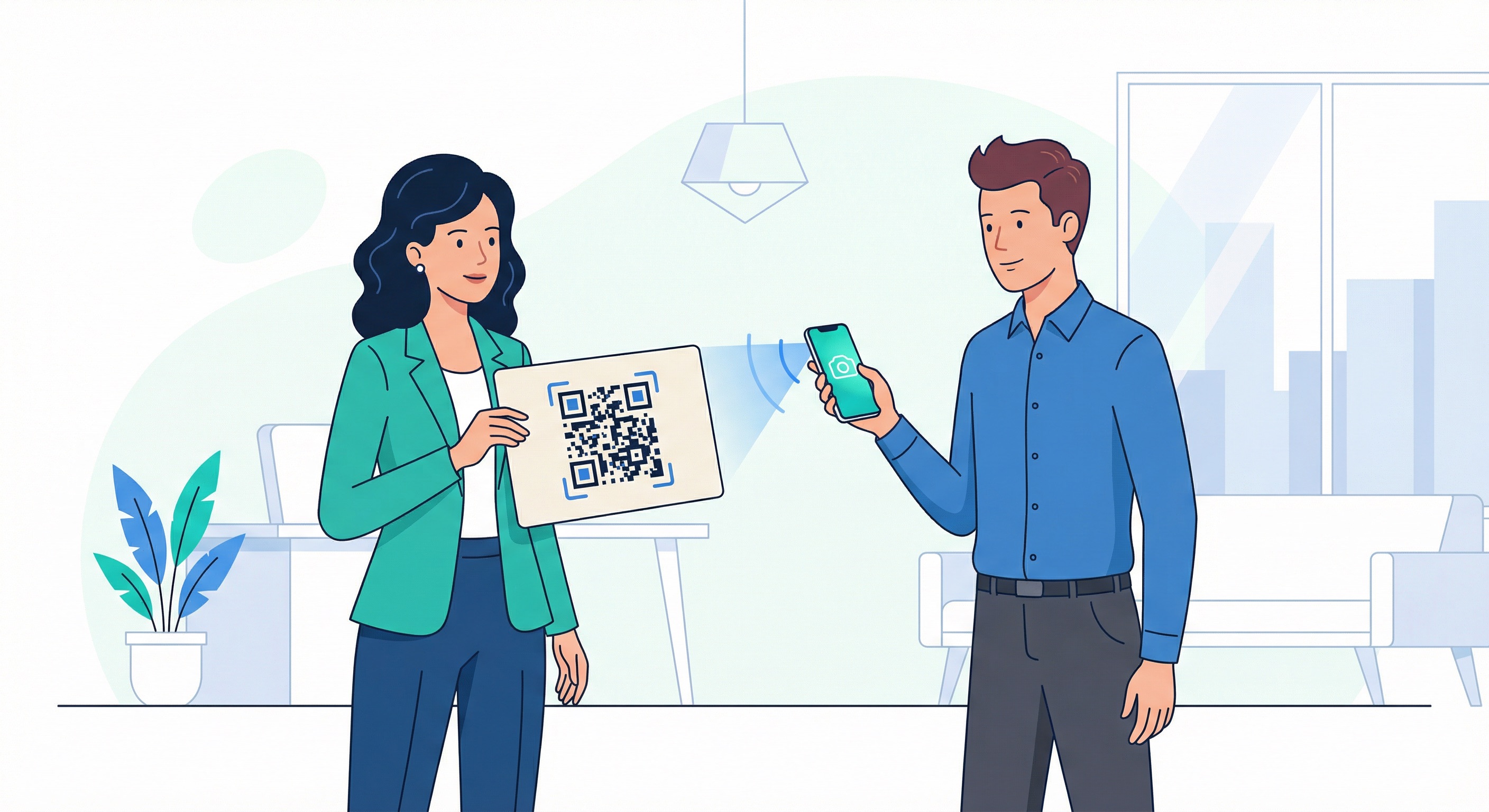

The global QR code market reached $13.04 billion in 2025 and is growing at 17% annually — and nowhere is that momentum more visible than in business services. From professional networking to client billing, from trade show lead capture to office security, QR codes have quietly become one of the most versatile tools available to service-based businesses of every size. In 2026, 94% of marketers have increased QR code usage and 62% of businesses expect QR-driven revenue growth — yet most business services companies have barely scratched the surface of what is possible. This guide covers the core benefits, real-world applications, how to get started with Supercode, and the best practices that separate high-performing QR campaigns from wasted print runs.
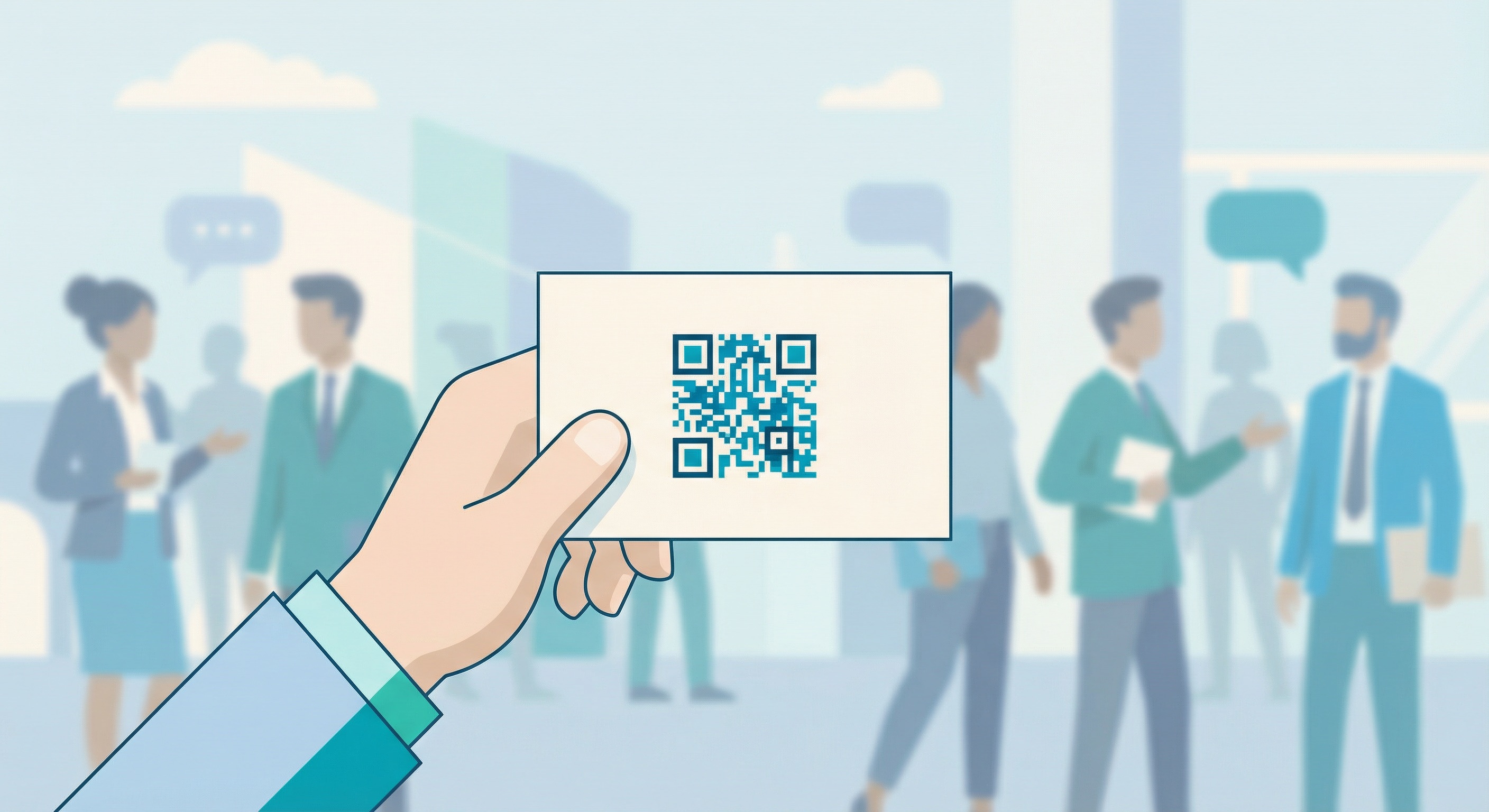
A QR code on a proposal document, business card, or office lobby display immediately signals that your company is modern, organised, and tech-forward. Prospects can scan to see your portfolio, access a product demo, or book an introductory call — all before they leave your meeting room. Research shows that business cards containing vCard QR codes achieve a 19% higher engagement rate than traditional cards, according to Qrlytics, because they remove the friction of manual contact entry. When you hand someone a card they can scan, you immediately stand out from the stack of forgotten paper cards in their drawer.
Traditional networking is limited by the number of people you can physically meet. QR codes on brochures and print collateral, office displays, email signatures, and trade show stands extend your reach to anyone who encounters your materials — in person or online. Link your QR code to a social media QR code aggregator page to grow followers across LinkedIn, X, and Facebook simultaneously from a single scan. The trade show and conference circuit is particularly high-value: QR codes on name badges and booth displays allow hundreds of contacts to be captured per event without manual form-filling.
Every dynamic QR code created on Supercode generates scan data — date, time, device type, and geographic location — that flows into your analytics dashboard in real time. This means you can measure which brochures are being engaged with, which display locations in your lobby produce the most scans, and whether a follow-up mailing produced results. This level of attribution is impossible with traditional print marketing and transforms your materials from a cost centre into a measurable growth investment.
Reprinting brochures, proposals, and marketing materials every time a phone number, pricing page, or case study changes is expensive and wasteful. With dynamic QR codes, you update the destination URL in your Supercode dashboard and every existing printed code instantly points to the new content — no reprints required. For businesses distributing printed brochures, branded merchandise, or display materials, this alone can pay for the cost of a Supercode subscription many times over.
Reducing paper use has become an important brand signal for companies that want to attract sustainability-conscious clients and talent. Replacing printed proposals, document packs, and event handouts with QR codes linking to digital equivalents removes a measurable quantity of paper from your operations. This not only reduces costs but demonstrates environmental commitment — an increasingly important differentiator in competitive B2B tender and procurement processes. Include this in your company's ESG communications as a concrete, quantified action.
95% of businesses report using QR engagements to collect first-party data, according to a 2025 Uniqode report. A feedback QR code on a post-project summary email or printed on an invoice gives clients a one-tap route to leave a review, complete an NPS survey, or provide structured comments. Linking QR codes to gated lead forms on your website or CRM allows you to capture names, companies, and contact details from event attendees and brochure recipients who might otherwise remain anonymous.
The most common — and highest-impact — application for business services companies is replacing traditional business card contact details with a scannable vCard QR code. Traditional business cards result in data entry errors in 40% of cases when contacts are typed manually into a phone (Qrlytics, 2026). A vCard QR code eliminates that entirely — one scan saves your name, title, email, phone number, company, website, and even a profile photo directly to the contact's phone. By 2024, 37% of businesses and 23% of individuals were using digital business card apps, up from just 16% in 2020 (digitalbusinesscard.com). Read our detailed guide on QR code business cards for professionals to set yours up.
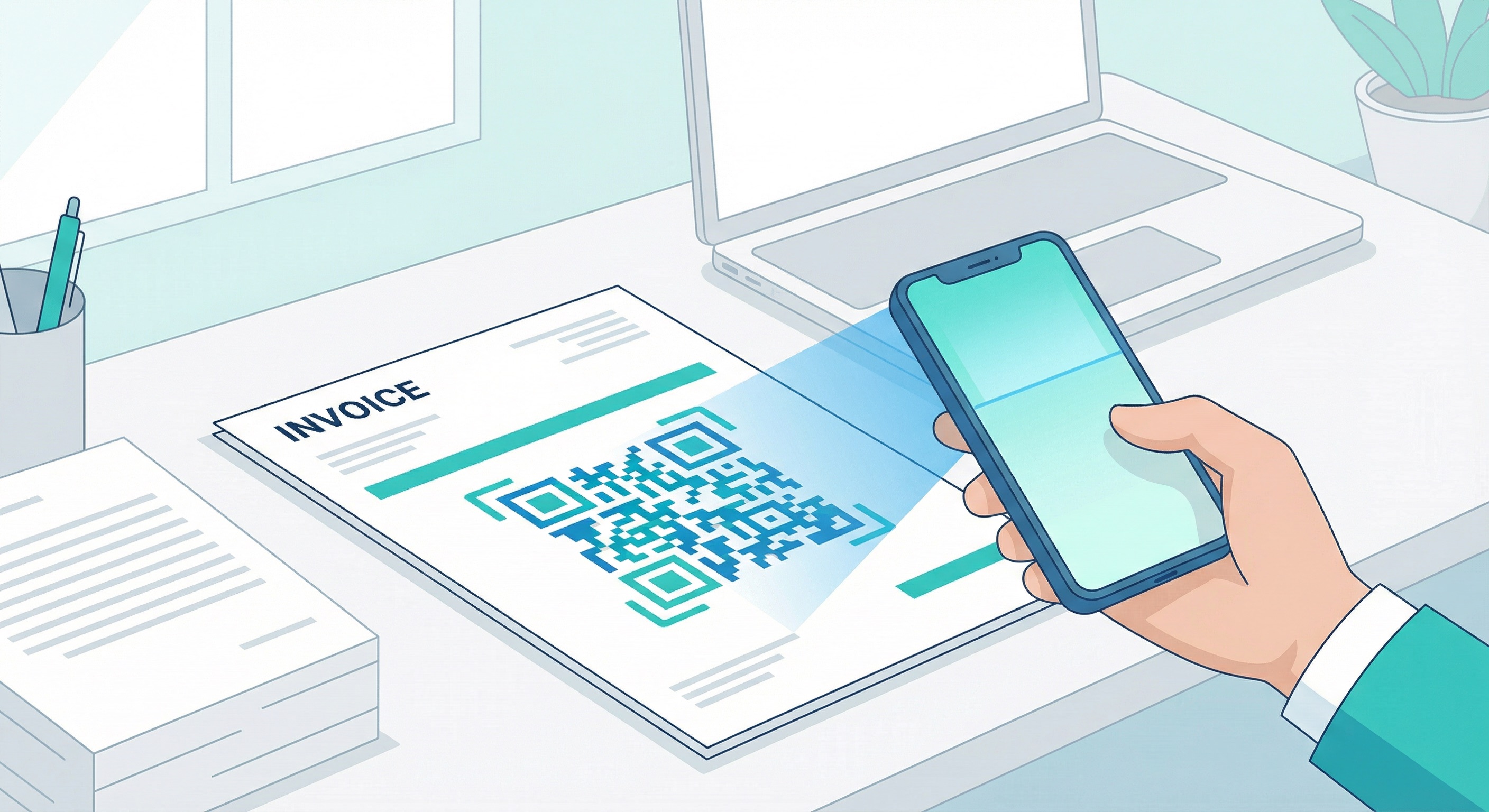
Adding a URL QR code to invoices linking to your payment portal — Stripe, PayPal, GoCardless, or your accounting software's payment page — removes one of the biggest friction points in getting paid on time. Clients scan the code from their phone and settle the invoice in seconds without logging into a portal or typing bank details. The B2B QR payments market in Europe alone is projected to grow from $3.1 billion in 2024 to $15.1 billion by 2033 at a 19.9% CAGR, as businesses embrace scan-to-pay for faster cash flow (SBS Software). Dynamic codes mean you can update the payment link without reprinting invoice templates if you switch providers.
At conferences and exhibitions, every QR code scan is a potential qualified lead. Place QR codes on your stand's display screens, promotional leaflets, and attendee lanyards. Link them to a lead capture form pre-filled with campaign context — event name, booth number, and offer — so when someone scans, their details go directly into your CRM. Use bulk QR codes to create unique tracking codes for each collateral item and compare which materials generate the most leads per event. Visit our trade show QR code guide for a complete strategy.
A printed proposal becomes significantly more persuasive when a QR code at the front of the document links to a video overview of the approach, a case study carousel, or a private client portal with detailed specifications. Decision-makers who might skip a dense written section will often watch a 90-second explainer video. Use a PDF QR code to link to supporting documentation — audit reports, technical appendices, compliance certificates — that would bloat a printed document but add significant credibility when readily accessible.
Place QR codes on job posting materials in universities, co-working spaces, and industry publications. A QR code on a printed "We're hiring" poster at a campus jobs fair links candidates directly to the application form — no URL to type, no search required. Bloomberg famously deployed QR codes for its summer internship programme across university campuses, allowing students to scan and apply instantly from their phones. Link your job posting codes to a URL QR code pointing to your careers page or specific vacancy on LinkedIn.
For offices that manage visitor access and security check-ins, QR codes on employee badges and visitor passes can trigger check-in workflows, verify identity against pre-registered lists, and log entry and exit times automatically. This is a cost-effective alternative to expensive hardware-based access control systems for SMBs. QR codes can also be placed at building entrances to link to emergency procedures, evacuation maps, and first-aider contact details — ensuring this information is always accessible without costly printed poster replacements.
Welcome packs for new clients can include a QR code linking to a personalised onboarding portal, video introduction from the account manager, or a shared folder containing contracts, service level agreements, and key contact lists. This creates a professional, memorable first impression and reduces the back-and-forth of email document attachments. Use PDF QR codes on Supercode to share documents that can be updated on your end without resending any materials to the client.
The data below illustrates the scale of QR code adoption across business services and B2B sectors — and the commercial opportunity available to companies that deploy them strategically.
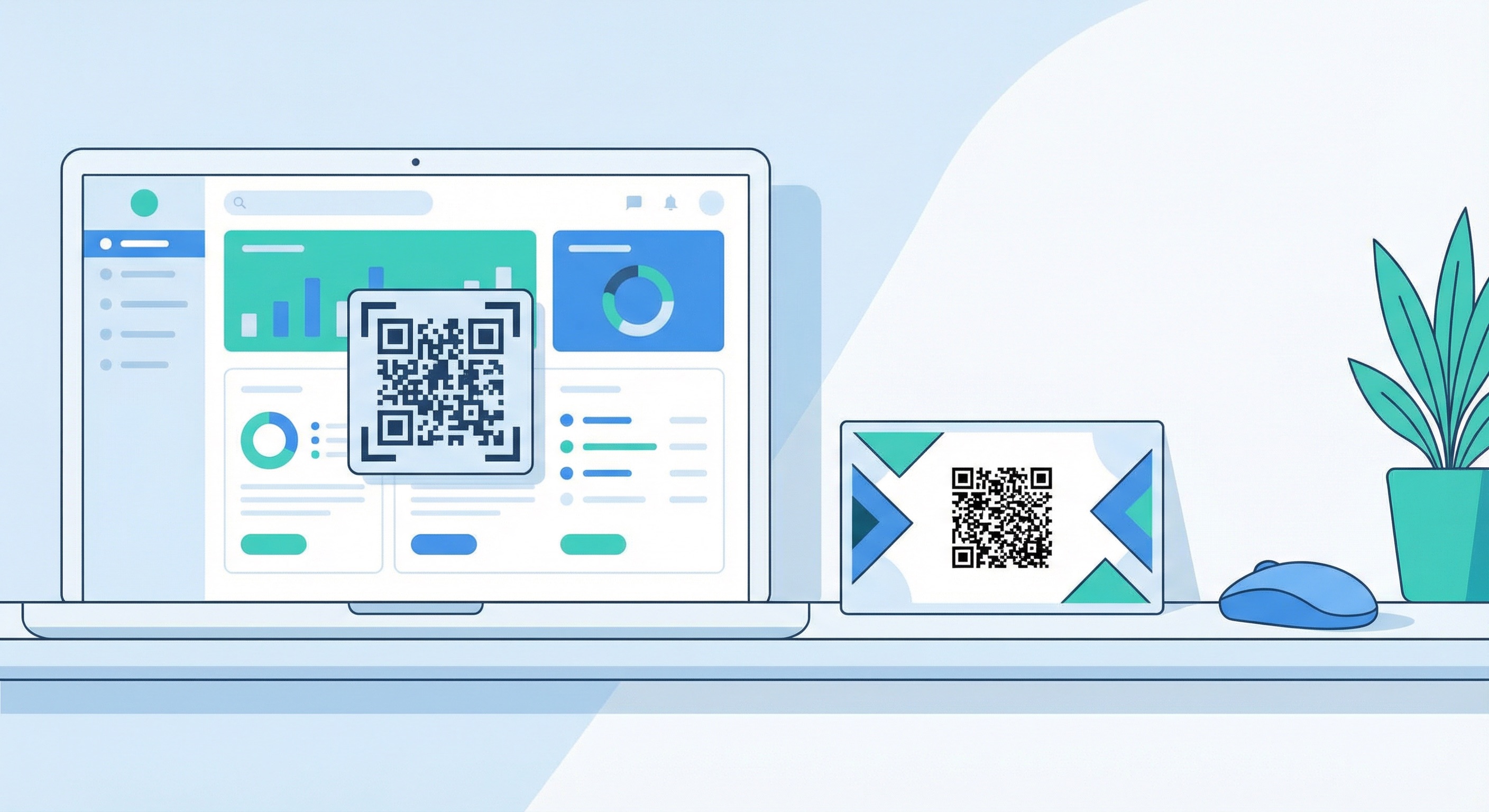
Getting started with QR codes on Supercode's platform takes minutes, and you can create professional, branded codes for every application listed above without any design or coding experience. Here is the recommended setup process for business services companies:
Supercode supports all the QR code types a professional services business needs. Match the type to the use case:
A generic black-and-white QR code on a business proposal or event stand looks like an afterthought. Use Supercode's design tools to add your company logo, apply brand colours to the code dots and corners, and choose a frame with a call-to-action label. A well-branded QR code reinforces professional identity and significantly increases scan rates. Our QR code design guide covers colour contrast rules, logo sizing (maximum 30% of the code area), and frame design best practices.
Always choose dynamic QR codes for business-critical applications — invoices, proposals, brochures, and trade show materials. Dynamic codes allow you to update the destination URL without reprinting, track scan analytics, and even pause a code if a campaign ends. Static QR codes are appropriate only for permanent applications where the content will never change, such as a code etched into a permanent office sign. For a full comparison, read our guide on dynamic vs static QR codes.
Business services companies often manage QR codes across multiple clients, campaigns, events, and teams. Use Supercode's folder system to organise codes by client, campaign type, or financial quarter. Folders can be shared with team members, making it easy for marketing, sales, and operations to access the codes relevant to their work without cluttering each other's dashboards. Check Supercode's pricing plans to find the tier that matches your team size and campaign volume.
Before printing any materials — business cards, brochures, banners, invoice templates — test every QR code on both iOS and Android devices. Point the camera at the code without a dedicated scanner app and confirm the link opens correctly and loads quickly. Our QR code printing guide recommends a minimum code size of 2.5 cm × 2.5 cm and a quiet zone (white border) of at least 4 modules around the code to ensure reliable scanning.
Every dynamic QR code on Supercode generates scan data — timestamp, location, device type — accessible in real time via the analytics dashboard. Export this data and incorporate it into your monthly marketing reports to show leadership which campaigns are driving engagement. For detailed attribution, use UTM parameters in your QR code destination URLs to track conversions in Google Analytics. This turns your physical materials from untrackable cost items into measurable digital touchpoints.
As QR codes have become common in B2B settings, so has QR code phishing (quishing). Ensure your company's QR codes use branded short domains so recipients can verify the link is genuine before scanning. Read our guide on QR code safety and security in 2026 to understand current threats and protective measures, particularly important for codes on financial documents like invoices.
Do not add QR codes to materials without a defined goal. Before creating any code, state what action you want the recipient to take — save your contact, pay this invoice, leave a review, download this document, book a meeting — and build the destination page around completing that single action. A QR code that links to a generic homepage is a missed opportunity. Every code should have a purpose, and that purpose should be reflected in the call-to-action text printed near the code: "Scan to pay" or "Scan to save our contact" are far more effective than a lone QR graphic.
The single most important technical decision for business services companies is to use dynamic QR codes for any material that will be printed in bulk or used for more than a few weeks. Dynamic codes give you full editorial control over the destination after printing — when your invoicing provider changes, when a case study URL is updated, or when a campaign ends, you update the link in Supercode and the printed code stays valid. This is essential for brochures, display stands, and anything on branded merchandise.
QR codes on conference name badges are scanned from arm's length; codes on lobby displays may be scanned from 1–2 metres away. Ensure your codes are appropriately sized for their context — a minimum of 2.5 cm × 2.5 cm for close-range materials and at least 10 cm × 10 cm for display-scale applications. Use High (H) error correction in Supercode's settings, which allows up to 30% of the code to be obscured and still scan — valuable when a logo is placed at the centre or the material experiences wear. Our design guide covers all sizing specifications.
Set a monthly calendar reminder to review your Supercode analytics dashboard. Look at which codes are generating scans, when, and from which locations. If a particular brochure distributed at a specific event or in a particular city is outperforming others, that is a signal to increase distribution in that channel. If a code has generated zero scans over a month of active distribution, investigate whether the placement is visible, the call-to-action is clear, and the destination page is mobile-optimised. Track your QR code marketing strategy metrics quarter-over-quarter to demonstrate ROI to stakeholders.
Every QR code scanned by a business contact will be opened on a mobile phone. Payment pages, portfolio links, proposal portals, feedback forms, and onboarding documents must load in under 3 seconds and render correctly on screens of all sizes. Test every destination on iOS and Android before any materials go to print. If your website or client portal is not mobile-responsive, fix that before embedding QR codes in printed materials — a broken mobile experience damages the professional impression you are trying to create. Review your setup periodically, especially after website redesigns or system migrations, to confirm all links remain valid and fast.
A vCard QR code is the optimal choice for professional services business cards. When scanned, it opens an instant contact-saving prompt on the recipient's phone that pre-fills every field — name, title, company, email, phone number, LinkedIn profile, and website — eliminating the 40% data entry error rate that accompanies manual typing. For senior partners, executives, and business development professionals who attend multiple networking events per year, a branded vCard QR code on a business card is one of the highest-ROI QR code investments available.
Yes — but only if you use a dynamic QR code rather than a static one. Dynamic vCard QR codes created on Supercode log every scan with a timestamp, location, and device type in your analytics dashboard. This data lets you understand which networking events produce the most active contacts and whether specific campaigns or meetings are converting into saved contacts. Static QR codes, by contrast, contain the vCard data directly in the code and generate no scan data.
Create a URL QR code on Supercode linking to your payment portal — Stripe, PayPal, GoCardless, FreshBooks, or your accounting software's online payment page. Download the QR code as a PNG or SVG and insert it into your invoice template in Word, Google Docs, Excel, or your invoicing software. Add a short call-to-action label: "Scan to pay now." Print or email your invoice as usual. Clients scan the code and complete payment from their phones without navigating to a URL or logging into a portal. Use a dynamic code so you can update the payment link without reprinting if you switch providers.
QR codes are one of the most effective tools for B2B lead generation at trade shows and conferences. Place unique QR codes on your stand's display materials, promotional items, and printed handouts — each linking to a lead capture form pre-filled with the event and offer context. Every scan creates a CRM-ready contact record without manual badge scanning or business card collection. Use bulk QR codes to assign unique codes to each collateral item, then compare scan volumes per item to identify your highest-performing materials at each event. Visit our trade show QR code guide for a complete event strategy.
QR codes on invoices are safe when created via a trusted platform and linked to verified payment pages — but businesses should be aware of QR code phishing (quishing) threats. To protect your clients, always use Supercode's branded domain feature so the short link in your QR code reflects your company name rather than a generic URL shortener. This gives recipients a visual verification signal before they scan. Never share QR codes as editable image files that a bad actor could replace in a document. For a full guide to QR code security in 2026, see our post on QR code safety and security.
A small professional services firm typically starts with 4–6 codes: a vCard code for each senior team member, a payment code for invoices, a feedback code for post-project reviews, and a URL code linking to the company's service overview or case study portfolio. Larger firms managing multiple offices, client verticals, and campaign types may maintain dozens or hundreds of codes — particularly if they use unique codes for each trade show, brochure version, or geographic market. Supercode's bulk code generation and folder organisation features scale to meet enterprise needs. Review Supercode's pricing plans to find the right tier for your team.
From networking and billing to lead capture and client onboarding, QR codes give professional services companies a fast, cost-effective way to bridge physical materials and digital experiences — and measure the results in real time. With the global QR code market valued at $13.04 billion in 2025 and growing, the competitive advantage belongs to businesses that deploy QR codes strategically, not just symbolically.
Explore how QR codes work across the full spectrum of business solutions and industries on Supercode, or browse the complete use case library to find strategies relevant to your sector. For related B2B applications, see our guides for trade shows, finance and insurance, and events and conferences. Ready to create your first professional QR code? Sign up free at Supercode — your first codes are ready in minutes, no credit card required.
Head to our FAQs section or reach out to us directly on info@supercode.com
Sign up for free

