

In 2026, 40% of marketers now deploy QR codes in print advertisements — making magazines and newspapers one of the most powerful offline-to-online conversion channels available. Yet for publishers, advertisers, and brand marketers, the true opportunity is far greater than a simple link in a print ad. QR codes in magazines and newspapers bridge the gap between the tactile authority of print and the interactivity of digital media, creating seamless experiences that readers can carry from the page into their smartphones in seconds.
Whether you are a magazine publisher looking to deepen reader engagement, a brand placing ads in national print titles, or a newspaper looking to retain subscribers in a digital-first era, this guide covers everything you need to know about using QR codes in print media effectively in 2026 — from key applications and best practices to real statistics and a step-by-step creation guide using Supercode's QR code generator.
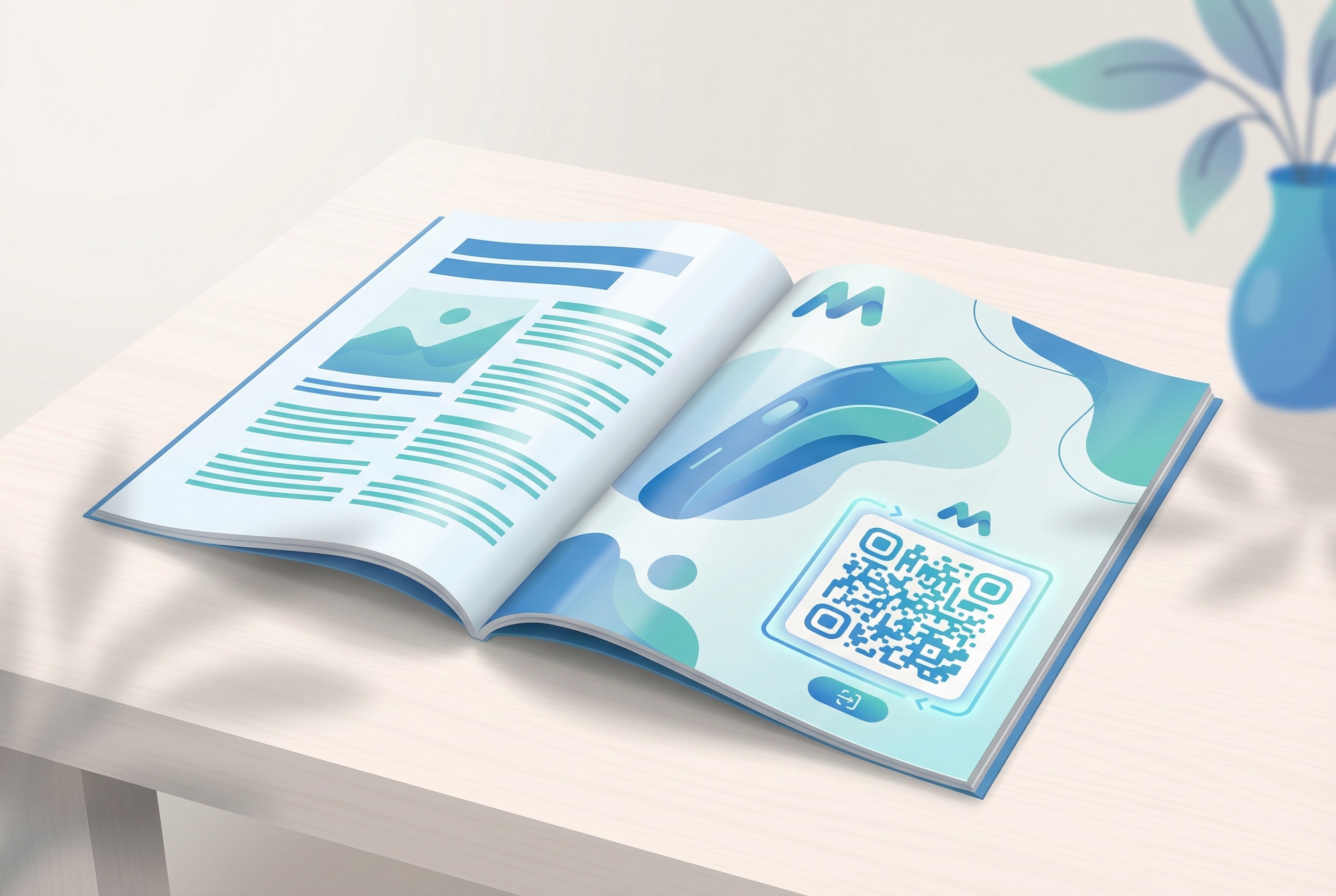
Print media earns a level of reader trust and attention that digital channels rarely match. Studies show that the average dwell time on a magazine advertisement exceeds 30 seconds, and print ads boost message recall by up to 70% compared to digital equivalents. Adding a URL QR code to a magazine or newspaper ad allows advertisers to combine that high-recall print impact with the click-through conversion capabilities of digital — giving readers an instant, low-friction path from inspiration to action without typing a single URL.
QR codes allow publishers to expand the editorial experience far beyond the printed page. A feature article on a film can link to the trailer. A profile of a musician can link to their latest album. A travel feature can link to a 360-degree virtual tour. For media and publishing brands, this transforms a static printed issue into an interactive, multimedia platform that readers can engage with on their own terms. Readers who scan once are more likely to subscribe, return, and recommend — deepening the publication's relationship with its audience.
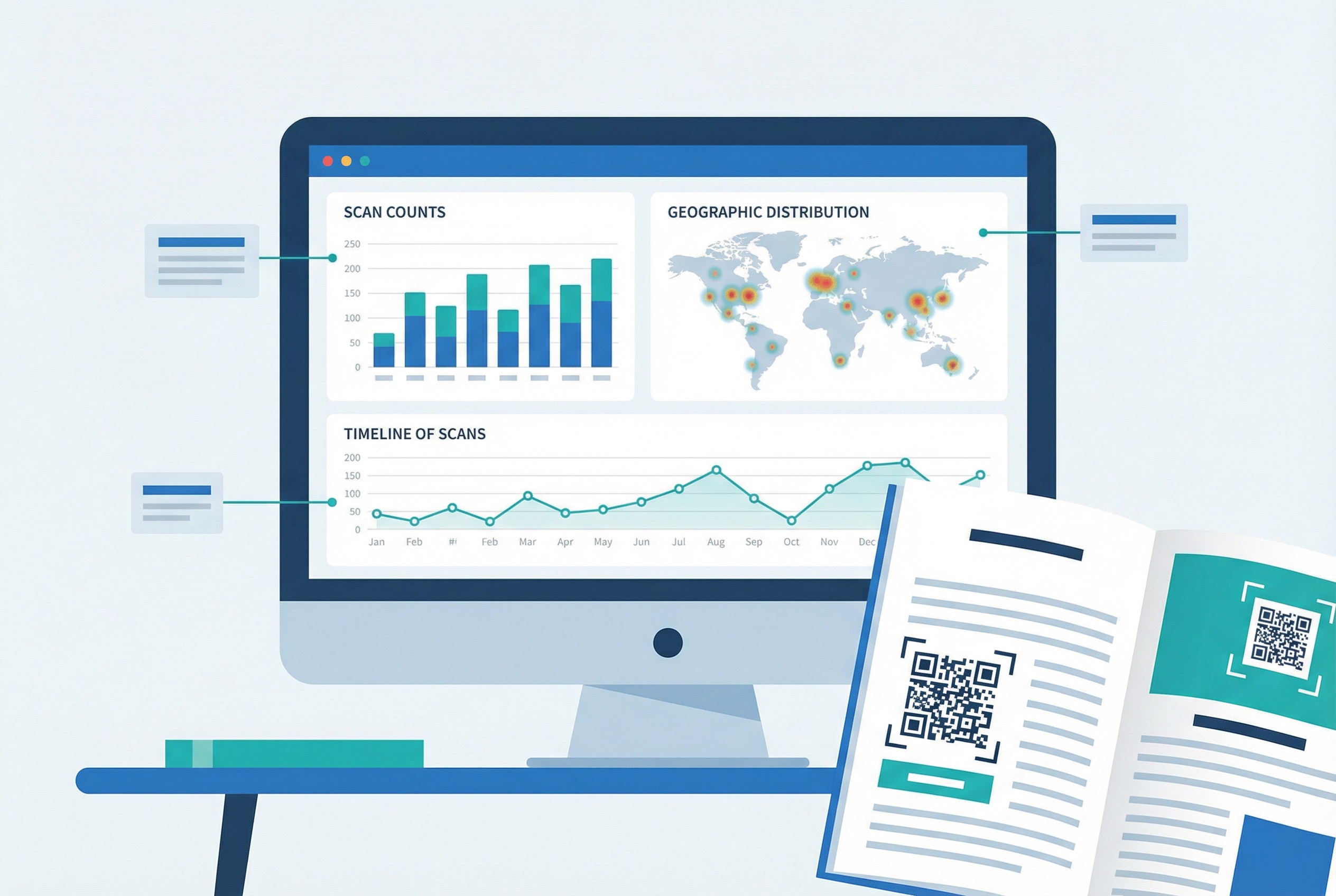
One of the most significant limitations of traditional print advertising has always been attribution: How do you know how many people read your ad, let alone acted on it? Dynamic QR codes solve this entirely. Every scan generates data — total scans, unique users, time of scan, device type, and geographic location — giving you precise campaign intelligence that was simply unavailable in the pre-QR print era. Platforms like Supercode's analytics dashboard show you exactly which ads and editions are performing, enabling rapid iteration. QR code tracking turns print media from a brand awareness play into a measurable, data-driven marketing channel.
Forward-thinking brands are using QR codes in magazines to trigger augmented reality (AR) and virtual reality (VR) experiences that go far beyond traditional one-dimensional print. A fashion brand can let readers virtually try on a product. An automotive brand can let prospects explore a car interior in 3D. A home furnishings advertiser can show how a sofa looks in a reader's living room. According to the QR Insights State of QR Codes 2025 report, 70% of CMO Council members already combine QR codes with AR in their campaigns — and print is one of the highest-impact contexts for this technology.
Running a television commercial across multiple channels requires significant production budgets and repeated media spend. QR codes in print ads offer a far more cost-effective model: a single ad placement in a magazine or newspaper, paired with a dynamic QR code, can deliver rich digital content — video, interactive pages, e-commerce landing pages — to every reader who scans, without additional broadcast costs. The digital destination can even be updated after print, adapting the campaign without reprinting. For brands managing tight marketing budgets in 2026, this flexibility represents exceptional value.
Publishers can use QR codes strategically within their print editions to convert casual readers into committed subscribers. A QR code inside a news article can offer an extended digital version. An ad for a special issue can offer readers a discount on an annual subscription when they scan. For fashion magazines and luxury lifestyle titles, QR codes can offer exclusive subscriber-only content or early access to collections — creating a meaningful incentive to remain loyal to the print edition while deepening digital engagement simultaneously.
Retail brands, particularly in fashion, beauty, and consumer goods, can use QR codes in magazine ads to create shoppable print experiences. A reader who sees a product they like can scan, view the full product page, read reviews, check sizing, and complete a purchase — all within seconds of seeing the ad. This kind of retail-integrated QR marketing dramatically shortens the path to purchase that traditionally required a reader to remember a brand, search for it later, and navigate to the right product.

The most straightforward application of QR codes in magazines is routing curious readers directly to a brand's website, product page, or promotional landing page. Rather than hoping a reader types in a URL or searches for a brand after seeing an ad, a QR code provides instant, zero-effort access. Include a clear call-to-action ("Scan to shop the collection" or "Scan to see this in action") and link to a page specifically optimised for mobile visitors who are arriving from a print context. This is particularly effective for retail, fashion, automotive, and technology brands running full-page magazine spreads.
Both digital and print subscriptions can be promoted inside the very edition a potential subscriber is reading. A QR code placed on the inside cover or on a dedicated subscription page can link directly to a sign-up form, a discount offer, or a gift subscription option. The reader is already engaged with your content — the QR code removes every barrier between that engagement and a subscription conversion. Add a time-limited discount code displayed on the landing page to increase urgency and scan rates.
Sunday newspapers and weekly magazines have long been coupon vehicles, but physical coupon clipping creates waste and inconvenience. QR codes linked to digital coupon pages solve this entirely. Readers scan, save the offer to their phone, and redeem it at checkout in-store or online. The brand gains precise redemption data, the retailer gains a seamless POS integration, and the reader gains a cleaner, more convenient experience. This approach is highly effective for FMCG, grocery, pharmacy, and lifestyle advertisers who traditionally rely on insert-heavy weekend editions.
According to Bitly's State of QR Codes 2025, 39% of marketers report that exclusive content or information is the most effective driver of QR code scanning behaviour. Magazines and newspapers are ideally placed to capitalise on this. A QR code in a print interview can link to the unedited extended video conversation. A QR code in a recipe feature can link to a video of the chef cooking the dish. A QR code in a news analysis piece can link to the full data set or source documents. This model rewards readers for engaging with the print edition while extending the content relationship online, increasing brand affinity and digital traffic simultaneously.
Luxury and lifestyle brands are pioneering WebAR experiences triggered by QR codes in magazine ads. Target ran a contest campaign in Lucky magazine where readers could scan to enter a $5,000 shopping spree. Bass Pro Shops used QR codes in magazine ads to let readers "see this boat in action" through linked video experiences. Today, brands go further — using WebAR to let readers virtually try on eyewear, preview furniture in their homes, or explore fragrance campaigns through multisensory digital interactions. No app download is required; the scan opens the AR experience directly in the reader's browser, removing every point of friction.
For brands with mobile apps — from news publishers to retailers to hospitality companies — QR codes in print ads are one of the most effective offline acquisition channels. A QR code linked to a smart app download page automatically routes iOS users to the App Store and Android users to Google Play, eliminating the friction of platform selection. Publishers can promote their own digital editions this way, converting print subscribers to dual-platform readers who engage with content daily rather than weekly. See our complete guide on how to boost app downloads with QR codes for detailed strategy.
Magazines and newspapers occupy a unique position of trust with their readers — and that trust can transfer to a brand's social channels when leveraged correctly. Social media QR codes that link to a brand's Instagram, TikTok, X, or LinkedIn profile, or to a specific hashtag campaign, enable readers to follow a brand in one scan. For editorial brands, QR codes in author biopics or letters from the editor can build direct digital relationships with readers, enabling the publication to maintain audience connection beyond the print cycle. For deeper strategy, explore our guide on QR codes for social media marketing.
The data confirms that QR codes in print media are not a niche tactic — they are a mainstream, rapidly growing component of the modern marketing mix:
Creating professional QR codes for print media with Supercode takes minutes. Here is a step-by-step guide optimised for magazine and newspaper applications:
Before generating your code, identify what you want readers to do when they scan. Supercode supports all the QR code types most relevant to print media:
Log in to Supercode's QR code generator, select your QR code type, and enter the destination URL or content. Then customise the design to match your brand or publication: choose brand colours, add your logo, select a frame style, and add a clear call-to-action label. A well-branded QR code generates significantly higher scan rates than a plain black-and-white code. Read our QR code design guide for detailed design best practices.
For magazine and newspaper printing, always download your QR code as a high-resolution SVG or PNG file rather than JPEG. Vector formats (SVG) scale infinitely without quality loss, ensuring sharp, scannable codes whether printed at a quarter-page size or full-bleed spread. Our QR code printing guide covers minimum size requirements, resolution specifications, and print preparation in detail.
If you are managing QR codes across multiple magazine issues, newspaper editions, or advertiser campaigns, use Supercode's folder system to keep everything organised. Create folders by publication title, campaign name, or edition date, and share access with your design and advertising teams. This ensures every stakeholder is working with the correct, current version of each code.
Always scan your QR code with multiple devices and camera apps before submitting artwork to print. Test on both iOS and Android. Print a test page at the intended final size and scan it under typical reading conditions — artificial lighting, varied angles, and different scanning distances. Fix any destination errors or design issues at this stage; once the print run is complete, you cannot change the printed code itself. With dynamic QR codes, however, you can update the destination URL at any time even after printing.
After publication, track your campaign's performance via the Supercode analytics dashboard. Monitor total scans, unique users, scan times, geographic breakdown, and device types. Use this data to understand which ads and editions drive the most engagement, inform future campaign decisions, and demonstrate clear ROI to advertisers and editorial leadership. For a comprehensive guide to tracking metrics, see our article on QR code tracking and analytics.
The minimum recommended size for a QR code in print media is 2 cm × 2 cm (approximately 0.8 × 0.8 inches) at the final printed scale. Anything smaller risks scan failure under typical reading conditions. For full-page or half-page magazine ads, a QR code of 3–5 cm is ideal — prominent enough to notice without dominating the design. Never reduce a QR code below minimum size to fit a layout; instead, redesign the surrounding layout to accommodate the code correctly.
Print QR codes require high contrast to scan reliably. Black on white is the safest combination, but many brands successfully use dark brand colours on a light background. Avoid printing QR codes on heavily patterned, photographic, or low-contrast backgrounds. If you must place a QR code over an image, use a solid-colour block or frame behind the code to ensure the camera can distinguish the pattern clearly. Supercode's design tools let you customise code colours while preserving the contrast ratios required for reliable scanning.
A QR code without context is a missed opportunity. Always pair your print QR code with a brief, action-oriented call-to-action that tells readers exactly what they will get when they scan. Examples: "Scan to watch the full interview," "Scan to claim your 20% discount," "Scan to explore the collection." This is particularly important for newspaper readers who may be less familiar with QR code habits than regular magazine readers. According to Bitly's 2025 data, 84% of consumers are more likely to scan when the use case is clearly communicated.
For any print campaign — whether a one-page newspaper ad or a six-page magazine insert — always use dynamic QR codes rather than static ones. Dynamic codes let you update the destination URL after printing, fixing errors, redirecting traffic to updated landing pages, or extending a campaign beyond its original print run without reprinting. They also provide full analytics, which static codes cannot. Learn more about Supercode's dynamic QR code capabilities across all campaign types.
The reader scanning your magazine QR code is holding a smartphone — your destination page must be fully mobile-optimised. This means fast load times (under 3 seconds), clear hierarchy, tap-friendly buttons, and no horizontal scrolling. If you are linking to a product page, ensure the page works flawlessly on the smallest common screen sizes. A poor mobile experience after a scan wastes the attention advantage that print media earned you. Test your destination page on multiple devices and screen sizes before the publication goes to press.
Use Supercode's analytics tools to compare QR code performance across different magazine issues, sections, ad sizes, and positions. Over multiple editions, you will build a clear picture of which placements — inside front cover, feature spreads, back cover, supplement inserts — drive the highest engagement. Use this data to advise your media buying strategy, negotiate better placements, and justify QR code investment to editorial or marketing leadership with concrete data rather than assumptions. For comprehensive campaign strategies, explore our QR code marketing strategy guide.
The minimum recommended size for a QR code in print media is 2 cm × 2 cm (approximately 0.8 × 0.8 inches) at final printed scale. For standard magazine ads, 3–5 cm is optimal — large enough to be noticed and easily scanned without overwhelming the ad design. For broadsheet newspaper placements, a 4–6 cm code works well. Always test by printing at the final intended size and scanning with multiple smartphone cameras before submitting artwork.
Yes. QR codes work reliably on any printed surface that maintains sufficient contrast and minimum size. Magazines (coated, gloss, or matte stock) and newspapers (newsprint) both produce scannable QR codes when the code is printed at the correct resolution and size. The key requirements are: high contrast between code and background, minimum 2 × 2 cm print size, and no distortion from page curvature or binding gutter overlap. Always test on the actual paper stock and at the actual print scale before approving the final artwork.
Use a dynamic QR code — not a static one — to gain full tracking capabilities. Supercode's analytics dashboard records every scan with timestamp, geographic location, device type, and operating system. For print campaigns, create a separate QR code for each distinct placement (different magazine titles, different editions, different ad positions) so you can compare performance across placements. You can also append UTM parameters to destination URLs to pass scan data directly into Google Analytics or your preferred analytics platform. See our QR code tracking guide for the full setup.
Yes — if you used a dynamic QR code, you can update the destination URL at any time, even after the print run has been distributed. The printed QR code pattern itself does not change; only the URL it resolves to changes in the Supercode system. This is invaluable for print media campaigns: if a landing page has errors, a promotion expires, or you want to redirect traffic to a new campaign, you can update the destination without any additional print costs. Static QR codes, by contrast, cannot be changed after creation and have no tracking capabilities.
URL QR codes are the most versatile choice for the vast majority of print media applications — they link to any webpage, video, landing page, or e-commerce product. PDF QR codes are ideal for sharing extended editorial content or product catalogues. Social media QR codes work well for building brand followings from editorial contexts. Bulk QR codes are essential for publishers managing multiple regional editions or advertisers running multi-market print campaigns with unique codes per market. The right choice depends on your campaign goal — see the full range of Supercode QR code solutions to find the best match.
Supercode's design tools allow you to customise every element of your QR code: replace the default black with your brand's primary colour, add your logo to the centre of the code, choose from multiple eye and frame styles, and add a colour-matched call-to-action frame around the code. Branded QR codes generate measurably higher scan rates because they signal trustworthiness and relevance to readers. The only design constraints are maintaining adequate contrast for scanability and keeping the code large enough to scan reliably at print scale. Our complete QR code design guide walks through every customisation option with practical tips for print media.
Magazines and newspapers remain powerful vehicles for brand communication — but in 2026, the publications and advertisers winning the attention economy are those that connect their print authority with digital measurability. QR codes are the bridge that makes this possible, transforming every ad, article, and insert into a trackable, interactive, data-rich touchpoint that works as hard for your brand in print as your best digital campaigns do online.
Whether you are a publisher building deeper reader relationships, an advertiser driving measurable conversions from print placements, or a marketing team looking to bring your campaigns into the full range of material use cases, Supercode gives you the design tools, analytics dashboard, and dynamic code capabilities to make every print QR code count. QR codes on posters, QR codes on brochures and flyers, and QR codes on billboards can all extend the same campaign across every print touchpoint for a unified, fully trackable offline-to-online strategy. Explore Supercode's pricing plans and sign up for free to create your first print QR code today.
Head to our FAQs section or reach out to us directly on info@supercode.com
Sign up for free

