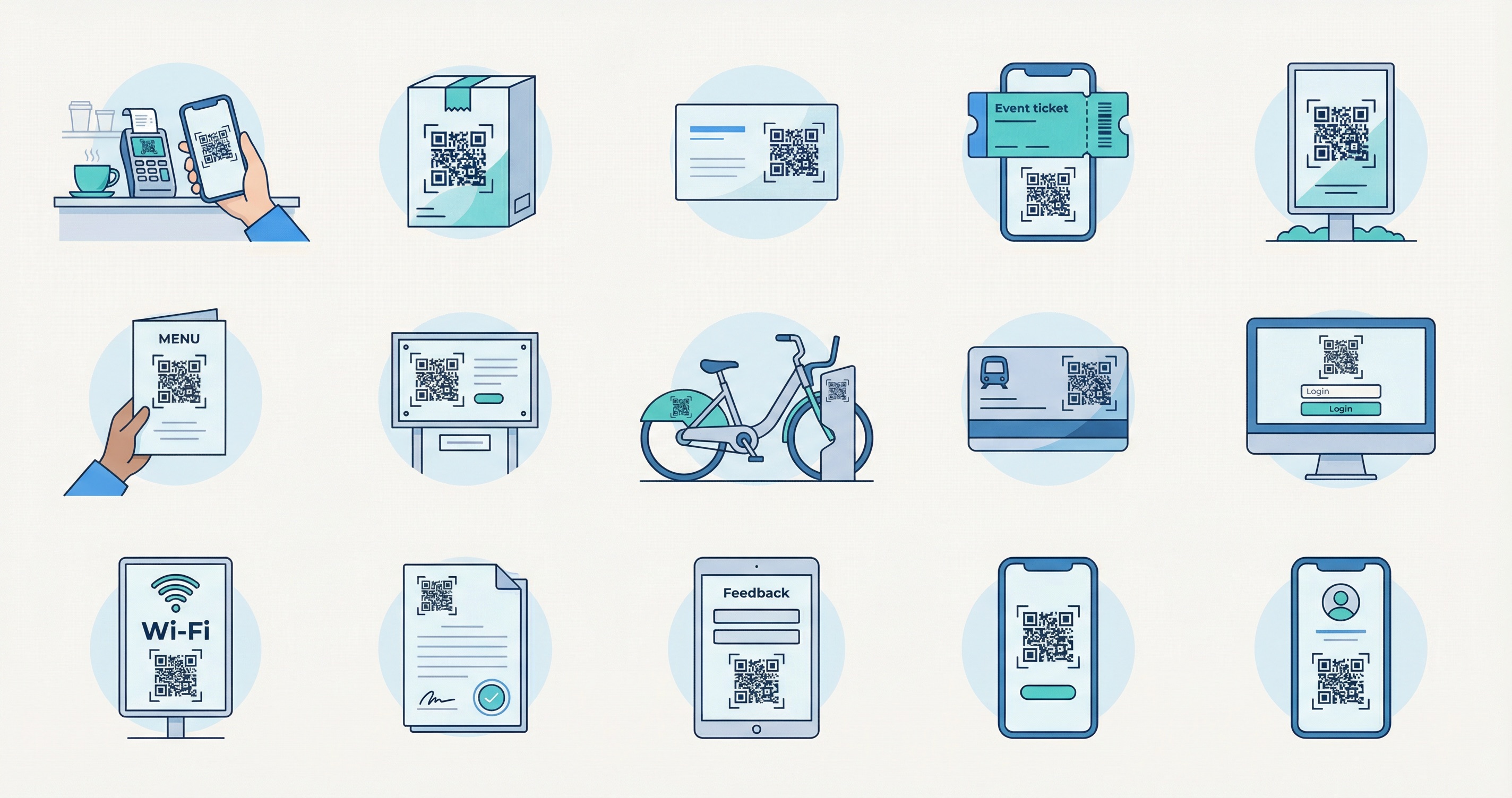
The global QR code market is valued at $13.04 billion in 2025 and is growing at 17% annually — and it is not slowing down. According to QR Code Chimp, over 2.9 billion people are expected to use QR codes in some capacity by 2025, and marketing QR scans have surged 323% between 2021 and 2024. What was once a niche logistics tool is now a mainstream channel connecting physical touchpoints to digital experiences.
Whether you run a restaurant, a retail brand, a professional services firm, or an enterprise with a global supply chain, there is a QR code application built for your needs. In this guide, we break down the 15 most practical QR code uses for businesses in 2026 — with real-world examples, current data, and actionable tips to start implementing each one today. If you want the technical setup first, see our complete guide on how to create a QR code.
QR codes spent a decade in obscurity before the pandemic fast-tracked adoption by years. Today, the infrastructure is permanently in place: every iPhone since iOS 11 and every modern Android device can scan a QR code natively from the camera app — no third-party app required. That single shift removed the biggest barrier to mass adoption.
The numbers reflect this reality. Statista projects that 99.5 million Americans will scan a QR code in 2025 — a 240% increase from 2020. Globally, 84% of smartphone users have scanned a QR code at least once, and 44.6% scan at least once per month. For businesses, this means QR codes are now a reliable channel with near-universal reach.
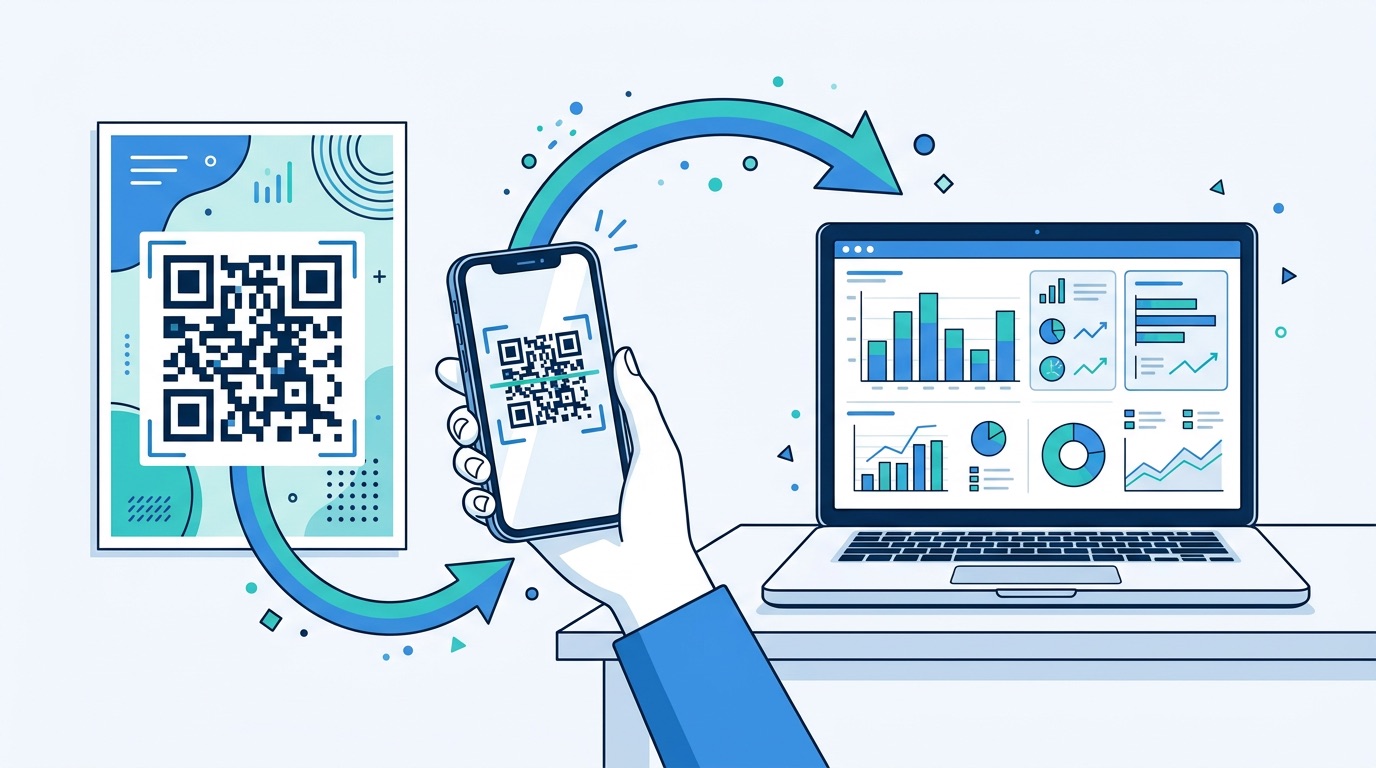
The most important shift in 2026 is the move from static to dynamic QR codes. Dynamic codes let you update the destination URL at any time without reprinting, and they unlock real-time scan analytics — how many scans, when, where, and on what device. That data turns every QR code into a measurable marketing asset. With that context, here are the 15 most impactful ways businesses are using QR codes right now.
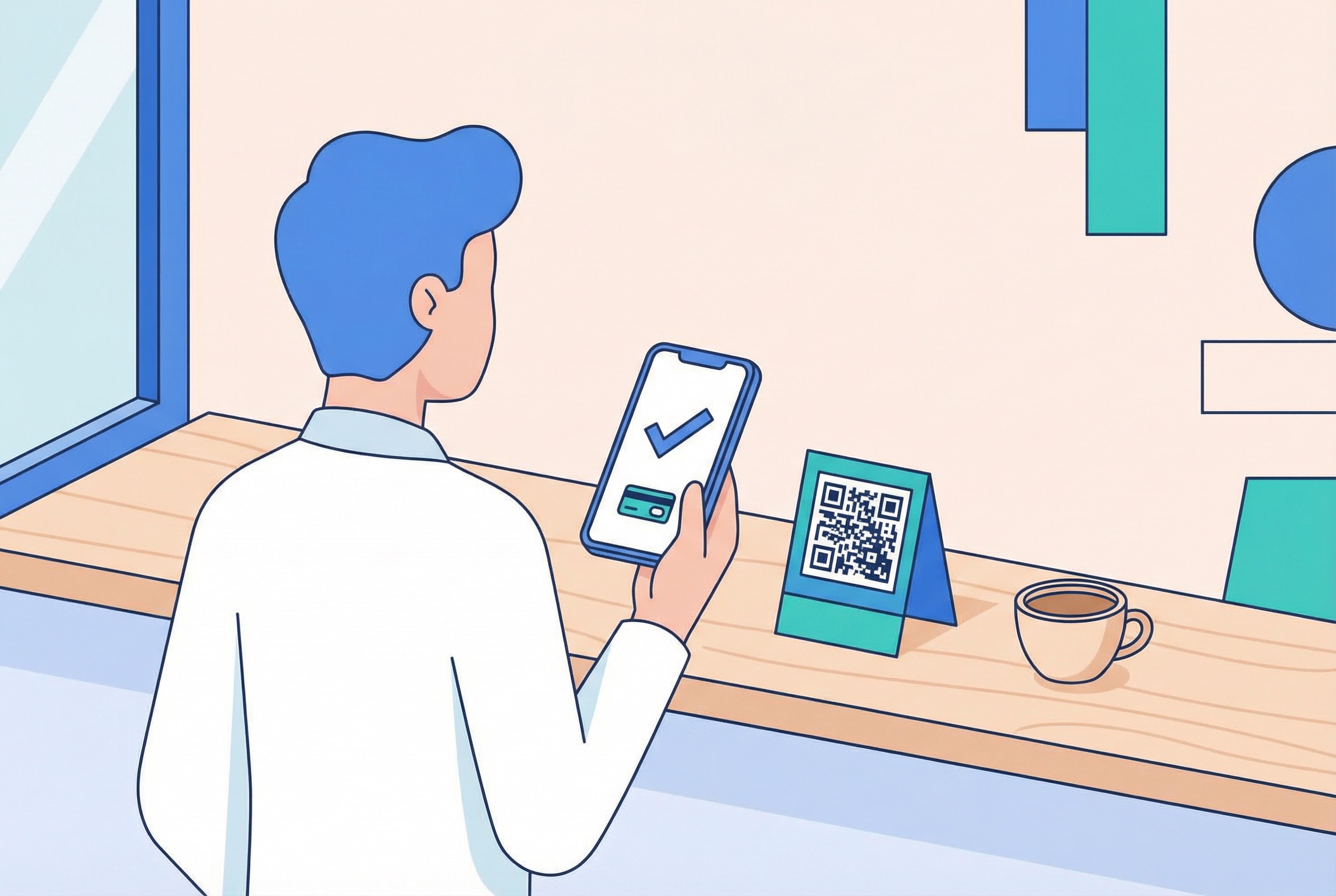
The payment and commerce space has seen the most explosive QR adoption of any category. With 2.2 billion people globally now using QR codes for payments — representing 29% of all mobile phone users — scan-to-pay is no longer a novelty: it is infrastructure.
QR code payment transactions reached $5.4 trillion globally in 2025, with projections to exceed $8 trillion by 2029, according to Juniper Research. While Asia Pacific leads (China processes over $5.5 trillion in QR transactions annually), Western adoption is accelerating fast. PayPal, Venmo, Square, and virtually every major payment processor now support QR-based checkout.
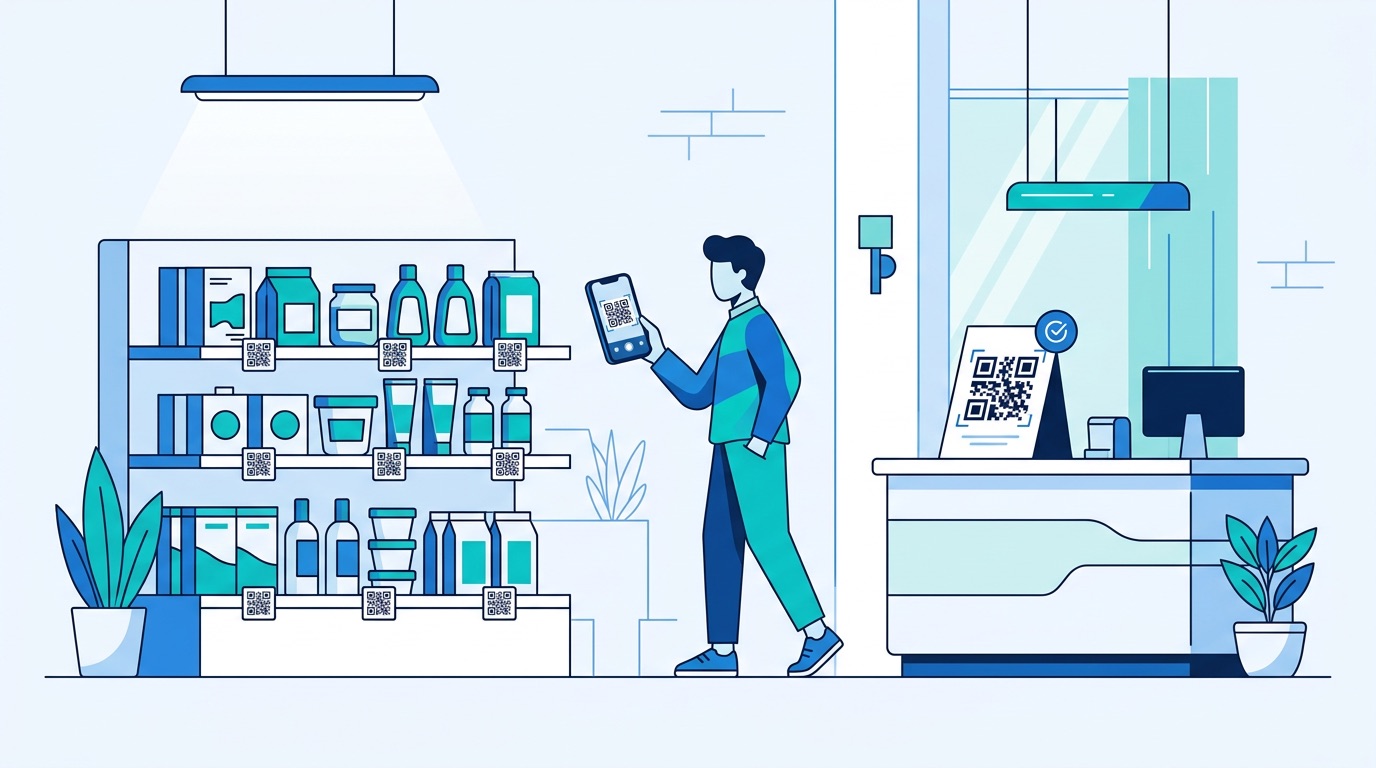
For businesses, the case is straightforward: QR payments reduce hardware costs (no card terminal required), speed up checkout, and work internationally without currency conversion friction. A merchant in a market stall and an enterprise retailer are both printing the same type of code. See how QR codes transform the retail experience beyond just payments.
Loyalty programs built around QR codes are replacing plastic loyalty cards — and customers prefer it. Instead of managing a wallet full of stamp cards, shoppers simply scan a code at checkout to log points, redeem rewards, or register for a program. For businesses, the benefit is two-fold: higher sign-up rates (scanning is frictionless) and richer data on customer behaviour linked to a real identity.
QR-based loyalty programs are particularly effective in restaurants, coffee shops, and retail environments where repeat visits are the business model. You can print the code on receipts, at the point of sale, or on branded merchandise — and because it is a dynamic code, you can update the destination URL or swap out offers without reprinting a single item.
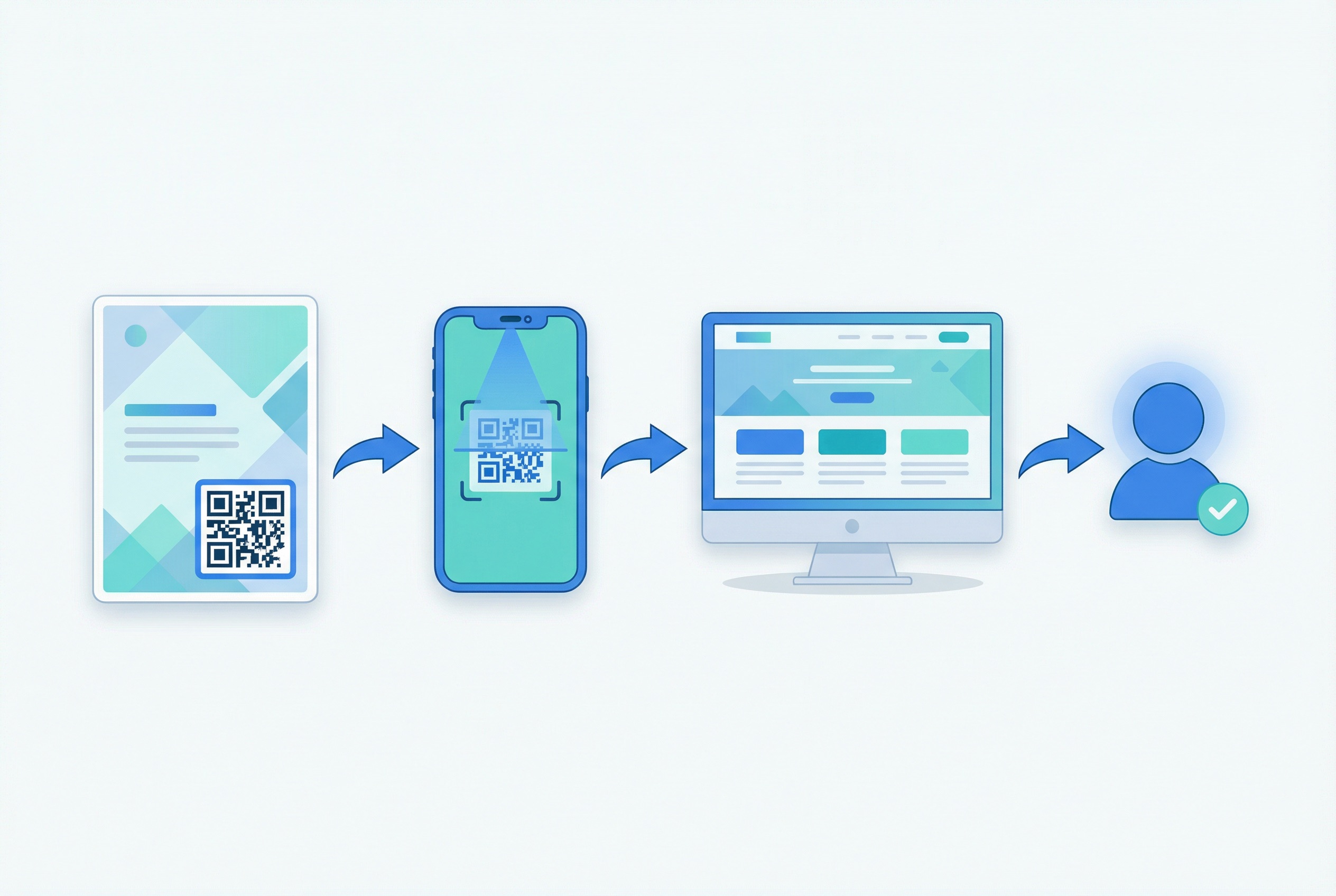
With 93% of marketers increasing QR code usage over the past 12 months and dynamic codes delivering 37% average click-through rates — far above the 2-5% benchmark for traditional digital ads — QR codes have become a core marketing channel. Here are three of the most effective applications.
QR codes create a direct, low-friction path from a physical touchpoint to a lead capture form. A prospect sees your ad on a poster, in a magazine, or at a trade show booth, scans the code, and lands on a landing page pre-populated with context about where they came from. The scan itself tells you which placement or campaign drove the action — data that traditional print advertising cannot provide.
Common lead gen applications include: scanning to download a gated white paper, scanning to register for a webinar, scanning to request a quote, or scanning to enter a competition. Pair the code with a URL QR code pointing to a tracked landing page and you have a fully measurable funnel from physical to digital. For a complete strategy, see our guide on how to use QR codes for lead generation.
Social media QR codes let customers follow your brand with a single scan — no username search, no misspelling, no friction. Place a social media QR code on your packaging, receipts, business cards, event banners, or shop window and convert every physical interaction into a digital follower.
You can create a single code that routes to a social media landing page showing all your profiles, or create separate codes for individual platforms depending on your campaign goals. The key is coupling the code with a clear call-to-action: "Follow us for exclusive deals" outperforms a bare QR code every time. For a full tactical breakdown, read our post on 5 ways QR codes can take social media marketing to the next level.
Billboards, posters, magazine spreads, and flyers are one-dimensional by nature — until you attach a QR code. A billboard QR code can route passersby to an augmented reality experience, a product video, an m-commerce store, or a limited-time offer. The physical ad becomes a gateway to a fully interactive digital journey.
Critically, dynamic QR codes let you track every scan from that billboard or poster campaign in real time on your analytics dashboard — something traditional OOH advertising could never offer. You can A/B test different landing pages behind the same printed code, adjust the destination mid-campaign, and calculate MROI with precision. Use Supercode's QR code tracking and analytics to close the loop between physical and digital performance data.
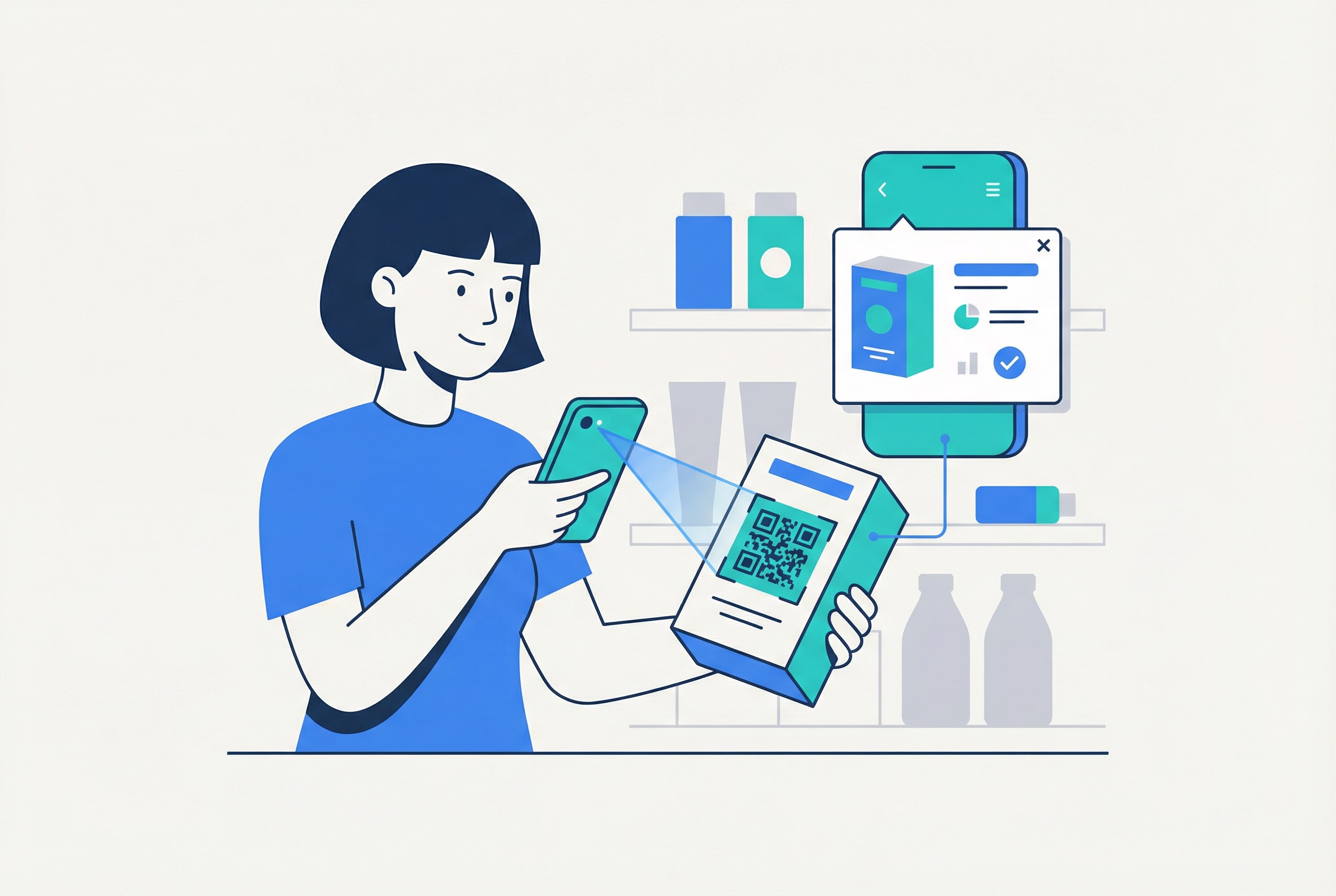
Product packaging is one of the highest-ROI placements for QR codes because every unit sold puts the code directly into a customer's hands. According to Bitly's QR Code Statistics report, 46% of marketers deploy QR codes on product packaging — making it the second most common channel after email.
Printing a QR code on product packaging or labels lets you share far more information than a label has room for — ingredients, certifications, usage guides, video tutorials, warranty registration, and comparison tools — all accessible with a single scan. This is especially powerful in regulated categories like food, cosmetics, and pharmaceuticals, where transparency drives purchasing decisions.
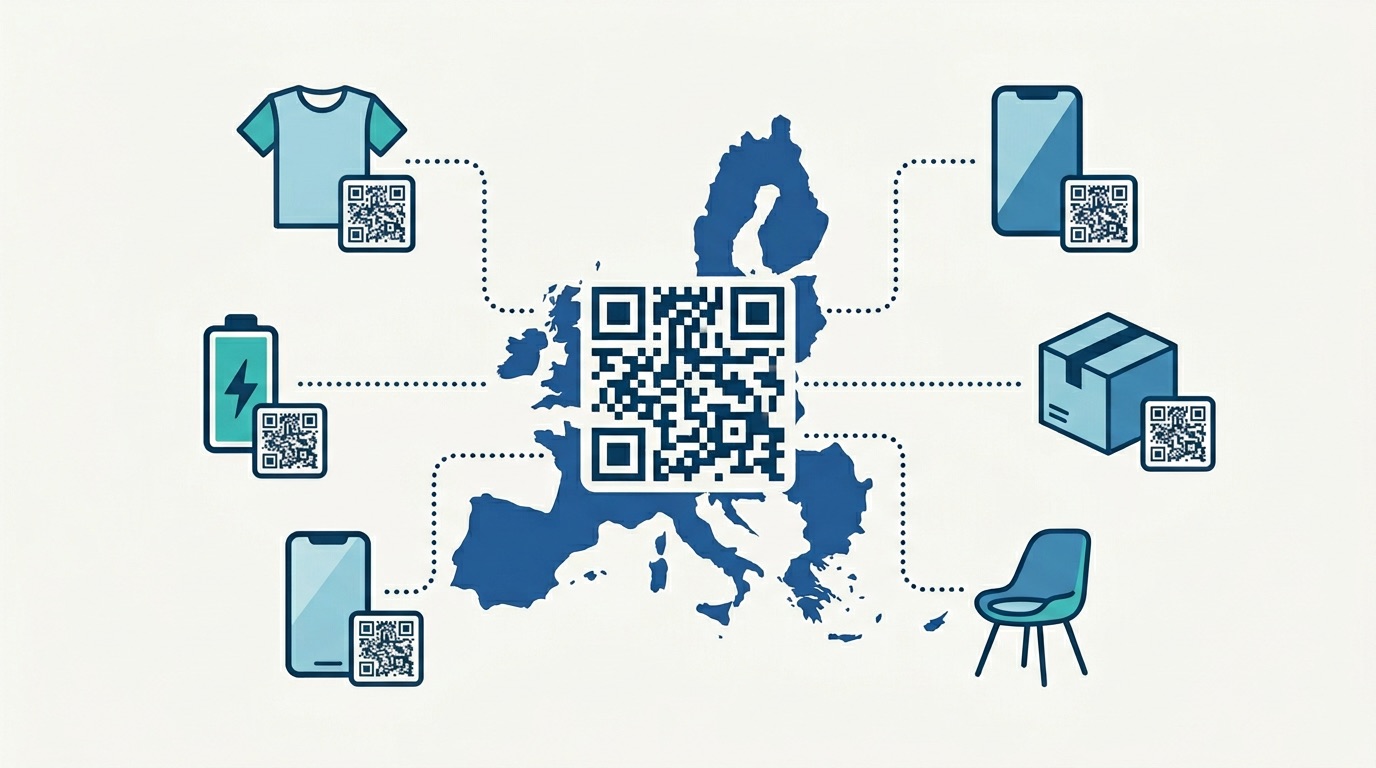
The EU's Digital Product Passport regulation, rolling out progressively from 2026, will make QR codes on products a legal requirement for many categories. Businesses that build the habit now will be ahead of compliance requirements while simultaneously building consumer trust. QR codes on food packaging are particularly effective — consumers increasingly want to know exactly what they are eating, and a QR code is the most efficient way to deliver that information at the moment of decision.
For luxury brands, pharmaceutical companies, and any business with complex supply chains, QR codes provide an authenticated, scannable trail from manufacturer to end consumer. Each unit can carry a unique QR code that records its journey: origin, production date, handling conditions, and distribution path. This deters counterfeiting, verifies authenticity, and provides regulators and consumers with transparent chain-of-custody records.
This is especially relevant for luxury goods brands where authentication is a core brand promise. A customer scanning the QR code on a luxury item can receive an instant verification certificate along with product story content — turning a security feature into a brand experience. For high-volume operations, bulk QR code generation makes it practical to assign unique codes at scale.
App store QR codes create the shortest possible path from awareness to install. Instead of typing a long app store URL or searching by name, a customer scans the code and lands directly on the app listing — or, with a smart redirect, directly on the correct store for their device (App Store for iOS, Google Play for Android).
Place app download QR codes on product packaging, in-store displays, website banners, and print collateral. This channel performs particularly well at physical events where you want attendees to install your app on the spot. For a complete playbook, read our guide on how to boost app downloads with QR codes.
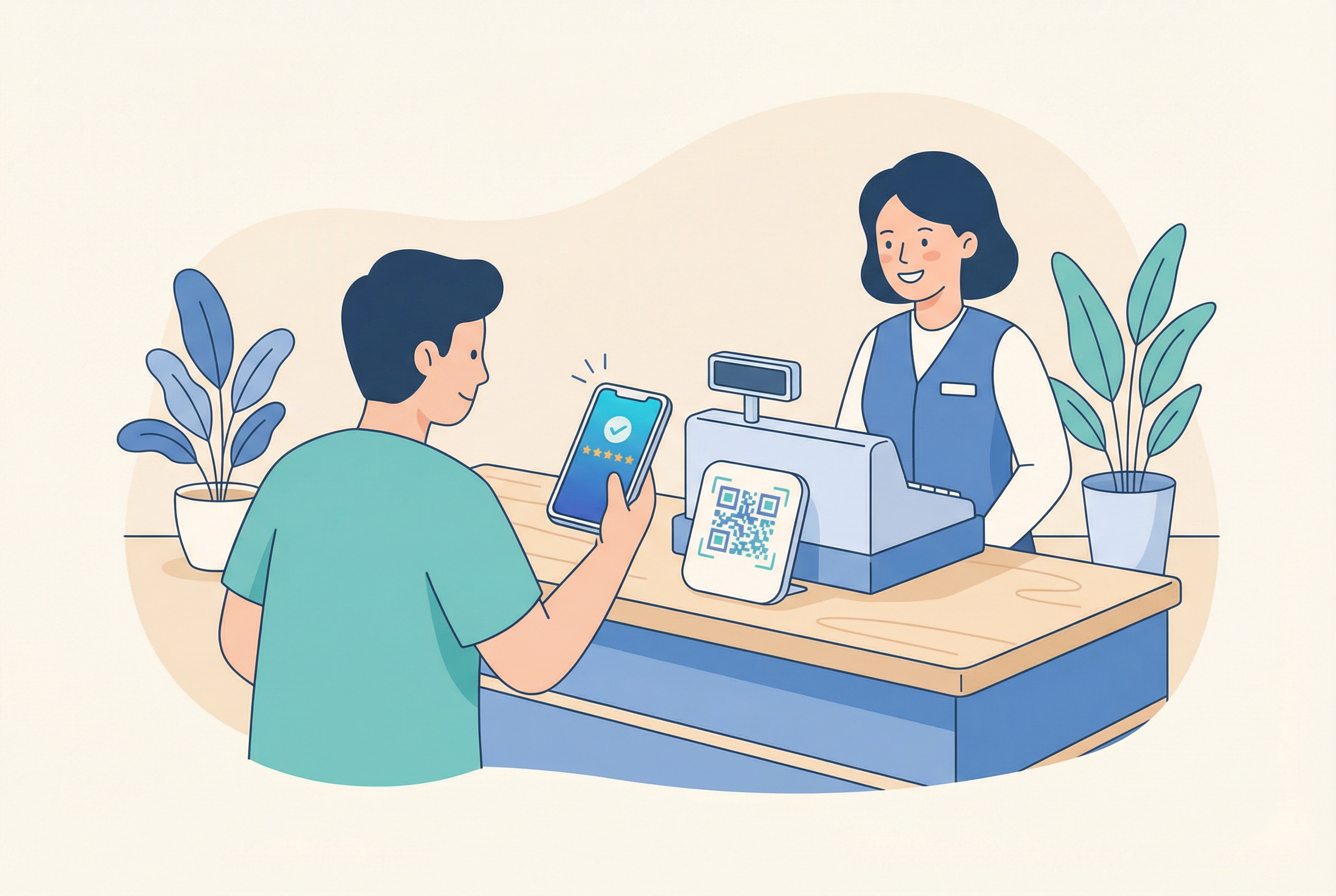
Customer experience is increasingly the battleground for business differentiation. QR codes enable frictionless interactions that meet customers in the moment — at the point of purchase, on the premises, or at the exact second a question arises.
Feedback collected immediately after an experience is exponentially more accurate and actionable than feedback collected days later via email survey. A feedback QR code on a receipt, table card, or shop exit lets customers rate their experience, leave a comment, and optionally share their contact details — all in under 60 seconds on their own device.
According to a SuperOffice survey, 86% of customers are willing to pay more for a great customer experience. Real-time feedback gives you the data to deliver that experience consistently. Negative feedback captured privately is far more valuable than a public one-star review, and a contactless QR-based system removes the awkwardness of asking face-to-face. Place the code prominently at your shop entrance or exit to maximise capture rates.
WiFi QR codes encode your network credentials so guests can connect instantly by scanning — no password typing, no staff assistance, no misread characters. The code embeds the SSID, security type, and password in a format that Android and iOS both support natively, triggering an automatic connection prompt on scan.
This is a small but high-impact touchpoint in hospitality, retail, and office environments. Guests appreciate the convenience, staff avoid constantly repeating the password, and you can rotate credentials periodically without worrying about resending them — just update the dynamic code's destination. Hotels, hospitality venues, and co-working spaces are among the heaviest users of this application.
Image QR codes and URL codes pointing to gallery pages let businesses create a rich visual experience from minimal physical space. A real estate agent can attach a QR code to a for-sale sign and route interested buyers to a full virtual tour and photo gallery. An artist can put a QR code on every framed piece in a gallery exhibition, linking to a purchasing page, artist biography, and portfolio. A fashion brand can turn a clothing tag into a styled lookbook.
The digital showroom concept works because it converts passive interest (seeing a product) into active engagement (exploring it) at the exact moment of peak attention — when the person is physically present. For businesses with a portfolio to show, this is one of the highest-conversion QR code use cases available. Combine it with a custom-designed QR code that matches your brand aesthetic for maximum impact.
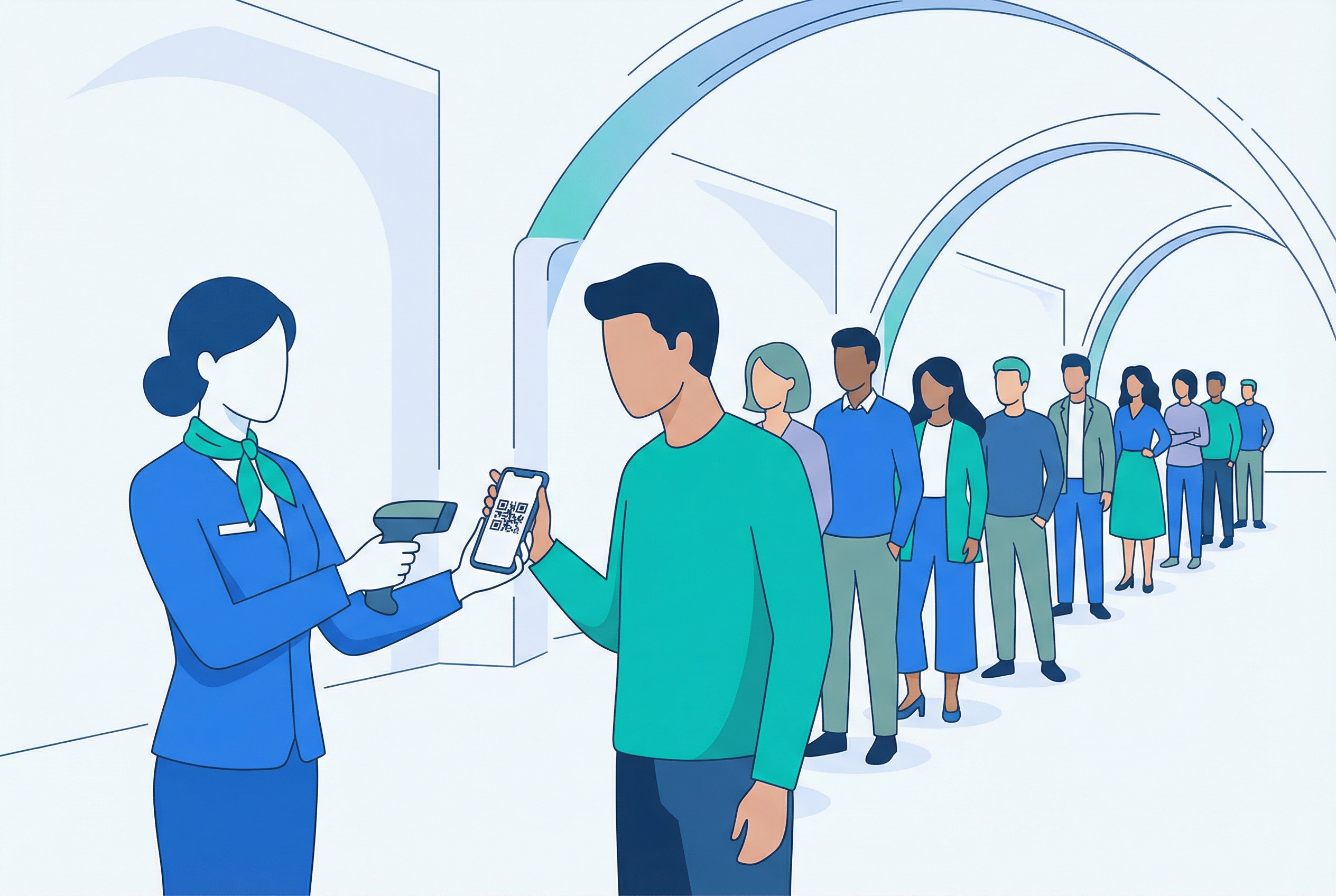
The events industry has become one of the largest adopters of QR technology. From music festivals to corporate conferences, QR codes streamline logistics, reduce queues, and create new sponsorship and engagement opportunities. The events and event management industry now relies on QR as a core operational tool.
QR code tickets stored on a smartphone have replaced paper tickets for most consumer events. Each ticket carries a unique, scannable code that validates entry, records attendance, and prevents duplication — all in a single scan. Airlines, stadiums, theatres, and conference organisers have standardised on this format because it eliminates print costs, reduces queue times, and provides real-time attendance data.
For event organisers running their own ticketing, bulk QR code generation makes it practical to issue thousands of unique codes via CSV, each linked to a specific attendee record. Beyond entry, QR codes on event materials — programmes, badge lanyards, session signage — can link to speaker bios, session recordings, networking apps, or post-event surveys. This extends engagement well beyond the physical event.
Educational institutions are finding creative and practical applications for QR codes across the campus experience. QR codes in education are used for contactless attendance check-in (students scan in rather than calling roll), linking physical textbook pages to supplementary digital content, accessing assignment briefs, navigating campus wayfinding, and connecting library resources to digital catalogues.
Campus dining halls and cafeterias are using QR codes to display nutritional information and allergen data, empowering students to make informed choices quickly. Student ID cards embedded with QR codes simplify access control, printing, and borrowing systems. The low cost of implementation and broad applicability make QR codes one of the most versatile tools in the EdTech toolkit.
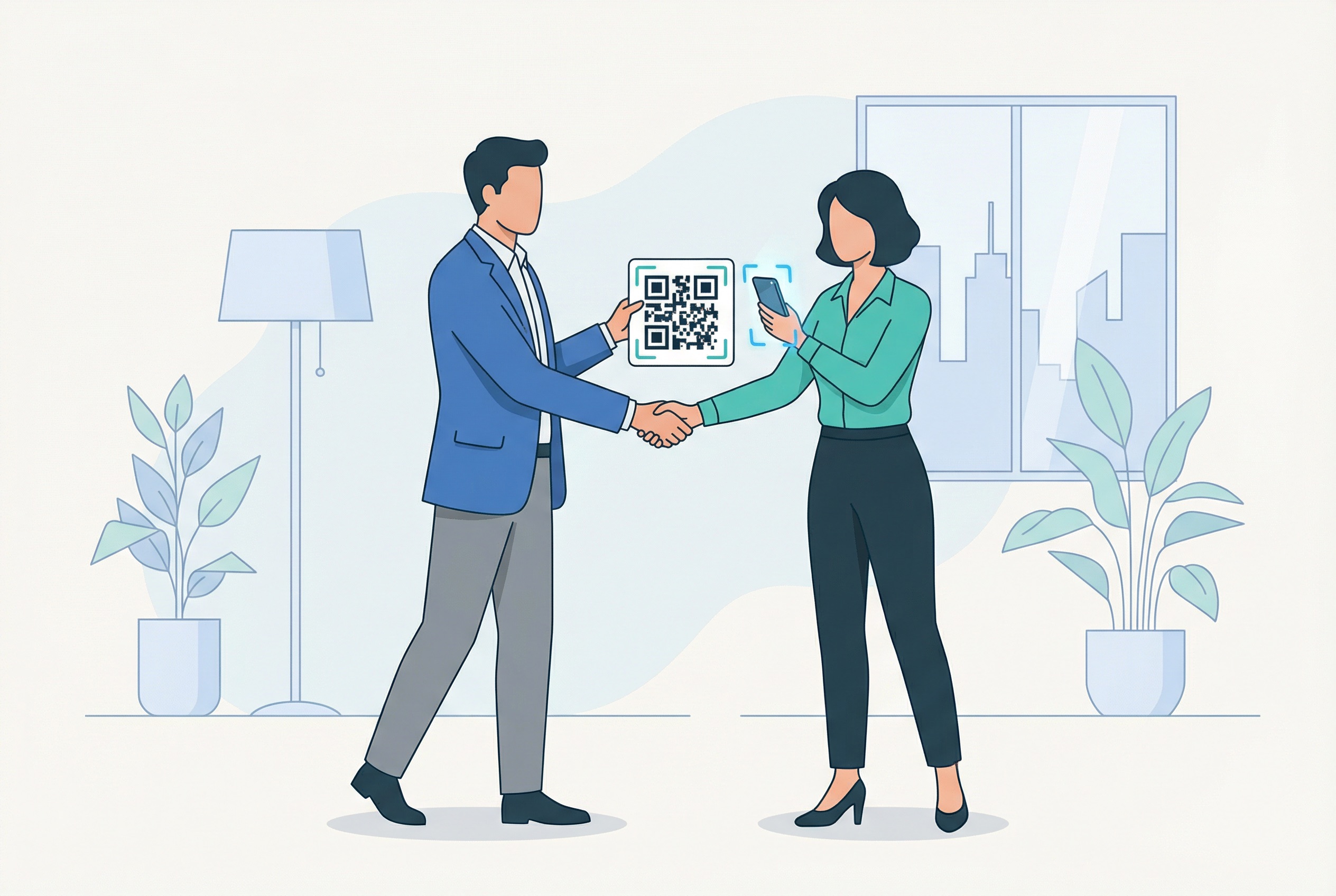
Networking is about making a memorable, frictionless connection. QR codes remove the friction — no mistyped phone numbers, no illegible handwriting, no forgotten cards. They also make every networking interaction trackable and the contact data instantly actionable.
A vCard QR code encodes your full contact profile — name, title, company, phone, email, website, and social links — in a format that phones can import directly to the contacts app with a single scan. No manual data entry, no transcription errors, no lost business cards at the bottom of a bag.
The modern version of this is a QR code stored on your phone's lock screen or homescreen: at a conference or meeting, you simply show your screen and the other person scans. It is paperless, always current (update your profile any time with a dynamic code), and more memorable than a standard business card. For a complete look at the professional use case, see our guide on why QR code business cards are a must. You can also design a fully custom-branded QR code that reflects your visual identity and stands out.
Every physical surface your business owns is a potential gateway to your website. URL QR codes on packaging, signage, brochures, vehicle wraps, fleet vehicles, and shop windows can all drive incremental web traffic from audiences who would not otherwise find you online.
What makes this use case particularly powerful is the analytics layer. A dynamic URL QR code tracked through Supercode's dashboard tells you exactly which physical placement drove which scans — city, device, time of day — so you can optimise your offline-to-online strategy with real data. Unlike a URL printed in a magazine, a QR code turns every physical touchpoint into a measurable digital channel. Connect QR-driven traffic with UTM parameters in your analytics platform and you have a complete attribution picture from print to conversion.
With the right platform, setting up any of the 15 applications above takes minutes, not days. Supercode's QR code generator supports all major QR code types — URL, vCard, feedback, social media, WiFi, PDF, image, SMS, email, and bulk generation — with a built-in design editor and real-time analytics dashboard.
Explore the full feature set and pricing plans — or jump straight into creating your first code on the Supercode platform.
Payments and contactless menu access are the most widespread consumer-facing uses globally. In marketing contexts, QR codes are most commonly deployed on product packaging (46% of marketers), at events (43%), and in print advertising (40%), according to Bitly's QR Code Statistics report. For businesses, lead generation and loyalty programs represent the highest-ROI use cases.
Basic static QR codes are free to generate with most tools. However, dynamic QR codes — which allow you to edit the destination URL, track scans, and run analytics — are included on Supercode's free plan — with dynamic codes, design customisation, scan analytics, and bulk generation. For any business or marketing use case, a dynamic code is almost always the right choice.
You need a dynamic QR code. Unlike static codes (where the destination is baked into the code pattern), dynamic codes store a short redirect URL in the code that points to your actual destination. You can update that redirect at any time without changing the printed code. Supercode supports dynamic codes for all QR types. See our full guide on how to create a QR code for step-by-step instructions.
QR code adoption has reached mainstream scale. In the US alone, 99.5 million people are projected to scan a QR code in 2025 — up 240% from 2020. Globally, 84% of smartphone users have scanned at least one, and 44.6% scan at least once per month. Consumer motivation is driven primarily by exclusive content or deals (39%) and discount offers (33%).
QR codes are versatile enough to benefit virtually any industry, but adoption is highest in restaurants and hospitality (52% of US restaurants use QR menus), retail (product info and loyalty programs), events (ticketing and check-in), healthcare (patient registration and pharmaceutical tracing), and manufacturing (supply chain traceability). See the full range of industry applications on Supercode's use cases hub.
Yes — QR codes are highly effective in both contexts. B2C businesses use them for payments, loyalty, packaging, and in-store engagement. B2B businesses use them at trade shows for lead capture, on sales collateral for instant demo scheduling, on products for technical documentation access, and on business cards for professional networking. The use case determines the QR type and the destination, but the mechanism works identically across both audiences.
QR codes have graduated from a pandemic-era workaround to a permanent fixture of the business technology stack. With 2.9 billion global users, a $13 billion market growing at 17% annually, and dynamic codes delivering 37% click-through rates, the ROI case is clear. Whether your priority is increasing payments velocity, generating leads, improving customer experience, or driving website traffic, there is a QR code application built for it — and the barrier to entry has never been lower.
Supercode makes it easy to create, design, track, and manage every QR code in your business from one platform. From single dynamic codes to bulk campaigns with thousands of unique codes, Supercode scales with you.
Sign up free on Supercode and create your first QR code in minutes — no credit card required.