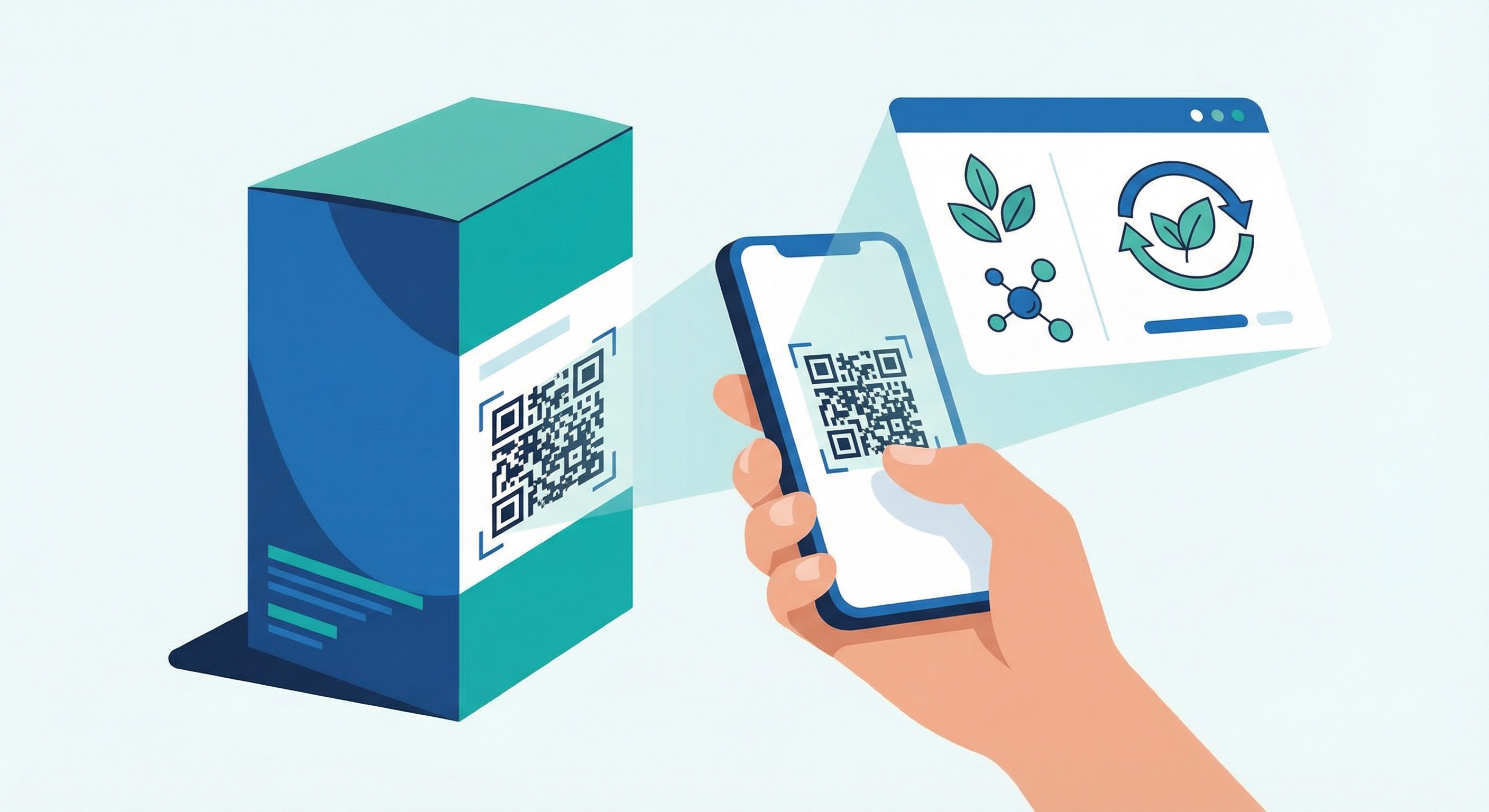

QR code usage on product packaging grew by 44% year-on-year in 2025, according to Statista's Global Smart Packaging Report — and the momentum is only accelerating. 60% of shoppers now scan QR codes for product information before they buy (NielsenIQ, 2025 Consumer Transparency & Tech Report), while the European Union's Digital Product Passport (DPP) regulation is set to make QR codes a compliance requirement on batteries, textiles, electronics, and more from 2026 onward.
For brands, this is no longer a nice-to-have feature — it is a strategic imperative. This guide covers everything you need to know about adding QR codes to product packaging: why it matters, how leading brands are doing it, the latest statistics, and step-by-step instructions for getting started with Supercode.
Today's consumers want to know what is in the products they buy — ingredients, sourcing, certifications, and environmental impact. A QR code on your packaging delivers that information instantly, without crowding the label. Brands using QR codes for ingredient transparency report a 17% higher purchase likelihood among sustainability-conscious shoppers (NielsenIQ, 2025). Retailers and food brands alike benefit from making that transparency effortless — one scan reveals everything a customer needs to make a confident decision.
The EU Digital Product Passport is the most significant packaging regulation in a generation. Under the Ecodesign for Sustainable Products Regulation (ESPR), products sold in the EU will be required to carry a QR code linking to a machine-readable digital record covering material composition, environmental impact, repair instructions, and supply chain traceability. The central DPP registry is expected to become operational by mid-2026, with mandatory compliance beginning with batteries and expanding to textiles, furniture, and electronics from 2027 onward. Brands in fashion, luxury, and healthcare should start building DPP-ready QR code infrastructure now. Learn how QR codes support sustainable marketing strategies.
Instruction manuals, warranty cards, multilingual leaflets, and promotional inserts add cost, weight, and paper waste to every shipment. A single PDF QR code printed on the box replaces all of it — and unlike a printed insert, it can be updated after the packaging is already in the market. Home repair and appliance brands using QR codes for instruction manuals report significant reductions in packaging material costs while improving the customer experience with video walkthroughs. This directly supports the sustainability commitments consumers increasingly expect from brands. Why eco-aware shoppers are embracing QR codes →
Every unboxing is an opportunity to convert a one-time buyer into a loyal customer. Brands using dynamic QR codes on packaging experience 3x higher repeat engagement rates than those using static alternatives (McKinsey & Company, 2025). A QR code linking to a subscription re-order page, a loyalty programme, or a personalised discount makes repeat purchase frictionless. Retail brands across FMCG, beauty, and food categories are already using packaging QR codes to reduce customer acquisition costs and increase lifetime value.
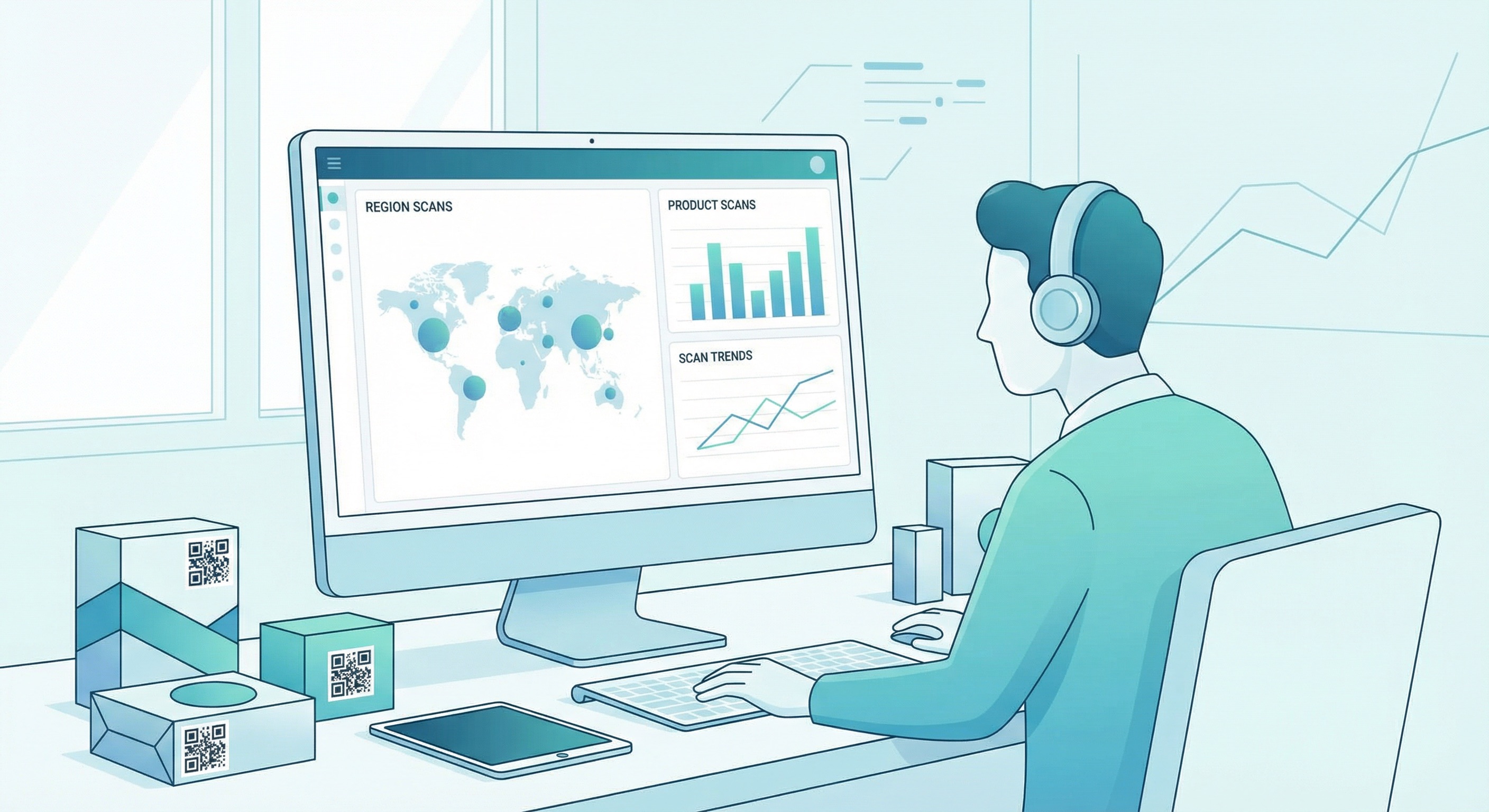
QR code analytics turn passive packaging into a live data channel. Every scan returns device type, location, time, and referral data — giving your marketing team insight into which products, regions, and campaigns are driving engagement. 58% of marketers now integrate QR packaging scan data into campaign reporting (Adobe Digital Experience Report, 2025). With dynamic QR codes, you can update the destination URL, run A/B tests, and redirect seasonal campaigns — all without changing the printed packaging. Learn more on the Supercode product page.
Counterfeit goods cost brands billions in lost revenue and erode consumer trust. A unique URL QR code on each product or batch — one that links to a brand-hosted verification page — gives consumers an instant way to confirm they have an authentic product. Luxury brands, pharmaceuticals, and beauty companies are increasingly embedding anti-counterfeit QR codes in their packaging as a first line of defence. Unlike printed security seals, a dynamic QR code can be invalidated the moment a genuine product has been registered, making reuse by counterfeiters difficult.
40% of consumers now expect personalised QR code experiences when they scan packaging (Deloitte Insights, 2025). With dynamic QR codes, a single printed code can surface different content depending on the time of year, the customer's location, or a promotional calendar — a summer recipe in July, a festive competition in December, a spring discount in March. QR code marketing campaigns built on dynamic codes let brands run always-on, rotating content without ever reprinting packaging.
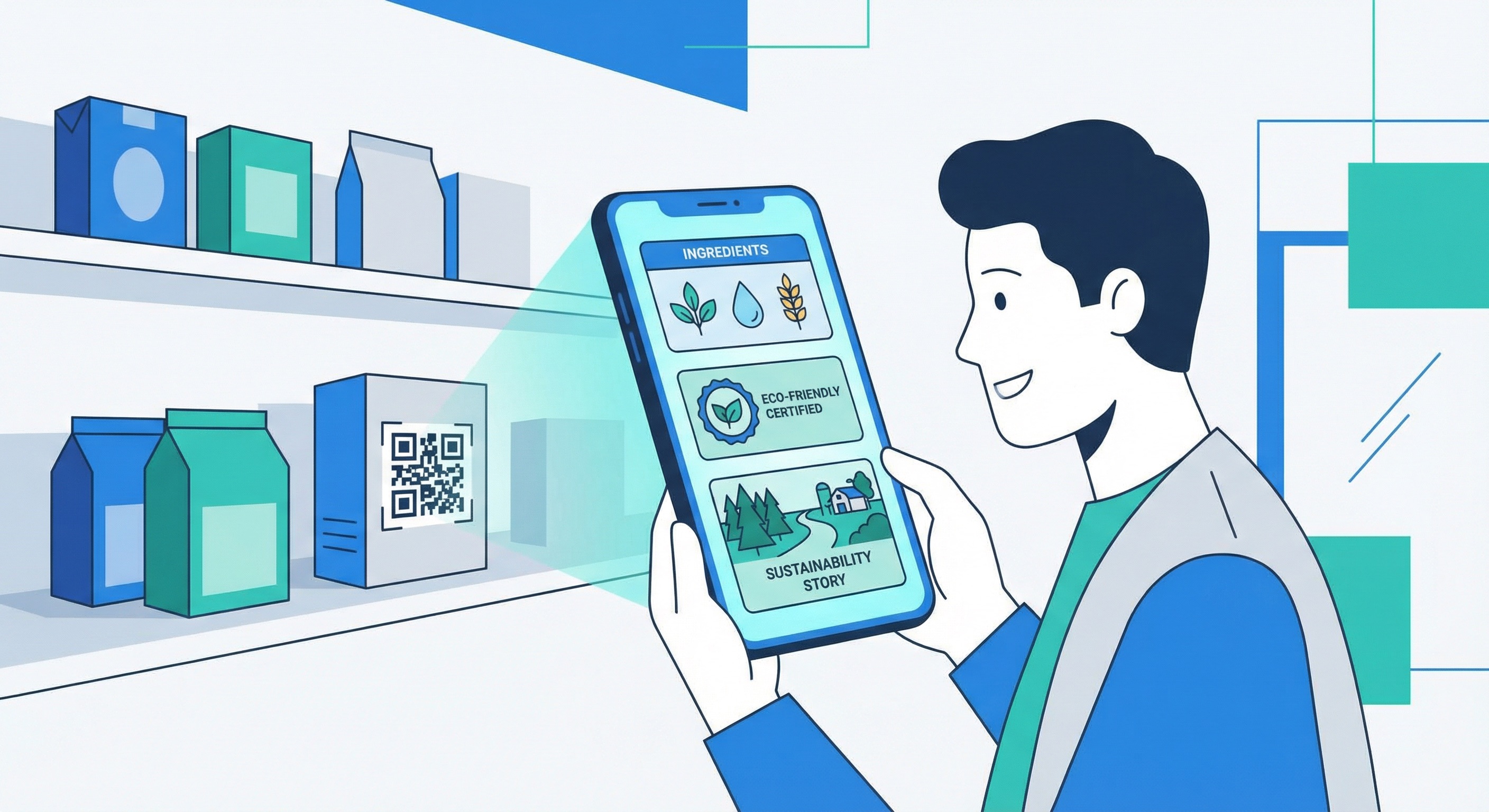
Health and beauty, food, and personal care brands use QR codes to host full ingredient lists, allergen warnings, nutritional data, and sourcing stories. Geodeo, a natural deodorant brand, placed QR codes on packaging after reformulating — allowing customers with sensitive skin to verify the full ingredient list before purchasing. This approach is especially powerful for food packaging brands where label space is limited and consumer scrutiny around ingredients is high.
Replacing paper manuals with PDF QR codes or video-linked URL QR codes eliminates printing costs, reduces box size, and improves the setup experience. EK Water Blocks replaced its boxed instruction booklets with QR codes linking to PDF guides and video walkthroughs — cutting packaging material significantly while improving customer satisfaction. The dynamic version of this approach means product videos can be updated without reprinting. This is particularly effective for DIY and home repair products, electronics, and appliances.
Gamification is one of the most engaging uses of packaging QR codes. A code on a coffee cup, cereal box, or snack bag can link to a prize draw, a points-collection scheme, or a brand loyalty programme. Small Batch Coffee offered home delivery subscription sign-ups via a QR code on its packaging — combining loyalty and re-order in a single scan. For retail and FMCG brands, this converts passive packaging into an active acquisition channel. Link it to a feedback QR code to capture post-purchase sentiment at the same time.
The best time to prompt re-purchase is when the product is nearly finished — which is precisely when the customer is looking at the packaging. A QR code linking to an m-commerce store, a subscription sign-up page, or an Amazon listing removes all friction from the re-order journey. Dynamic codes let you track exactly how many repeat purchases were driven by packaging scans, giving marketing teams clear ROI visibility. See how QR codes increase sales →
Consumers increasingly expect brands to prove their sustainability credentials — not just print them on the box. A QR code links to a rich digital experience: factory tours, carbon footprint data, Fairtrade certifications, and recycling guidance. Sustainable marketing with QR codes is increasingly a brand differentiator, particularly in fashion, food, and luxury goods. With the EU DPP requiring verified sustainability data from 2026, QR-linked sustainability content is becoming a compliance requirement, not just a marketing advantage.
A single physical packaging design can serve dozens of markets when QR codes replace language-specific printed inserts. Linking to a language-detection landing page means the same code serves German, French, Japanese, and English speakers — all from one print run. This dramatically reduces the complexity of international packaging operations. Bulk QR code generation makes it easy to create region-specific codes at scale if you prefer geotargeted experiences over dynamic language detection.
Tangle Teezer uses QR codes on packaging to verify product authenticity — redirecting consumers to a brand page confirming the item is genuine and UK-manufactured. Wine brands, luxury cosmetics, and pharmaceutical companies are implementing similar strategies. When combined with serialised bulk QR codes (one unique code per unit), each scan registers that specific product and flags if the same code is scanned more than once — a strong signal of counterfeiting.
The data tells a clear story: packaging is now one of the most important QR code channels, and consumer expectations are rising fast.
These figures confirm that packaging QR codes have moved well beyond novelty. For brand managers, these codes are now a primary channel for QR code marketing, first-party data collection, and regulatory compliance.
Getting started takes minutes. Here is a step-by-step guide to creating production-ready packaging QR codes with Supercode.
The right type depends on what you want the scan to do. For product packaging, the most commonly used types are:
Log into Supercode, select your QR code type, and enter the destination URL or content. For packaging, we strongly recommend creating a dynamic QR code — this means you can change the destination after packaging has been printed without needing a new code. See our dynamic vs. static QR codes guide for a full comparison.
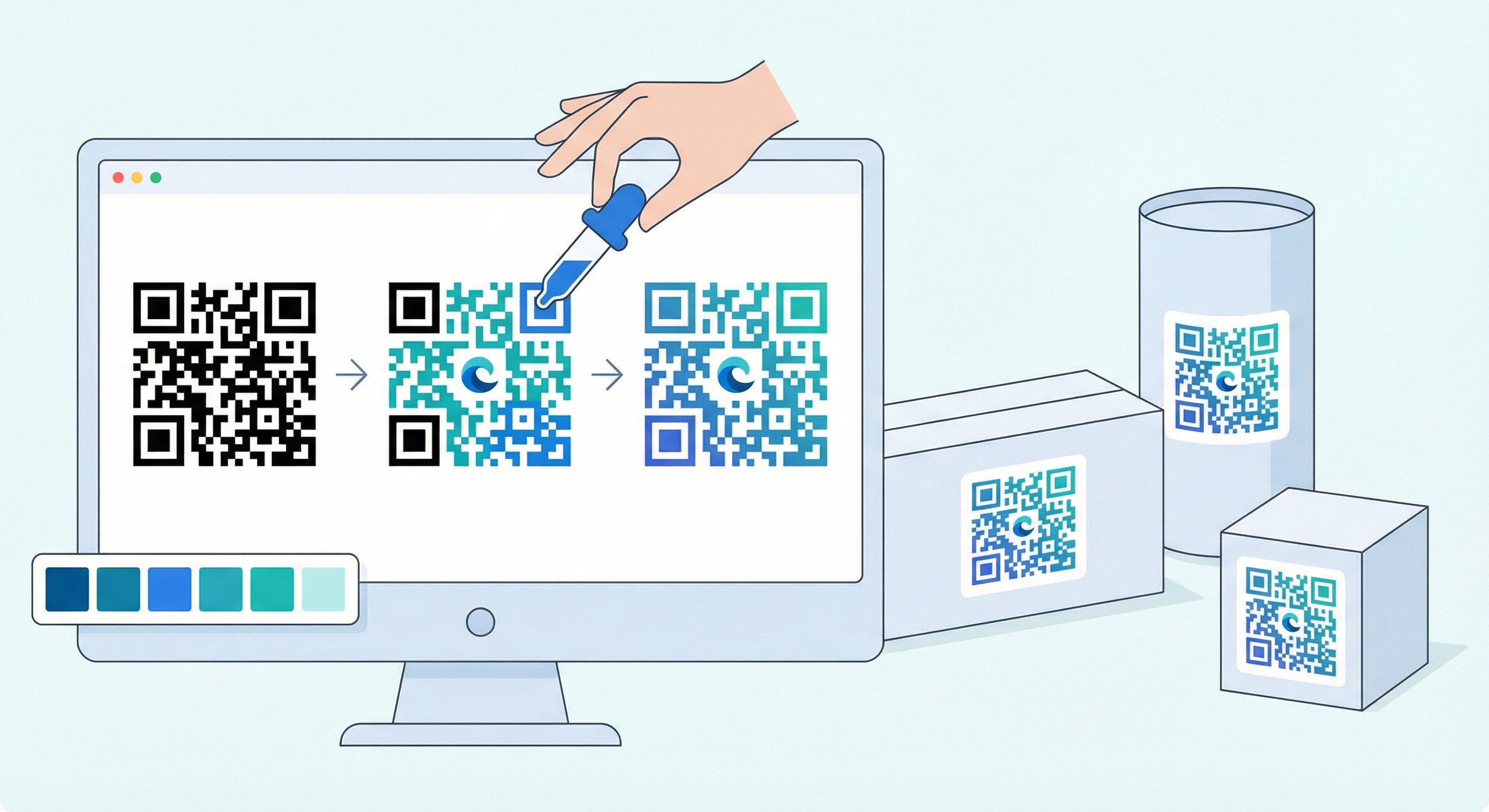
Supercode's design tools let you add your brand logo, apply your colour palette, and choose from multiple pattern and corner styles — all while preserving scannability. Use a minimum size of 2cm × 2cm on packaging, and always include a quiet zone of at least 4 modules on all sides. For detailed sizing and print specifications, see the complete QR code printing guide. Custom-designed QR codes achieve 30–45% higher scan rates than plain black-and-white codes.
Use Supercode's folder system to organise codes by product category, SKU, or campaign. Share folders with your packaging agency or print team. This is especially important for brands managing dozens of SKUs across multiple packaging formats — the folder system prevents codes from getting lost and ensures the right code goes on the right product.
Always test the final QR code on a printed proof — not just a screen preview. Scan under multiple lighting conditions, at the expected scan distance, and on the actual packaging material. Glossy, metallic, or transparent substrates can reduce contrast. If testing reveals issues, adjust the error correction level to Level H for maximum resilience. Visit the 10 QR code mistakes to avoid for a pre-print checklist.
Once your packaging is live, monitor scan performance from the Supercode dashboard. Key metrics to track: total scans, unique scans, device type, geographic distribution, and scan-over-time trends. For multi-SKU campaigns, use UTM parameters to segment scan data by product line. Read the QR code tracking and analytics guide for a full walkthrough.
Static QR codes cannot be updated after printing. If your website URL changes, your campaign ends, or your product is reformulated, a static code becomes useless. Dynamic codes — which redirect through a short URL that you control — mean you can change the destination, run seasonal campaigns, and track analytics without ever reprinting. For packaging that may sit in a warehouse or retail shelf for 12–24 months, dynamic codes are not optional — they are essential. See our dynamic vs. static QR code guide for a full breakdown.
Minimum recommended size is 2cm × 2cm (approximately 0.8 × 0.8 inches), assuming a scan distance of 20–30cm. For large format packaging or outer cartons, scale up proportionally. On metallic, embossed, or heavily textured packaging, increase the quiet zone and test thoroughly. The QR code printing guide covers sizing, DPI, and substrate recommendations in detail.
A QR code without context is invisible. Always print a short CTA next to the code: "Scan for ingredients", "Scan for your exclusive offer", "Scan to verify authenticity". Research consistently shows that QR codes with explanatory CTAs achieve significantly higher scan rates. The CTA also sets expectations — a consumer who knows what they will find is more likely to act on it. See our QR code design guide for CTA placement best practices.
If you sell physical products in the EU, start building your DPP infrastructure now. The central registry becomes operational in mid-2026, and mandatory compliance begins with batteries and selected electronics in 2027. Your packaging QR code infrastructure should be built on dynamic codes from the outset — so that when the DPP system requires specific data formats and verification, you can update the destination without a packaging reprint. Read about the QR code regulatory trends shaping 2026 →
Your packaging QR code is part of your brand experience. Apply your brand colours, add your logo, and ensure the code sits within a clean quiet zone that does not compete with other packaging design elements. Supercode's design tools let you create codes that look intentional — not like an afterthought — which improves both scan rates and brand perception. Avoid placing codes on folded edges, curved surfaces, or printed over textured areas.
Use different dynamic codes on different product variants to test which landing page, content type, or offer drives the highest engagement. Compare ingredient pages vs. video content vs. competition entry forms. Supercode's analytics dashboard gives you the data to optimise continuously — turning your packaging into a live marketing experiment rather than a static asset. Explore the full materials use case library for more ideas on QR code placements.
The minimum recommended size is 2cm × 2cm (0.8 × 0.8 inches) for a scan distance of around 20–30cm. For larger packaging or outer cartons scanned from further away, scale proportionally. Always include a quiet zone of at least 4 modules around all sides of the code. The QR code printing guide includes a full sizing table by substrate and scan distance.
Yes — if you use a dynamic QR code. Dynamic codes redirect through a short URL, so you can change the destination page at any time without changing the printed code itself. This makes them essential for packaging, where reprinting is expensive. Static QR codes are permanently fixed and cannot be updated after printing.
No. Modern smartphones (iOS 11+ and most Android devices from 2018 onward) can scan QR codes directly through the native camera app — no third-party app required. Simply point the camera at the code and tap the notification that appears. This frictionless experience is a key reason why QR code scanning on packaging has grown by 44% year-on-year (Statista 2025).
Almost anything. Common destinations include: ingredient and allergen information, instruction manuals and setup videos, sustainability and supply chain stories, contest and loyalty programme pages, re-order and subscription links, product authentication pages, customer support contacts, and social media profiles. With a dynamic QR code, the destination can change over time — so the same printed code can link to a seasonal promotion in summer and a loyalty programme in autumn.
For certain product categories, yes. The EU's Digital Product Passport (DPP) regulation, part of the Ecodesign for Sustainable Products Regulation (ESPR), requires products sold in the EU to carry a QR code (or equivalent) linking to verified product lifecycle data. The central DPP registry becomes operational in mid-2026, with mandatory compliance starting with batteries and electronics. Textiles, furniture, and other categories follow from 2027–2028. Brands selling in the EU should begin building QR-based packaging infrastructure now. Read about the EU DPP and conscious consumers →
Dynamic QR codes automatically capture scan analytics — including total scans, unique scans, device type, operating system, country, and time of day — in your Supercode dashboard. For deeper attribution, add UTM parameters to your destination URL so scan data flows into Google Analytics alongside your other marketing channels. The complete QR code tracking guide covers UTM setup, GA4 integration, and campaign reporting in detail.
Whether you're preparing for EU Digital Product Passport compliance, launching a connected packaging campaign, or simply replacing printed inserts with dynamic digital content, Supercode gives you the tools to create, design, and track packaging QR codes at any scale. With dynamic codes, full pricing plan flexibility, built-in analytics, and bulk generation for large SKU catalogues, Supercode is built for brands serious about packaging performance in 2026 and beyond.
Head to our FAQs section or reach out to us directly on info@supercode.com
Sign up for free

