

The global personal luxury goods market reached €358 billion in 2025, yet it faces a persistent threat: trade in counterfeit goods is worth approximately $467 billion annually — over 2% of all global imports — with leather handbags, fine watches, and premium footwear among the most targeted categories of all. In 2026, the world's leading luxury houses are deploying QR codes not merely as marketing tools but as essential infrastructure for product authentication, consumer engagement, and regulatory compliance. Whether applied to a bespoke swing tag, a couture invitation, a boutique window display, or a seasonal lookbook, a well-designed QR code allows a luxury brand to connect every physical product to a rich, brand-controlled digital experience — securely, elegantly, and measurably.
This guide explores exactly how QR codes are transforming the luxury industry in 2026: the specific applications that drive results, the statistics that make the business case, and how to create and deploy premium QR codes with Supercode. For a broader view of how QR codes are used across industries, visit our industry use cases hub.
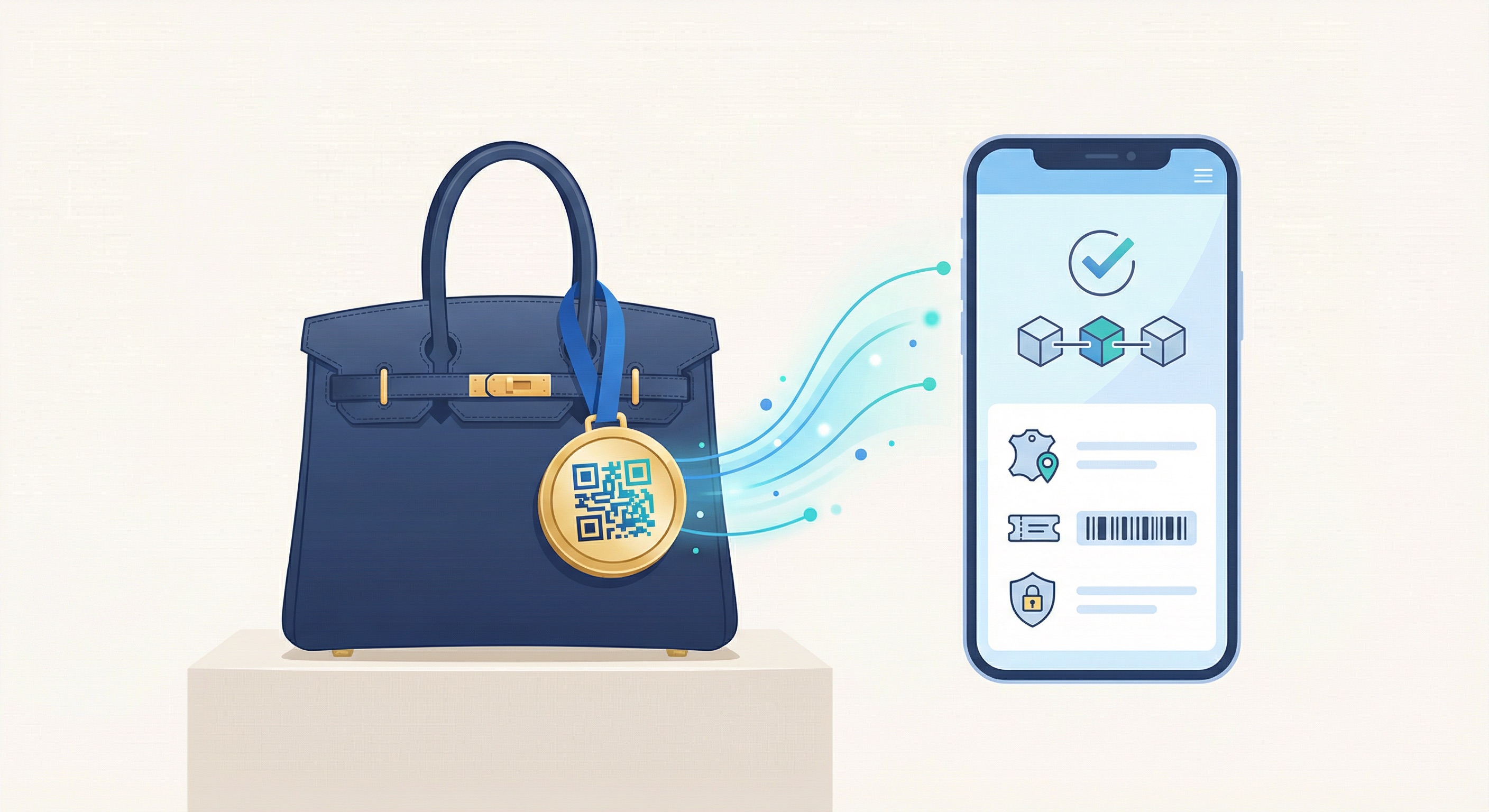
Every luxury item deserves a unique digital identity. A dynamic QR code embedded in a product tag, certificate of authenticity, or inner lining links directly to a brand-controlled verification page — allowing customers to confirm authenticity instantly, whether purchasing in a boutique, an airport duty-free, or a secondary resale marketplace. According to a 2025 BCG consumer survey, 70% of consumers value authentication and verification as the most important features of a Digital Product Passport when purchasing luxury goods, and 67% say the same when reselling. As the secondhand luxury market is growing three times faster than the firsthand market and is projected to reach $360 billion by 2030, QR-enabled authentication is no longer optional — it is a competitive necessity for protecting brand equity and enabling trust in resale channels.
Luxury consumers pay a premium for heritage, craftsmanship, and provenance. A QR code on product packaging or a swing tag can unlock a bespoke microsite that tells the complete story behind each item — the origin of its materials, the artisans who made it, the design inspiration behind the season's collection. This transforms a static physical product into a living brand narrative. Research shows that today's values-led luxury shoppers actively seek this depth of information before and after purchase. As our guide on conscious consumers embracing QR codes explains, transparency drives purchase decisions and brand loyalty among high-net-worth audiences.
Fashion houses, luxury car brands, and fine jewelers are using QR codes as the gateway to augmented reality (AR) and virtual reality (VR) experiences that define the future of luxury marketing. Scan a code in a glossy magazine and watch a virtual runway show play out on your phone screen. Visit a showroom and scan a code to experience a private drive in a photorealistic virtual environment. These experiences are shareable — extending reach far beyond the original placement — and fully measurable, with every scan tracked and attributed. Explore our guide on social media marketing with QR codes for tips on amplifying AR campaigns across digital channels.
High-net-worth clients expect service that goes far beyond the transactional. vCard QR codes placed on business cards, in-store stands, and private client collateral connect customers instantly with dedicated personal shoppers, stylists, or sales associates — delivering contact details, styling portfolios, and appointment booking links directly to the client's phone. For private jewelers, yacht brokers, and bespoke tailors, this personal connection is a key differentiator that builds lasting client relationships. Brands in the QR codes for fashion and QR codes in retail spaces use this approach extensively to convert browsing into booked consultations.
Today's luxury consumer increasingly expects proof of ethical sourcing and sustainable practice alongside brand prestige. QR codes enable brands to disclose material origins, environmental certifications, and supply chain data in a premium, unobtrusive format — aligned with our broader guide on sustainable marketing with QR codes. This is especially timely: the EU's Digital Product Passport (DPP) regulation, introduced under the Ecodesign for Sustainable Products Regulation, mandates QR codes as the standardized data carrier for textiles and luxury goods, with phased implementation running through 2027. Luxury brands implementing DPP-compliant QR codes today are ahead of both regulatory requirements and consumer expectations.
Traditional luxury advertising — the double-page magazine spread, the boutique window installation — is inherently passive. QR codes make every physical surface interactive. Place a code on a limited-edition window display to unlock exclusive content; embed a code in an event invitation to create anticipation and enable seamless RSVP; incorporate a code in a magazine advertisement to bridge editorial and commerce. Every scan is tracked in real time, making QR-powered campaigns the most measurable form of luxury marketing available. Our QR code marketing guide covers advanced campaign strategies for multi-touchpoint luxury activations.

The most strategically important application of QR codes for luxury brands is product authentication. Each item receives a unique dynamic QR code embedded in its tag, certificate, or inner lining, linking to a brand-controlled page that confirms the item's origin, serial number, and ownership record. BCG research highlights that Digital Product Passports enable instant authentication for both primary and secondary market transactions — critical infrastructure as the secondhand luxury market accelerates toward $360 billion by 2030. For brands selling into the EU, DPP-compliant QR codes on clothing and leather goods are rapidly becoming a regulatory requirement, not merely a marketing advantage.
Fashion houses are embedding QR codes in print editorial, packaging, and window displays that trigger immersive augmented reality experiences — no app download required. Scan a code on a magazine page to watch a virtual runway in your living room. Scan a code in a boutique window to see the season's collection styled in motion. These experiences transform passive advertising into active brand engagement. Image QR codes add an additional layer of luxury theater — displaying a branded visual to the scanner before they even land on the destination page. See our QR codes in magazines guide for editorial placement best practices.
Luxury retailers place vCard QR codes on business cards, in-store displays, and private client folders to connect high-value customers with dedicated personal service. Scanning the code delivers the associate's contact information, styling portfolio, and appointment booking link instantly to the client's phone — removing friction from the discovery-to-consultation journey. This approach is used widely across luxury fashion brands, private banking, and concierge luxury services. Complement this with Social Media QR codes to grow your brand's digital following at the same touchpoints.
Private collection viewings, launch events, and client dinners are central to luxury brand engagement. QR codes on bespoke, printed invitations serve a dual purpose: digital RSVP mechanism and unique access token on the night. Bulk QR codes allow brands to generate unique, single-scan codes for each guest — preventing sharing and maintaining the exclusivity of the experience. This approach is standard in QR codes for luxury events across the fashion, art, and automotive categories. For more on print collateral strategies, see our guide to QR code flyers and brochures.
Rather than producing costly printed seasonal lookbooks, luxury brands embed QR codes in print materials that link to digital versions — complete with video, 360-degree product photography, and direct purchasing paths. A code placed in magazine editorial or on boutique shop windows can bridge print and digital seamlessly, while tracking which products generate the most client interest. This approach reduces print costs and provides analytics that traditional lookbooks simply cannot deliver.
Ultra-high-net-worth transactions often take place in private settings where traditional point-of-sale systems are impractical — a collector's home, a private yacht, a penthouse suite. QR codes streamline these transactions: the sales associate presents a URL QR code linked to a secure payment page, and the client completes the transaction on their own device without the exchange of card terminals or paper contracts. This frictionless approach is gaining traction across the fine jewelry, art market, and yacht brokerage segments of luxury commerce.
The scale of the opportunity — and the risk of inaction — is clear from the data:
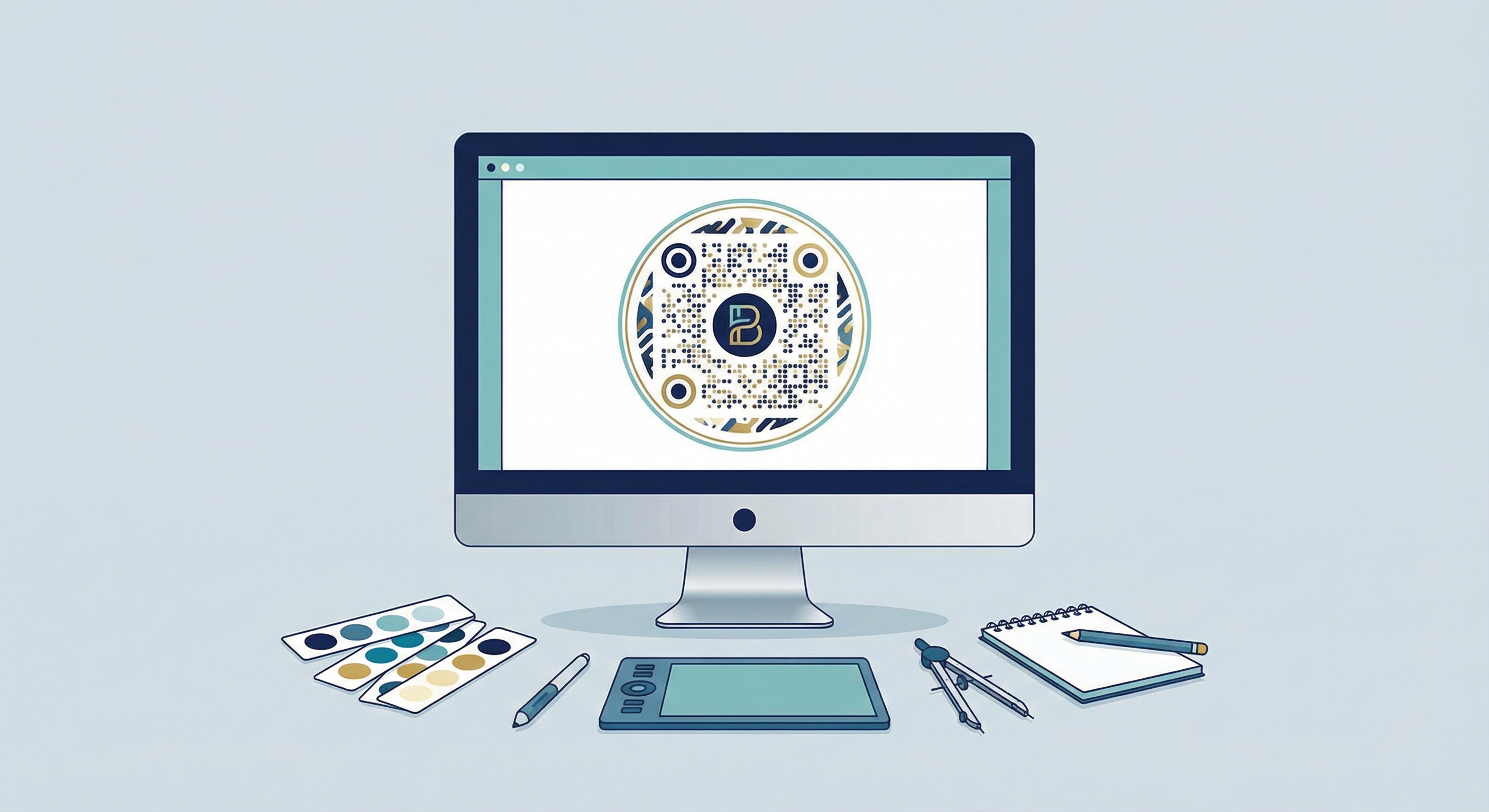
Creating a luxury-grade QR code with Supercode takes minutes. Here is a practical guide tailored to the specific requirements of luxury brand campaigns. Start by reading our full guide on how to create a QR code for a complete platform walkthrough.
Luxury brands use several distinct QR code types depending on the campaign objective:
Supercode's design tools allow you to embed your brand logo in the center of the QR code, customize module colors to match your palette, and choose from refined corner and dot styles. Your QR code should be treated as a brand asset — not a utility sticker. Refer to our QR code design guide for detailed instructions on custom luxury QR design. Visit the Supercode product page to explore the full design toolkit, including analytics, dynamic codes, and folder organization features.
Add your QR codes to labelled folders in the Supercode dashboard to keep campaigns organized by collection, season, region, or channel. Share folders with your marketing and management teams for consistent access. Before printing on luxury materials, always test the code with multiple devices at the exact production size. Download artwork in SVG or PDF format for vector-quality printing that holds crisp detail on even the finest papers and leathers.
Every dynamic QR code created with Supercode automatically records scan analytics — total scans, unique scans, geographic location, device type, and time of scan — accessible in real time via the analytics dashboard. Read our QR code tracking guide for a full breakdown of how to interpret your data and optimize campaign performance. Explore Supercode's pricing plans to find the plan that fits your campaign volume and analytics requirements.
A luxury brand QR code must look the part. Work with your creative team to integrate the code organically into packaging design, swing tags, invitations, and marketing materials — as a purposeful design element, not a functional afterthought. Use Supercode's custom design capabilities to match your brand's color palette, embed your logo, and choose a module style that complements your visual identity. See our full QR code design guide for luxury-specific customization tips and examples.
Dynamic QR codes can be updated after printing. If an authentication URL, campaign landing page, or AR experience destination changes after materials have gone to press, the code can be redirected instantly — no reprinting required. For luxury brands managing seasonal campaigns, evolving product lines, and live authentication systems, this flexibility is non-negotiable. Read our guide to dynamic vs static QR codes to understand the full operational and cost benefits for high-end brands.
Different luxury materials require different placement strategies. QR codes on product packaging look best on the base or inner flap, preserving the premium unboxing aesthetic. Codes on clothing should be integrated into care labels or interior swing tags — never on the outer face of a premium garment. For shop windows and boutique displays, use high-contrast codes of at least 2.5 cm (1 inch) with sufficient quiet zone for reliable scanning through glass. Always test before final installation.
Luxury products are held closely and examined with care. Your QR code must scan reliably at whatever size it appears on the final product. Always test at the exact production size before sign-off, ensure a quiet zone of at least four modules around the code perimeter, and produce artwork at a minimum of 300 DPI. Download in SVG or EPS format from Supercode for vector-quality printing that retains crisp detail on fine paper stocks, leather, and premium packaging materials.
Every dynamic QR code on Supercode comes with built-in analytics. Assign unique codes to each placement — packaging, magazine insert, shop window, event invitation — so you can attribute engagement accurately to each channel. This transforms luxury marketing from a pure brand exercise into a measurable, optimizable discipline. Our QR code tracking guide covers advanced attribution strategies for multi-touchpoint campaigns. Visit our QR code solutions hub to explore how analytics integrate across the full Supercode platform.
QR codes give each luxury product a unique digital identity that connects the physical item to a brand-controlled, secure verification page. When a customer scans the code on a product tag or certificate of authenticity, they are instantly directed to confirmation of the item's provenance, serial number, and manufacturing record. Unlike physical security features, dynamic QR codes can be updated centrally — and brands can monitor scan patterns to detect suspicious authentication attempts. Combined with the EU's Digital Product Passport requirements mandating QR codes for textiles and luxury goods, QR technology is rapidly becoming the global standard for luxury product authentication.
Yes. Supercode's QR code generator allows full design customization — including your brand logo in the center, custom module and background colors, refined corner styles, and dot pattern options. Many luxury houses treat their QR codes as design assets equal in importance to any other brand element. The key constraint is maintaining sufficient contrast between foreground and background to ensure reliable scanning at all sizes. See our QR code design guide for luxury-specific customization tips and technical parameters.
The most effective types for luxury brands are: URL QR codes (for authentication pages, microsites, and AR experiences), Image QR codes (for branded visual teasers), vCard QR codes (for personal shopper contact sharing), Social Media QR codes (for follower acquisition at physical touchpoints), and Bulk QR codes (for unique event access tokens). The right type depends on the specific campaign objective — visit our QR code solutions hub for a full overview of all available code types and their use cases.
Brands embed QR codes in print editorial, packaging, and boutique displays that trigger augmented reality experiences directly in the customer's smartphone browser — no app required. Scanning a code in a magazine can launch a virtual runway show; scanning a code in a showroom can initiate a 3D product configurator or virtual test drive. These experiences are shareable via social media, extending campaign reach organically far beyond the original placement. Our guide on social media marketing with QR codes covers strategies for amplifying AR content across digital platforms.
A Digital Product Passport (DPP) is a mandatory digital record — required under the EU's Ecodesign for Sustainable Products Regulation — that consolidates a product's identity, material composition, sustainability data, and provenance into a single accessible source. The regulation specifies QR codes as the primary standardized data carrier, making QR technology the physical gateway for consumers, brands, and regulators alike. For luxury fashion, leather goods, and accessories brands selling into the EU market, implementing DPP-compliant QR codes is increasingly a legal requirement — and an opportunity to demonstrate sustainability leadership. Learn more at the EU DPP implementation guide.
Every dynamic QR code created with Supercode automatically tracks total scans, unique scans, geographic location, device type, and time of scan — in real time, via the analytics dashboard. For multi-touchpoint campaigns, assign a unique QR code to each placement (packaging, magazine insert, event invitation, shop window) to accurately attribute engagement to each channel. This level of measurement is simply not achievable with traditional luxury advertising formats. See our QR code tracking guide for full analytics setup and attribution strategies, and explore Supercode's pricing plans for the analytics tier that matches your campaign scale.
QR codes have evolved from functional utilities into brand assets that define how luxury companies authenticate products, engage discerning consumers, and measure the impact of premium campaigns. Whether you are fighting counterfeiting with Digital Product Passport-compliant codes, unlocking immersive AR experiences, connecting clients with personal stylists, or making your seasonal print campaigns interactive and measurable — Supercode gives your team the design quality, dynamic flexibility, and real-time analytics that luxury marketing demands.
Create your first luxury brand QR code free at Supercode — and see exactly what a premium QR code strategy looks like in practice.
Head to our FAQs section or reach out to us directly on info@supercode.com
Sign up for free

