
In 2026, a QR code on a clothing label does far more than list washing instructions. Brands like Ralph Lauren have already placed QR codes on over 200 million garments, linking each piece of apparel to a rich digital experience covering origin stories, style advice, authentication, and sustainability data. With the EU's Digital Product Passport regulation making QR codes mandatory on textiles sold in the EU by 2027, every fashion brand — from independent designers to global retailers — needs to understand how to use QR codes on clothing effectively. This guide covers the benefits, applications, best practices, and step-by-step instructions for creating QR codes for clothing with Supercode.
From care label upgrades to end-to-end supply chain visibility, the advantages of placing QR codes on clothing are significant for brands, retailers, and consumers alike.
A QR code on a garment tag instantly invites interaction. Research shows that 56% of consumers are willing to scan a QR code on a clothing label, with curiosity about product origin, brand story, and sustainability credentials being the main drivers. When paired with a compelling incentive — an exclusive discount, a behind-the-scenes video, or a style guide — scan rates climb even higher. QR codes in fashion are rapidly evolving from a novelty into a standard customer touchpoint.
A URL QR code on a garment can send a customer directly to your online store to reorder a favourite item, browse matching accessories, or check stock in different colours. This shortens the path from physical ownership to repeat purchase, turning every item of clothing into a living sales channel. You can update the destination link instantly without reprinting labels — a key advantage of dynamic QR codes.
Today's consumers demand transparency. Approximately 60% of shoppers find value in scanning a QR code specifically for care and sustainability information (Cotton Inc.), and consumers are willing to pay a 17% premium for products featuring a verified Digital Product Passport. A QR code on a clothing label can link to full supply chain data: where the fabric was grown, who made the garment, what certifications apply, and how to recycle it at end of life. This is the foundation of sustainable fashion — and it is increasingly a legal requirement. Read more in our guide to sustainable marketing with QR codes.
The EU's Ecodesign for Sustainable Products Regulation (ESPR), which entered into force in July 2024, makes Digital Product Passports (DPPs) mandatory for all textiles and apparel sold in the EU by 2027. Each product must carry a unique identifier — typically a QR code — linking to approximately 125 data points covering material composition, carbon footprint, repairability, chemical safety, and recycling guidance. Brands that implement QR codes on their clothing now are not only ahead of the compliance curve — they are building infrastructure that will be required within the next few years. Learn how conscious consumers are embracing QR codes and what brands are doing to meet the demand.
The counterfeit fashion trade is estimated at $467 billion annually and is projected to grow from 3.3% to 5% of all global trade by 2030. Serialised QR codes — where each garment carries a unique code rather than a shared one — allow consumers and customs authorities to verify authenticity on the spot. Luxury and premium brands from DIESEL to Ralph Lauren already use QR codes on clothing tags to guarantee authenticity, as explored on our QR codes for luxury brands use case page.
QR code analytics let you track every scan: when it happened, where in the world, what device was used, and which destination converted. According to the Bitly State of QR Codes 2025, 93% of marketers have increased their QR code usage in the past 12 months, with 88% reporting improved consumer sentiment. With Supercode's analytics dashboard, clothing brands can measure the ROI of individual campaigns — from new collection launches to seasonal promotions — at the garment level.
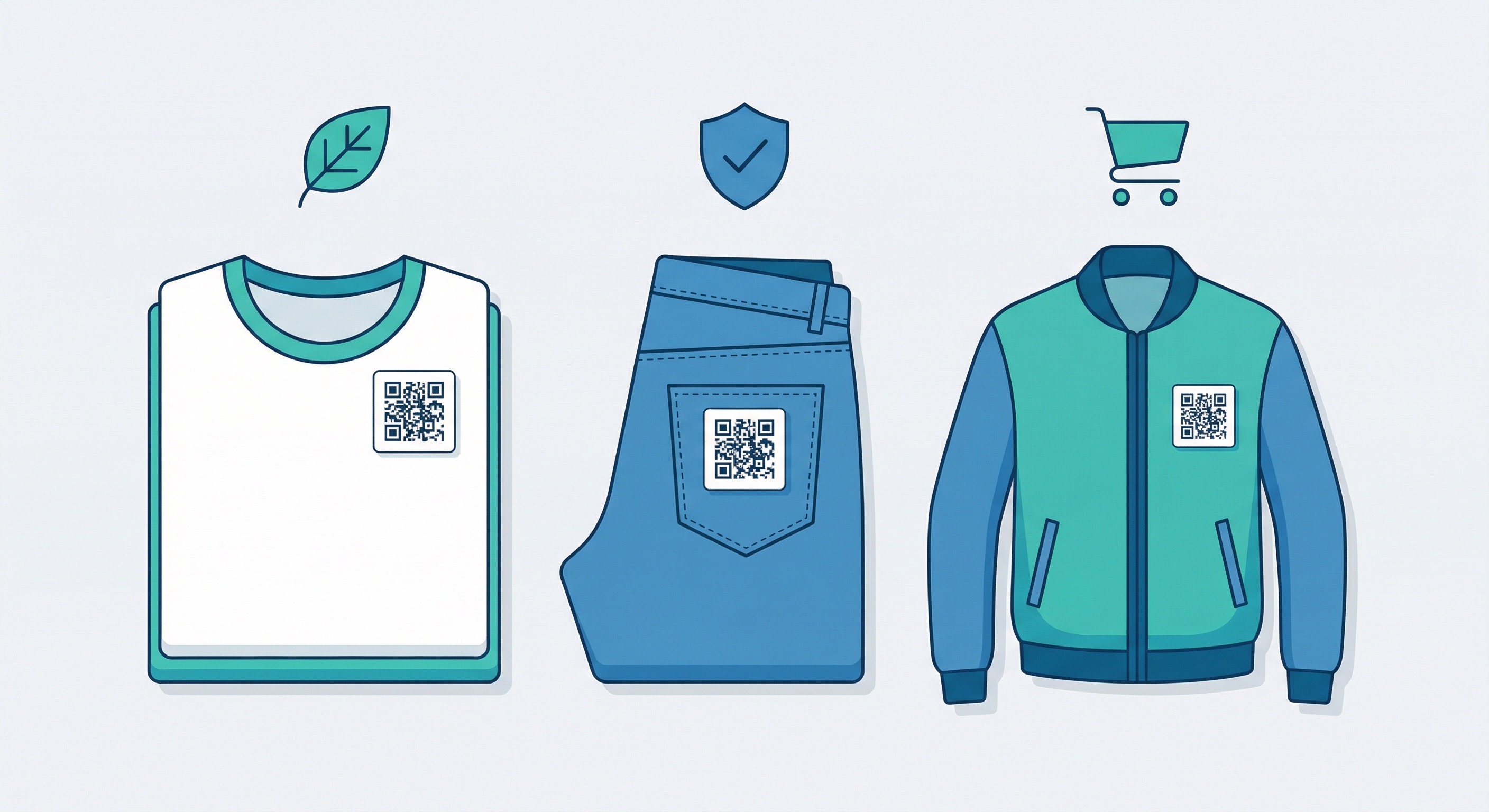
The versatility of QR codes on apparel means a single label can serve multiple business objectives simultaneously. Here are the most effective real-world applications.
Physical care labels are limited by space — they can only include a few washing symbols and fibre percentages. A QR code on a clothing tag unlocks unlimited space: full care guides, video tutorials, size-fit tips for different body types, and region-specific information in multiple languages. Ralph Lauren's QR label programme provides detailed origin, care, repair, and sustainability data for each garment in its range, setting the benchmark for the industry.
Brands investing in ethical and sustainable production can use QR codes to make their supply chain visible to consumers. Scanning the code on a garment tag can reveal where the cotton was grown, which factory made the item, what certifications (GOTS, Fair Trade, B Corp) apply at each stage, and the product's carbon footprint. This level of transparency is exactly what the EU Digital Product Passport mandates — and it resonates strongly with the growing segment of conscious consumers who actively research brands' sustainability claims. See also our QR codes on product packaging use case for complementary strategies.
Serialised QR codes give every garment a unique digital fingerprint. A customer buying a premium jacket can scan the label to verify authenticity before purchase or after receiving an online order. If the QR code returns a "not found" or "already scanned" response, the item is likely counterfeit. This application is especially powerful for luxury brands and streetwear labels where counterfeiting is rampant. Combined with dynamic QR codes, brands can track if a code has been scanned more times than units produced — a telltale sign of fraudulent reproduction.
A QR code on a clothing tag can link to a lookbook featuring the garment styled in multiple ways, with direct links to purchase complementary items. This is one of the most effective upselling tools in retail: rather than relying on in-store staff to suggest pairings, every garment becomes a self-guided shopping assistant. Dynamic QR codes allow brands to update the linked content seasonally — showing winter layering ideas in November and summer styling in June — without changing the physical label.
A social media QR code on apparel — whether printed on a label, sewn into a lining, or boldly featured on the garment itself — makes it easy for customers to follow your brand with one scan. This is especially effective at launch events, in subscription boxes, or on branded merchandise. Fans of musician merch, sports team apparel, and streetwear drops are highly motivated to engage digitally after a purchase. Explore our QR codes for musicians and artists page for event merchandise strategies.
Printing QR codes directly onto event T-shirts and hoodies turns every attendee into a walking advertisement. Brand ambassadors wearing branded merchandise with QR codes can prompt bystanders to scan for event information, sign up for newsletters, access discount codes, or follow the brand on social media. For events and trade shows, branded clothing with embedded QR codes is an underused but highly cost-effective marketing channel.
As the secondhand clothing market continues to grow, QR codes on garments enable seamless resale. A shopper listing a pre-loved item on Vinted or Depop can simply scan the original label QR code to auto-populate product details, care instructions, and original purchase information. Brands can also use this as a circular economy touchpoint — offering repair services, take-back programmes, or second-hand certification through the same QR code infrastructure. This connects to the EU DPP's end-of-life recycling data requirements and reinforces sustainable brand values.

The data supports strong and growing adoption of QR codes across the fashion and apparel sector in 2025 and 2026:
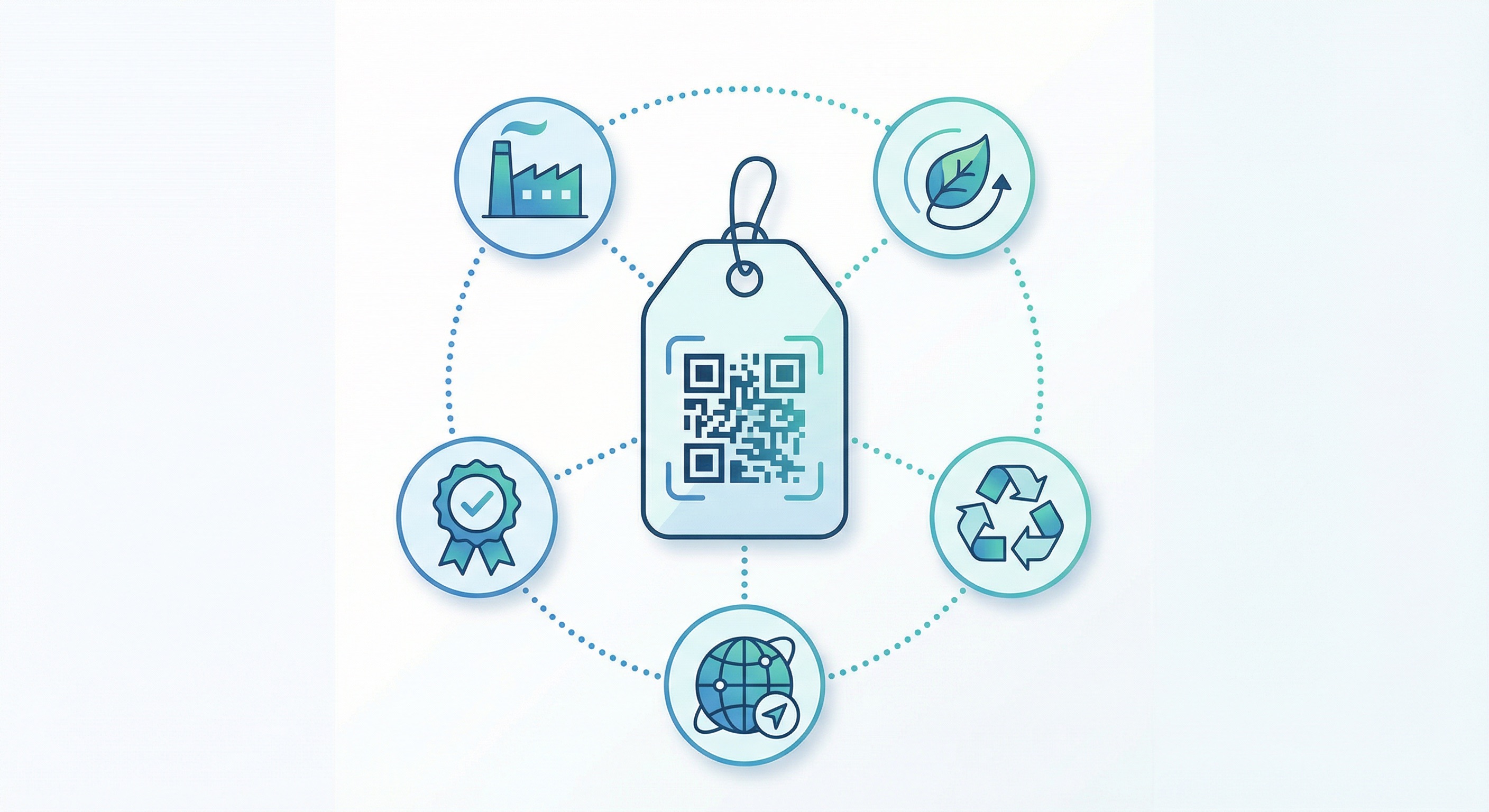
Creating professional QR codes for clothing labels, garment tags, and apparel campaigns is straightforward with Supercode. Here is a step-by-step guide.
The best QR code type depends on your goal. For most clothing applications, we recommend:
Log in to Supercode, select your QR code type, add the destination content, and customise the design. Add your brand colours, logo, and a custom frame with a call-to-action (e.g. "Scan for care guide" or "Discover the story"). A branded QR code stands out on a label and earns 25–40% higher scan rates than plain black-and-white codes. Follow our QR code design guide for best results.
Before printing at scale, test your QR code in realistic conditions: scan from the distance a customer would naturally hold their phone from a garment tag (typically 10–20 cm), test on the intended substrate (woven label, hang tag, printed paper), and check under different lighting conditions — including low-light fitting rooms. Always use Error Correction Level H (30% damage tolerance) for fabric applications, as sewing, folding, and washing can degrade code edges. See our QR code printing guide for substrate-specific recommendations.
Use Supercode's folder system to organise codes by collection, season, product line, or market. You can share folders with your design and production teams, making it easy to coordinate across departments. For brands managing codes across multiple product categories, this is invaluable — explore our guide to QR codes on product packaging for additional organisational best practices.
After your garments reach customers, monitor performance in Supercode's analytics dashboard. Track scan volume by code, location, device, and time period. Use this data to understand which collections drive the most engagement, which markets are most active, and which content types (style guides vs. sustainability pages vs. social profiles) generate the highest dwell time. Our guide to QR code tracking and analytics explains how to connect this data to your broader marketing metrics.
Getting maximum value from your clothing QR code strategy requires attention to placement, sizing, design, and content. Here are the most important guidelines.
The most effective placement depends on your goal. For care and product information, a woven label inside the collar or side seam is standard and durable. For marketing and social campaigns, a hang tag, swing tag, or the garment hem label offers more visual prominence. For event apparel and merchandise, integrating the QR code directly into the printed or embroidered design on the back or sleeve creates maximum visibility. Avoid placing codes on areas subject to heavy folding or seam pressure, as this can damage readability over time.
The minimum recommended size for a QR code on a garment tag is 2 cm × 2 cm, assuming the scanning distance is under 20 cm. For hang tags and printed labels, aim for 3–4 cm to ensure reliable scanning across a range of smartphones and lighting conditions. Never print a clothing QR code smaller than 1.5 cm — at that size, only high-end phone cameras can read the code reliably, leading to frustration and abandoned scans. Our QR code printing guide covers sizing, resolution (minimum 300 DPI), and substrate requirements in full detail.
Dynamic QR codes let you update the destination content after the label is printed — without changing the physical code. This means you can refresh styling content seasonally, redirect to a new e-commerce platform, update sustainability data as your supply chain evolves, or switch a promotional code to a new campaign — all without recalling or replacing garments. For the EU Digital Product Passport, dynamic codes are essential: product compliance data must be updatable throughout the product's lifecycle.
Clothing QR codes face physical challenges that packaging codes do not: sewing distortion, washing, ironing, folding, and general wear. Always generate your QR code at Error Correction Level H, which allows the code to remain readable even if up to 30% of the pattern is damaged or obscured. Supercode applies Level H error correction by default. For embroidered or printed codes on the garment itself (not on a separate label), consider slightly increasing the code's quiet zone — the white border around the pattern — to ensure smartphones can distinguish it from the surrounding fabric.
Always tell customers what to expect when they scan. "Scan to see the full story," "Scan for styling tips," or "Scan to verify authenticity" sets expectations and dramatically increases scan rates compared to a naked QR code with no context. For anti-counterfeiting applications, a prominent "Verify this item is genuine" message next to the code builds consumer confidence and makes scanning feel worthwhile. Use Supercode's frame and label tools to add this context directly to the code artwork — no additional design software required.
Yes. QR codes can be placed on clothing in several ways: printed or woven into care labels, printed on hang tags or swing tags, embroidered or heat-pressed onto the garment fabric itself, or integrated into the garment's printed design. Each method has different durability and scanning characteristics. Woven labels and hang tags are the most common for retail, while embroidered and printed codes on the garment body are used for event merchandise and fashion statements. Using URL QR codes with high error correction (Level H) ensures the code remains scannable through typical garment wear and care.
The minimum recommended size for a QR code on a clothing label is 2 cm × 2 cm (approximately 0.8 × 0.8 inches) for a scanning distance of up to 20 cm. For hang tags and printed paper labels where the customer holds the tag further away, a size of 3–4 cm is more reliable. Never print a QR code smaller than 1.5 cm × 1.5 cm as this will cause scanning failures on older or budget smartphones. Always print at a minimum resolution of 300 DPI to preserve fine module details.
It depends on the application method. QR codes on woven fabric labels are extremely durable and can survive hundreds of wash cycles. Printed codes on paper hang tags are not wash-resistant — they are intended to be removed before first wear. QR codes heat-pressed or screen-printed directly onto garment fabric can degrade over time with repeated washing at high temperatures. If you need a permanent, wash-resistant QR code on the garment itself, woven labels are the most reliable substrate. Always use Error Correction Level H to maximise resilience.
QR codes work best with high contrast between the code's dark modules and the light background. On dark fabric, you can invert the colour scheme — using a light-coloured code on a dark background — but this requires testing, as some smartphone cameras struggle with inverted codes. The safest approach is to place the QR code on a contrasting label (e.g. a white label on a dark garment) rather than printing it directly onto dark fabric. Supercode's design tools allow you to test colour combinations and preview scanability before production.
The EU's Digital Product Passport (DPP) for textiles is a mandatory digital record linked to each garment via a QR code (or RFID/NFC tag), required under the EU's Ecodesign for Sustainable Products Regulation (ESPR). It must contain approximately 125 data points covering material composition, supply chain origin, environmental performance, repairability, and end-of-life recycling guidance. The DPP becomes mandatory for all textiles and apparel sold in the EU by 2027. If you sell clothing in the EU, you will need to implement DPP-compliant QR codes on every product. Brands that start building this infrastructure now will have a significant compliance advantage. Learn more at Preserve Earth's DPP guide.
Yes — with dynamic QR codes on Supercode, every scan is logged in your analytics dashboard. You can see total scan counts, scans over time, geographic distribution (country, city), device types (iPhone vs. Android), and operating systems. You do not receive personally identifiable information about individual scanners unless they voluntarily provide it via a form linked from the QR code. This aggregated data is invaluable for measuring which collections, campaigns, or markets drive the most customer engagement. See our guide to QR code tracking and analytics for a full walkthrough.
Whether you are a fashion designer adding QR codes to care labels, a retailer using them to drive repeat purchases, or a brand preparing for EU Digital Product Passport compliance, Supercode gives you everything you need. Create beautiful, branded QR codes in minutes, track every scan in real time, and update your linked content without reprinting a single label. The future of apparel is connected — and it starts with a QR code.
Create your first clothing QR code free with Supercode — no credit card required.
Head to our FAQs section or reach out to us directly on info@supercode.com
Sign up for free


