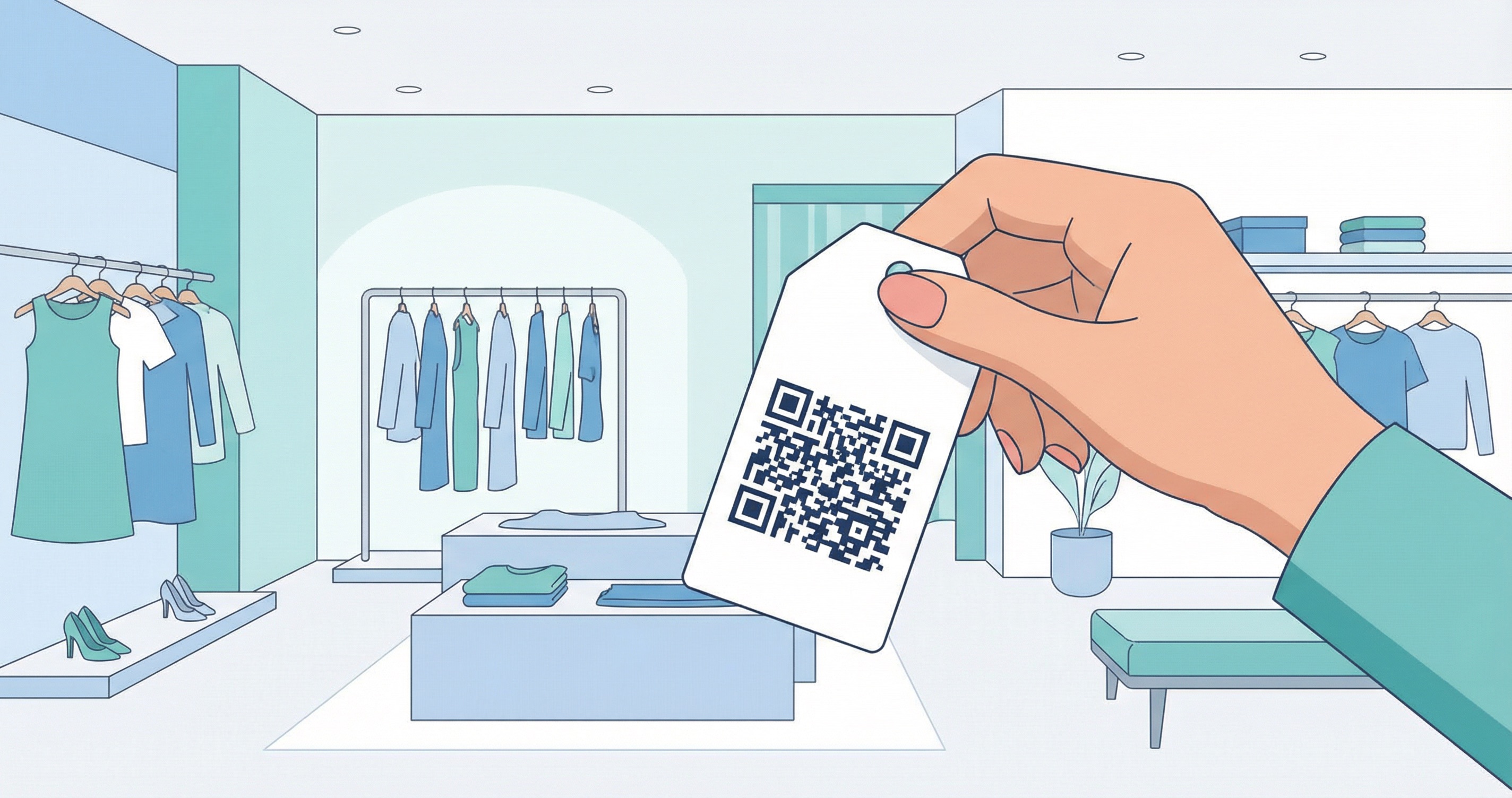

The fashion industry is undergoing a digital transformation, and QR codes are at the center of it. In 2026, 85% of fashion brands are increasing investment in QR codes and connected product technology, according to a SharpEnd Connected Experience Report — driven by the need for personalised consumer engagement, product authentication, and sustainability transparency. Whether placed on a clothing tag, a boutique shop window, a seasonal lookbook, or a fashion event invitation, a well-designed QR code connects a physical garment or campaign to a rich, brand-controlled digital experience that builds loyalty, drives sales, and delivers measurable results.
This guide covers everything fashion designers, retailers, and marketers need to know about QR codes for fashion in 2026: the benefits, real-world applications, key statistics, and a step-by-step guide to creating and deploying QR codes with Supercode. For an overview of QR codes across all industries, visit our industry use cases hub.

Today's fashion consumers — especially Gen Z and Millennials — demand to know where their clothes come from. A QR code on a garment's tag or label links directly to information about material sourcing, manufacturing practices, supply chain ethics, and care instructions. This level of transparency has become a competitive advantage: research shows that 56% of consumers are willing to scan QR codes on clothing labels to access product information. By pairing QR codes with a brand story microsite, fashion companies transform every item into a trust-building touchpoint — one that converts browsers into loyal customers. Read our guide on why conscious consumers are embracing QR codes for more on this growing shift.
The EU's Ecodesign for Sustainable Products Regulation (ESPR) mandates Digital Product Passports (DPPs) for textiles and apparel — and QR codes are the regulation's required data carrier. With the EU DPP registry becoming operational in 2026 and textile-specific requirements entering force from 2027, fashion brands selling into European markets need to begin implementing QR code infrastructure now. Each DPP-linked QR code must carry data on material composition, carbon footprint, durability, repairability, and recycling instructions. Brands that adopt URL QR codes for this purpose today will be ahead of both regulatory requirements and consumer expectations around sustainability. See our guide to sustainable marketing with QR codes for a full breakdown of how this regulation intersects with brand strategy.
Counterfeiting costs the global fashion industry an estimated $50 billion annually, with clothing, footwear, and accessories among the most targeted categories. QR codes provide each genuine item with a unique, brand-controlled digital identity that cannot be replicated on a counterfeit. A customer scanning a tag on a premium garment, bag, or pair of shoes is instantly directed to a verification page that confirms authenticity, provenance, and ownership history. For luxury and premium fashion brands in particular, QR-enabled authentication is essential infrastructure — not just for the primary market, but for enabling trust in the growing secondhand and resale channel. Explore how QR codes for luxury brands are applying this at the highest level.
Every physical touchpoint in fashion — a garment, a shopping bag, a boutique window, a receipt — is an opportunity to grow your digital audience. Social Media QR codes direct customers to your brand's Instagram, TikTok, Pinterest, or other channels with a single scan, converting an in-store experience into a social follower. Pair these with a clear incentive — early access to new collections, styling inspiration, or exclusive discounts — and the conversion rate increases significantly. Our guide on 5 ways QR codes amplify social media marketing covers effective incentive and placement strategies for fashion brands.
Fashion brands lead the industry in creative QR code campaigns — from shoppable window displays and billboard QR codes that trigger AR experiences, to runway show activations that let viewers scan their screens to shop the looks in real time. Every QR code placed in a campaign is fully trackable: you can see exactly how many people scanned, which placements performed best, and where in the world your audience is located. This measurement capability transforms fashion marketing from a brand exercise into a data-driven discipline. Use dynamic URL QR codes so you can update destinations after printing — essential for time-sensitive campaign redirects. See our QR code marketing guide for advanced campaign strategy.
QR codes dramatically expand what a physical garment can offer. Brands are using Image QR codes to unlock augmented reality try-on experiences that let customers visualize outfits before purchasing. Others place codes on tags to enable one-tap re-ordering of bestselling items — removing the friction that prevents repeat purchases. Personalized styling consultations, exclusive collection previews for loyal customers, and direct links to complementary accessories all become possible through QR codes placed on the items themselves. These experiences increase average order value and customer lifetime value simultaneously.
One of the most underutilized benefits of QR codes in fashion is their ability to collect first-party data directly from consumers — without relying on retailer intermediaries. A Feedback QR code on a garment's care label or receipt invites customers to rate their purchase, share how they styled it, and indicate their sizing preferences. This data feeds directly into product development and inventory decisions. Combined with the scan analytics from Supercode's QR code tracking, fashion brands gain a complete picture of customer behavior from physical product to digital interaction — precisely the first-party data capability that brands need as third-party tracking continues to diminish.
The most widespread application in fashion is placing QR codes directly on hang tags, care labels, and inner garment labels. A scan from the changing room or at home can reveal the full story of the piece: where the fabric was sourced, who made it, how to care for it, and how to style it. For brands preparing for EU Digital Product Passport compliance, the garment tag QR code is the standardized data access point mandated by regulation. Visit our dedicated page on QR codes on clothing for detailed guidance on tag placement, minimum sizing, and integration with DPP requirements.
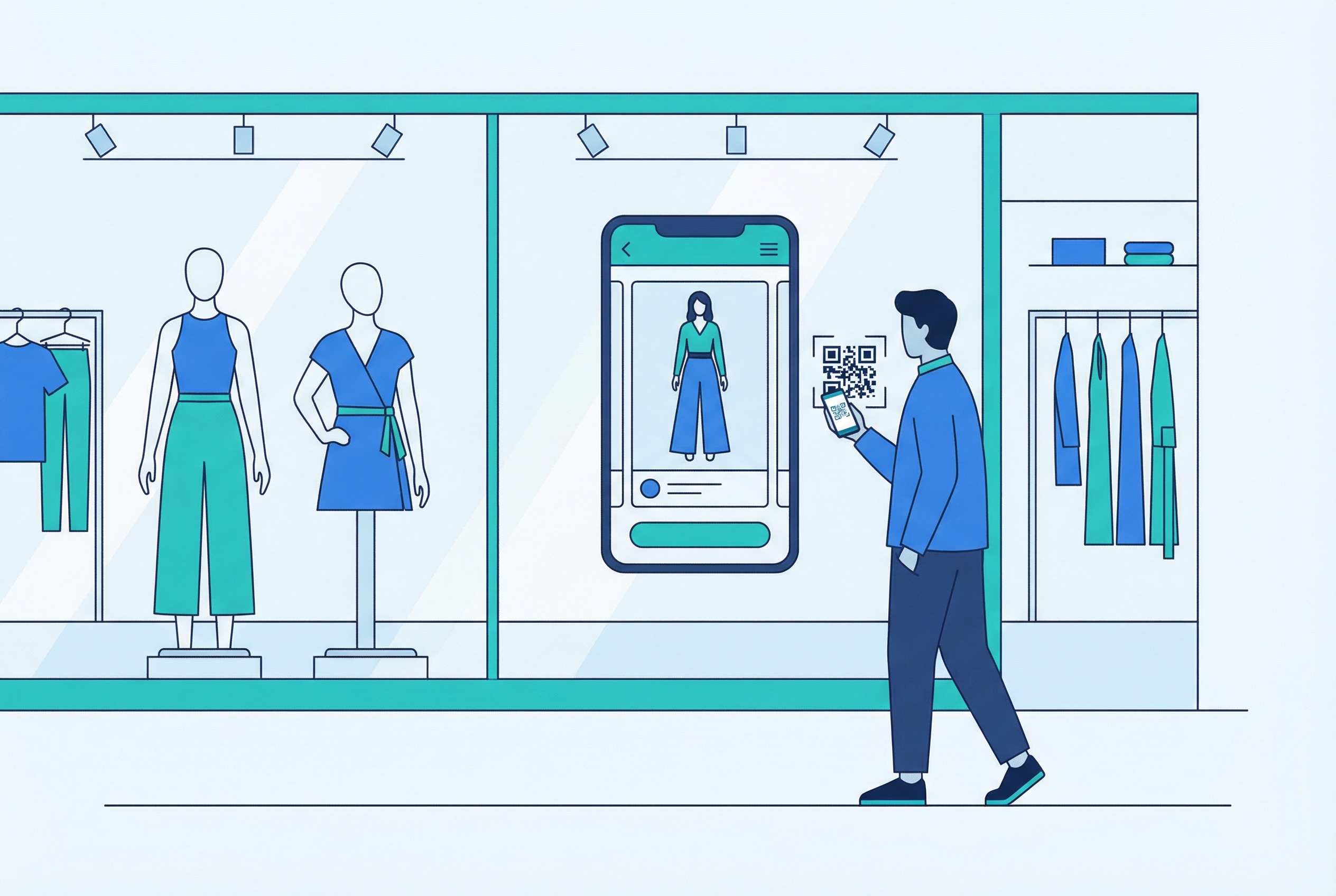
Fashion retailers are placing QR codes on boutique windows and exterior displays to create shoppable experiences that work around the clock — even when the store is closed. A customer who spots an outfit they like can scan a code on the display, view the full collection, and complete a purchase directly from the pavement. Zara, H&M, and independent boutiques have all used this approach to extend shopping hours and convert window browsing into online conversions. See our guide to QR codes for shop windows for placement and design best practices for exterior retail settings.
QR codes on printed invitations to fashion shows, trunk shows, and brand events serve a dual purpose: seamless digital RSVP and unique access control on the night. Bulk QR codes allow brands to generate a unique, single-scan code for each guest — preserving event exclusivity and providing granular attendance data. During shows, real-time QR codes on screens, programmes, and seat cards enable guests to view the collection and pre-order looks as they come down the runway. Explore our QR codes for events page for a full guide on event-specific applications. For print collateral, see QR code flyers and brochures.
Fashion is one of the most magazine-driven industries in the world — and QR codes in print editorial remain highly effective for bridging physical discovery to digital action. A code in a Vogue double-page spread can launch an AR runway experience, link to a shoppable lookbook, or direct readers to a limited-edition product launch. Because QR codes in magazine placements are tracked scan-by-scan, brands get precise ROI data on each insertion — something print advertising has historically been unable to deliver. Our page on QR codes in magazines and newspapers covers format, placement, and editorial tracking best practices.
Fashion brands use QR codes on branded merchandise — tote bags, caps, branded packaging, loyalty gift items — to extend the brand experience far beyond the store. A QR code on a shopping bag links to the brand's social channels, a new collection landing page, or an exclusive loyalty offer. These items become ongoing marketing touchpoints, reinforcing brand identity every time a customer uses them in public. Every scan is tracked and attributed, giving marketing teams visibility into which merchandise items drive the most post-purchase engagement.
The unboxing experience is critical in fashion e-commerce. QR codes on product packaging, tissue paper, and branded inserts turn the moment of unboxing into a brand engagement opportunity. A scan can unlock an exclusive welcome video from the designer, a styling guide for the new piece, or an invitation to join the brand's loyalty program. For fashion brands using packaging for EU DPP compliance, a well-placed code on the outer box ensures that the product's digital passport is accessible from the very first interaction with the item.
WhatsApp QR codes placed on in-store displays, receipts, and packaging enable customers to connect directly with a personal shopper, stylist, or customer service team via WhatsApp — no app download required, no form to fill in. This conversational commerce approach is particularly powerful for fashion brands targeting markets where WhatsApp is the dominant messaging platform, and for premium brands where a personal service channel adds measurable value to the customer relationship. Pair with app download QR codes for brands with their own shopping app.
QR codes embedded in printed seasonal lookbooks or brand catalogs link readers directly to video content, 360-degree product photography, and shoppable product pages — turning static print into a dynamic, interactive experience. Rather than printing separate digital supplements, brands embed a single QR code that unlocks the full digital companion to each lookbook. This approach reduces print costs, provides analytics on reader engagement, and enables the destination to be updated (with new stock, new prices, or a new season) long after the printed piece has been distributed. See our guide to QR codes in print media for formatting guidance.

The data behind QR code adoption in fashion makes the strategic case for investment clearly:
Creating a QR code for your fashion brand or retail campaign takes minutes with Supercode. Here is a step-by-step guide tailored to the specific needs of fashion designers, retailers, and marketers. For a full platform walkthrough, see our guide on how to create a QR code.
Different fashion use cases call for different code types. Here are the most effective options:
In fashion, visual identity is everything — and your QR code should reflect it. Supercode's design tools let you embed your brand logo in the center of the code, customize module colors to match your palette, choose from refined corner and dot styles, and add a brand-specific call-to-action frame. Research confirms that branded QR codes achieve 25-40% higher scan rates than standard black-and-white codes. See our QR code design guide for step-by-step customization instructions. Explore the full toolkit at the Supercode product page.
Fashion brands typically run multiple concurrent campaigns — seasonal collections, events, sustainability initiatives, flagship stores — each with their own QR codes. Supercode's folder system lets you organize codes by campaign, season, or region, and share access with your marketing, production, and agency teams. Before final print production — whether on garment labels, luxury packaging, or magazine inserts — always test each code on multiple devices at the exact output size. Download in SVG or PDF for vector-quality printing that maintains sharp detail on fine fashion materials. For print-specific guidance, see our QR code printing guide.
Dynamic QR codes can be updated after materials have been printed. If a product URL changes, a lookbook destination is updated, or a seasonal campaign is refreshed, the QR code destination can be changed instantly in the Supercode dashboard — with no reprinting costs. For fashion brands managing fast-moving seasonal cycles, this flexibility is non-negotiable. Read our guide to dynamic vs static QR codes to understand when to use each type and the full operational benefits of dynamic codes for high-volume fashion production.
Every dynamic QR code created with Supercode automatically tracks total scans, unique scans, geographic location, device type, and time of scan — visible in real time via the analytics dashboard. Assign a unique QR code to each campaign placement (clothing tag, window display, magazine ad, event invite) so you can accurately attribute engagement to each channel. This granular data enables confident decisions about where to focus future campaign investment. See Supercode's pricing plans to find the analytics tier that matches your campaign volume, and read our QR code tracking guide for attribution setup and best practices.
In fashion, every visual element communicates brand value. A QR code placed as a utility sticker undermines premium brand perception; a QR code treated as a designed brand asset reinforces it. Work with your creative team to integrate codes organically into swing tags, care labels, packaging, and campaign materials — using Supercode's custom design capabilities to match your color palette and logo. Consistently branded QR codes also achieve measurably higher scan rates, making good design a direct performance driver. See our QR code design guide for detailed customization guidance and luxury-specific tips.
The most effective placements put QR codes at the point of peak curiosity. On a garment tag, that's the moment a customer examines the label in-store or at home. On a shop window display, it's the moment someone pauses to look at an outfit. On a lookbook or magazine ad, it's the moment of aspiration. QR codes on clothing perform best on hang tags or inner labels rather than on the outer face of garments. Shop window QR codes should be at eye level with a clear call-to-action. Always match the destination content to the moment and the mindset of the scanner.
A QR code without a call-to-action converts poorly. Tell the customer exactly what they will get by scanning: "Scan to watch the runway show," "Scan to verify authenticity," "Scan to shop this look." Specific CTAs consistently outperform generic ones like "Scan me." Add an incentive where appropriate — exclusive content, a discount on the next purchase, early access to a new collection — to increase scan rates significantly. Every Supercode QR code supports customizable frame text, making it simple to add a CTA to your code design at no extra cost.
Fashion materials present unique scanning challenges. Embossed or foil-printed tags require high contrast between the QR code modules and background. Codes on fabrics should be placed on flat sections without creasing in the scan zone. For exterior displays and window stickers, use a code of at least 2.5 cm (1 inch) at the smallest scan distance. Always maintain a quiet zone of at least four module widths around the code perimeter. Test every code at the exact production size before sign-off — preferably on a physical sample of the final material. Our QR code printing guide covers minimum sizes, contrast ratios, and material-specific technical requirements in detail.
Assign a unique dynamic QR code to each distinct placement in your campaign — one code for the hang tag, a separate code for the shop window, another for the magazine ad. This one-code-per-placement approach is essential for accurate attribution: you can see exactly which placements drive the most engagement, which customer segments respond to which materials, and where to concentrate investment in future campaigns. Supercode's analytics dashboard makes it simple to compare performance across all codes and campaigns in one view. Visit our QR code solutions hub to explore the full range of analytics and campaign management features available across all pricing plans.
The most effective fashion QR code applications in 2026 are: product authentication on luxury hang tags, Digital Product Passport compliance on garment labels, shoppable window displays that convert walk-by traffic, interactive magazine ads linking to AR and video content, and social media codes that grow brand following from every physical touchpoint. The right application depends on your brand's specific goals — whether that is transparency, authentication, sales conversion, or audience growth. Start with a single high-impact placement and measure results before scaling. See our industry use cases hub for inspiration across verticals.
Yes — QR codes work well on clothing labels and hang tags when sized and placed correctly. The minimum recommended size for reliable scanning is 2 cm x 2 cm (approximately 0.8 inches square). The code must have sufficient contrast between foreground and background — avoid printing on patterned fabric or foil surfaces without adequate contrast. Inner care labels are ideal placements because they are flat, regularly examined by customers, and available long after the outer tag has been removed. Dynamic QR codes are strongly recommended for labels, as they allow the destination URL to be updated if product information or campaign pages change. Visit our dedicated page on QR codes on clothing for complete technical guidance.
Fashion brands use QR codes for sustainability in three main ways: first, to disclose supply chain information — material sourcing, manufacturing location, certifications — directly to consumers; second, to share care and longevity instructions that extend garment life and reduce waste; and third, to communicate end-of-life recycling and resale options at the point of disposal. These use cases are now intersecting with regulatory compliance, as the EU's Digital Product Passport mandate requires QR-linked sustainability data on all textiles sold in Europe. Read our guide on sustainable marketing with QR codes and our post on conscious consumers embracing QR codes for a deeper exploration of this growing trend.
The most effective QR code types for fashion brands are: URL QR codes for product pages, lookbooks, and Digital Product Passports; Social Media QR codes for growing Instagram, TikTok, and Pinterest audiences; Image QR codes for branded visual experiences in editorial and packaging placements; Feedback QR codes for collecting customer reviews and product data; Bulk QR codes for event invitations and per-item authentication; and WhatsApp QR codes for personal shopping and customer service. Most fashion campaigns use a combination of URL and Social Media codes as their foundation, adding specialist types for specific applications.
QR codes serve fashion events at every stage of the experience: pre-event invitations with digital RSVP, unique guest access codes at the door, real-time scan-to-shop during runway shows, and post-event lookbook links that keep the collection accessible for weeks afterward. Bulk QR codes are used to generate unique codes for each invitation — maintaining exclusivity and preventing guest list sharing. Codes on seat cards during shows link guests directly to individual product pages for the look just presented. For more on event-specific applications, see our full guide to QR codes for events.
Yes. Supercode allows full QR code design customization — including your brand logo in the center, custom module and background colors matched to your brand palette, refined corner and dot styles, and a branded call-to-action frame around the code. Fashion brands that invest in custom-designed QR codes see 25-40% higher scan rates than brands using standard black-and-white codes, making design customization a direct revenue driver. All customizations are available from the Supercode dashboard with no design software required — see the Supercode product page for a full feature overview and pricing plans to get started.
QR codes have become standard infrastructure for forward-thinking fashion brands in 2026 — from fast fashion retailers building sustainability transparency into every garment, to luxury houses deploying product authentication across global markets, to independent designers engaging their audience through shoppable window displays and social media codes. Whatever your brand's size or objective, Supercode gives you the design quality, dynamic flexibility, and real-time analytics to make every QR code campaign in fashion count.
Create your first fashion QR code free at Supercode — and see exactly how QR codes can transform your clothing tags, campaign materials, and retail spaces into measurable, interactive brand experiences.
Head to our FAQs section or reach out to us directly on info@supercode.com
Sign up for free

