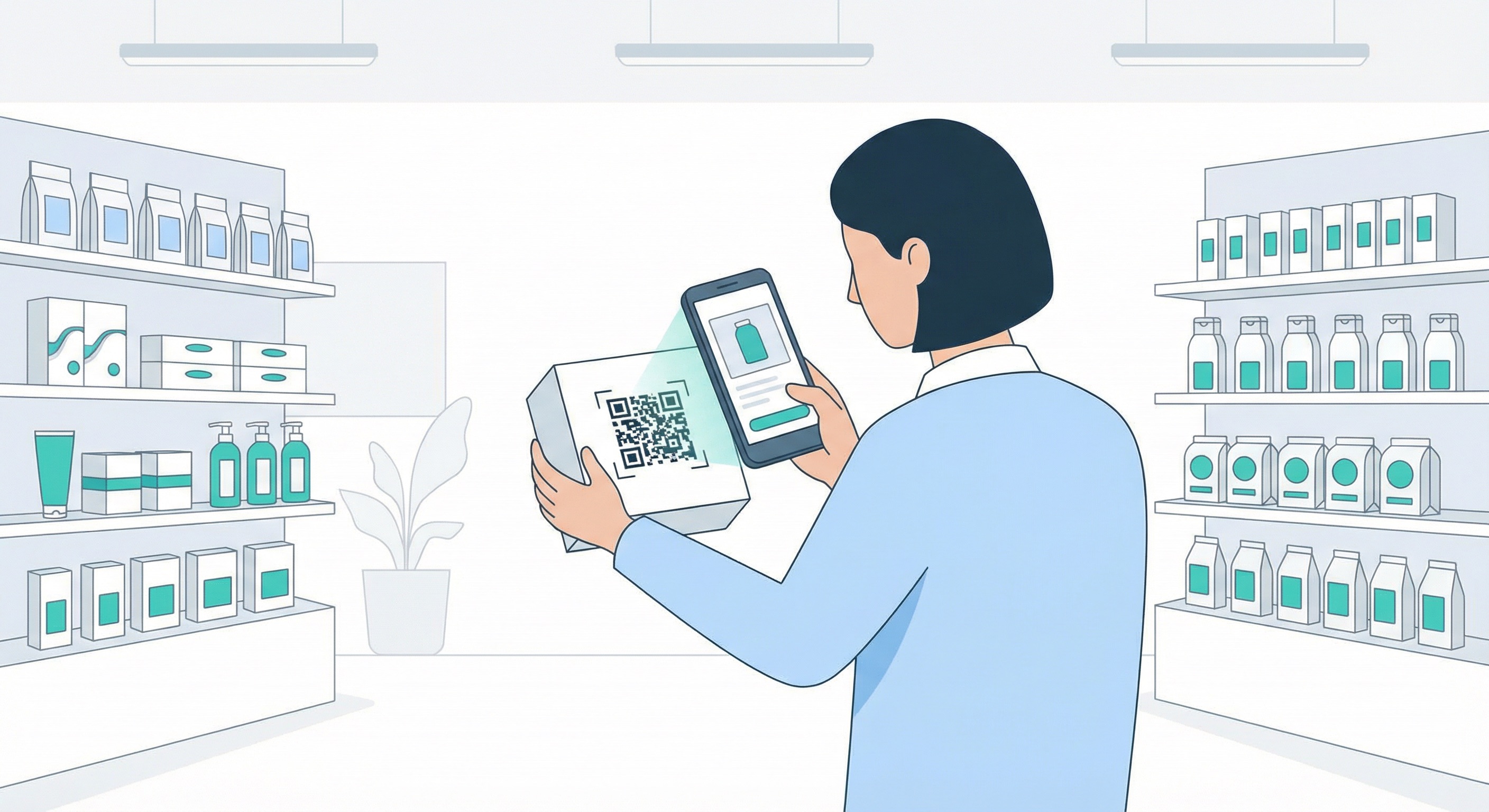

In 2026, 64% of consumers have scanned a QR code while shopping in-store, and global QR code payments have reached $5.4 trillion — making retail one of the most active QR code verticals on the planet. Whether you run a single boutique or a national chain, QR codes give your shoppers instant access to product information, loyalty rewards, contactless payments, and exclusive offers, all from the device already in their pocket. In this guide you will learn why retail QR codes drive real results in 2026, how leading brands are deploying them, what the data says, and how to create and track your own in minutes with Supercode.
From big-box stores to independent boutiques, QR codes solve real retail problems: information gaps at the shelf, slow checkout queues, and missed opportunities to turn a one-time buyer into a loyal customer. Here are six core benefits reshaping retail in 2026.
When a shopper picks up a product and wants to know ingredients, compatibility, reviews, or sizing before committing, a QR code on product packaging delivers that information in seconds. According to 1WorldSync, 61% of consumers scan QR codes on products after purchasing to access recipes, manuals, and exclusive offers — meaning the value extends well beyond the checkout lane. Place URL QR codes on tags, shelf talkers, and packaging to bridge the gap between the physical product and your full digital catalogue.
QR code payments have become a mainstream checkout option. In North America alone, 55% of businesses now offer QR code payments, and retailers that integrate scan-to-pay report average sales increases of around 15% — according to CoinLaw's 2025 payments report. From pop-up markets to high-street stores, a simple URL QR code or payment-linked code removes friction at checkout and keeps queues short.
Paper stamp cards get lost; apps require downloads. QR code-powered loyalty programmes sit in the middle — scannable in seconds, no new app required. Shoppers scan a code at purchase, accumulate points on your web-based loyalty portal, and redeem rewards on their next visit. URL QR codes linked to your loyalty sign-up page can be placed at the till, on receipts, and on in-store displays to maximise enrolment. Pair with SMS QR codes for quick re-engagement campaigns.
When sizes run out and staff are busy, QR codes on tags can instantly pull up back-of-house stock levels, alternative sizes, or "notify me when available" forms. This is especially valuable for fashion retailers — see how the strategy scales on our QR codes for fashion page — and for any category where variety (colour, size, spec) is a major purchase driver.
A QR code on packaging linking to setup guides, care instructions, or video tutorials reduces the likelihood of a return caused by confusion. Shoppers feel supported, and your support team handles fewer avoidable enquiries. PDF QR codes are ideal for delivering multi-page product manuals without printing costs, while feedback QR codes capture post-purchase satisfaction scores automatically.
Sustainability is now a purchase driver. Retailers using QR codes on packaging to share sourcing stories, carbon footprint data, and recycling instructions align with the EU Digital Product Passport (DPP) regulation — a framework that mandates product transparency for goods sold in the EU from 2026 onwards. Dynamic QR codes on product packaging let you update this information without a reprint, keeping compliance low-cost. Learn more in our conscious consumers guide and sustainable marketing guide.

The following applications show how retailers — from global chains to independent shops — are deploying QR codes across the customer journey in 2026. Each use case links to the relevant QR code type or material page for deeper implementation guidance.
The most common retail QR deployment. A product packaging QR code can link to ingredient lists, allergy information, video demos, or upsell recommendations. Dynamic codes mean the destination can be updated seasonally — a single print run serves multiple campaign periods. IKEA, Nike, and H&M all use packaging QR codes to deepen the brand experience beyond the physical product.
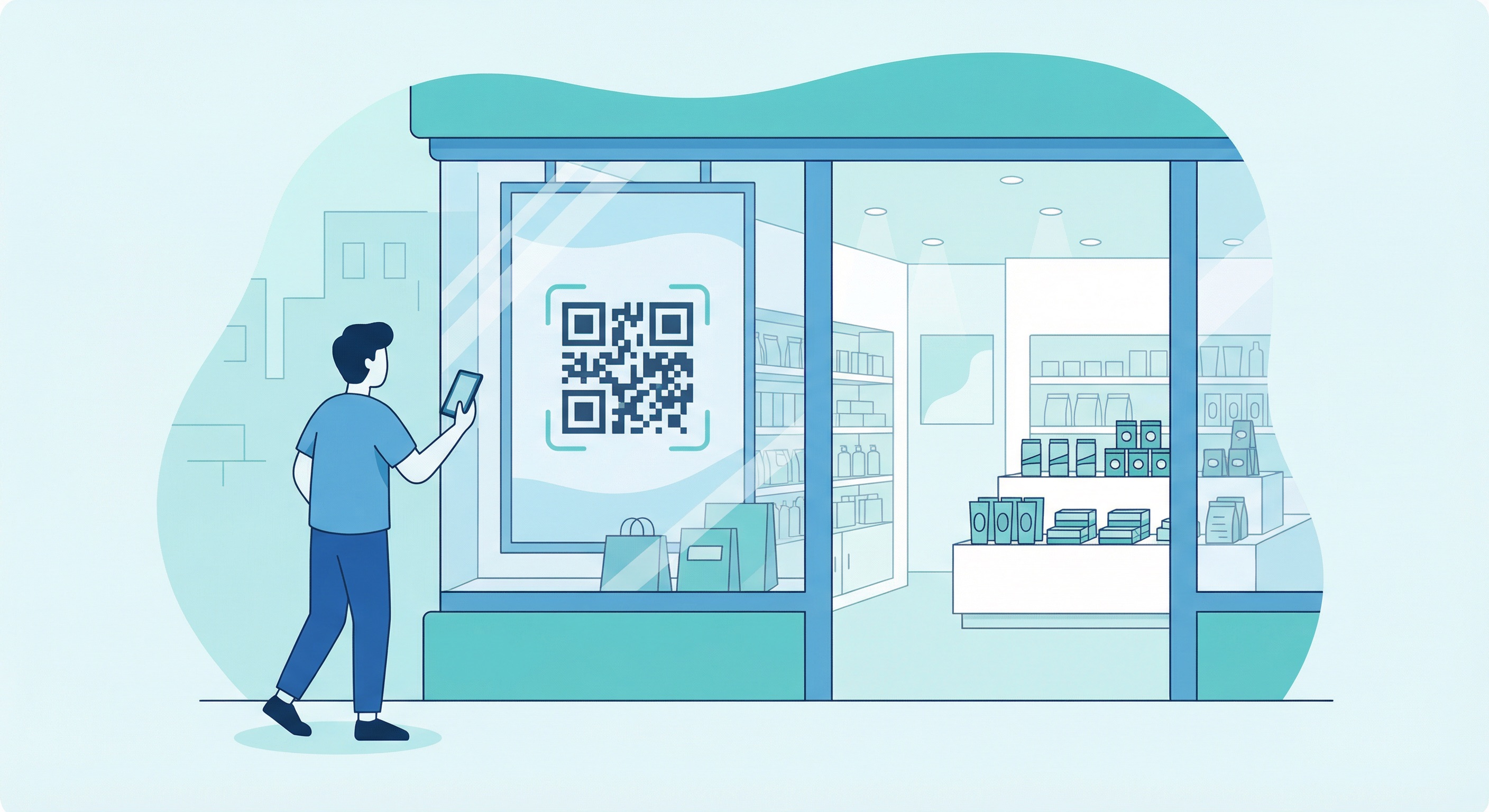
Outside retail hours, shop window QR codes turn glass into a 24/7 sales channel. Passers-by scan to browse your catalogue, join a waitlist, or claim a special offer — even when your doors are closed. Pair with a compelling visual headline and a clear call-to-action for best results.
Display QR codes placed near featured products, seasonal sections, or promotional end-caps give shoppers an immediate pathway to extended product videos, customer reviews, or "buy online, pick up in store" flows. They work equally well on printed poster stands and digital screens.
Replace paper coupons with URL QR codes that load directly into the shopper's mobile browser — no app, no clipping required. Bulk QR codes let you generate unique single-use codes for large-scale promotions at speed, ensuring each voucher is redeemed only once. This approach is especially powerful for lead generation campaigns tied to checkout discounts.
Driving app downloads from in-store is notoriously difficult with printed URLs. QR codes solve this elegantly: a scan routes directly to the App Store or Google Play listing. Starbucks famously used Snapchat-distributed QR codes to drive 11,000 app downloads in three weeks with a 27% conversion rate. Read our full guide on how to boost app downloads with QR codes for step-by-step strategies.
Social media QR codes on receipts, in-store posters, and shopping bags give shoppers a one-scan path to your Instagram, TikTok, or Facebook page. This builds your organic audience at zero cost per follow — an owned channel that pays back every time you post. See how the strategy integrates into a broader campaign in our social media QR code guide.
WhatsApp QR codes open a pre-filled chat with your team the moment a shopper scans them — perfect for product queries, after-sales support, or personalised style advice. With over 3.2 billion WhatsApp users globally and 98% message open rates, conversational commerce via QR code is delivering 3–5x conversion lifts versus standard email follow-up. It's already a proven tactic in luxury retail and high-consideration fashion categories.
A feedback QR code placed at the till, in the fitting room, or on the receipt gives shoppers a frictionless way to rate their experience while it is still fresh. Retailers using QR-linked surveys report response rates of 40–60%, compared to 15–25% for email follow-up. Feed the data into your product ranging and service training decisions in real time.
The numbers confirm that QR codes have moved from novelty to necessity in retail. Here are the key data points shaping strategy decisions in 2026.
For a full breakdown of QR code trends across industries, see our QR code statistics 2026 report.
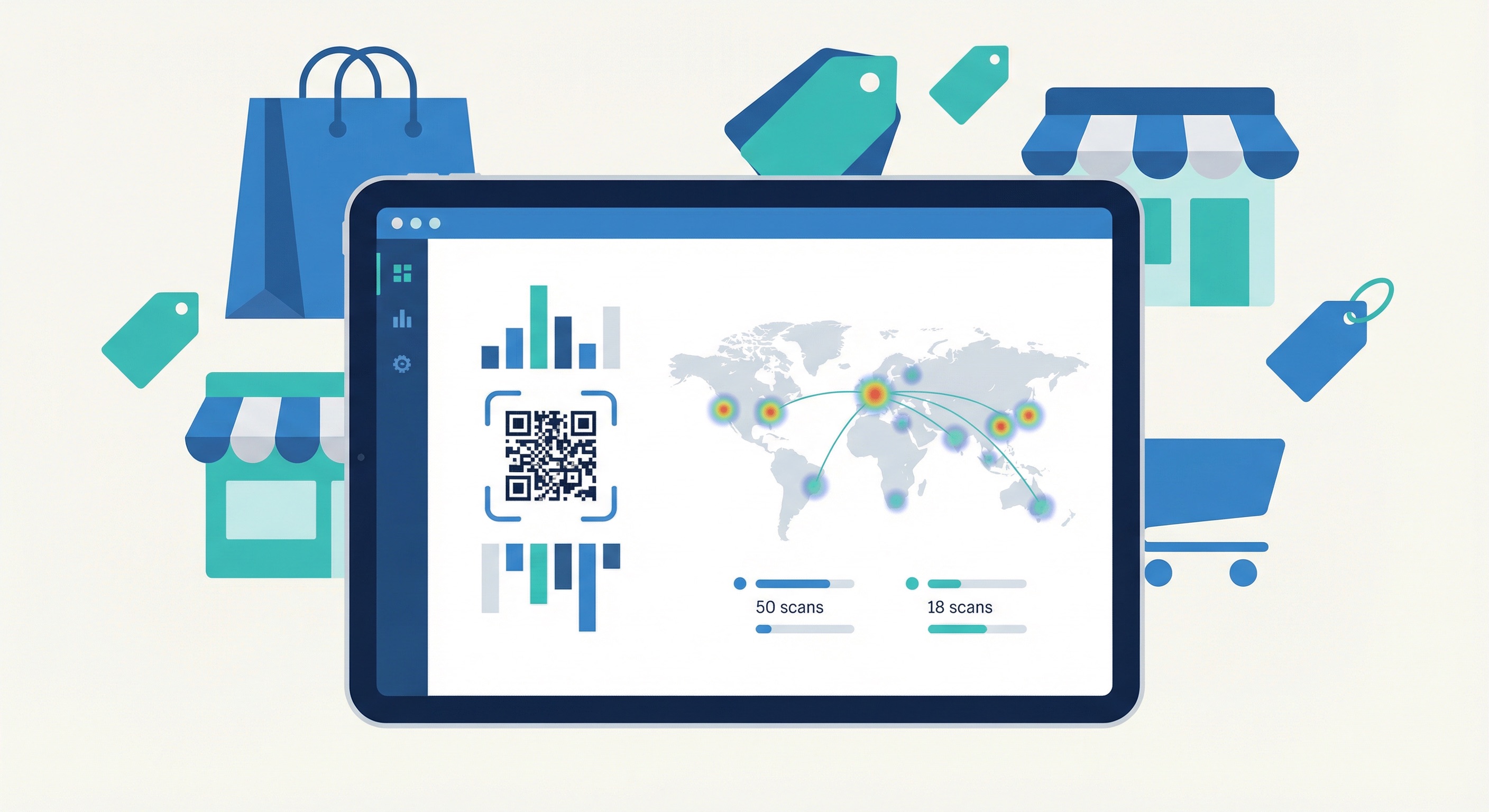
Supercode is a professional QR code generator with design tools, real-time analytics, bulk creation, and dynamic code management — everything a retail team needs in one platform. Here is a six-step guide to creating your first retail QR code campaign.
Match the code type to the goal. For retail, the most useful types are:
Log in to Supercode, select your QR code type, enter the destination URL or content, and click Save. The process takes under a minute. Choose a dynamic QR code if you want to update the destination later without reprinting — essential for seasonal campaigns and inventory-linked pages. Learn the full difference in our dynamic vs static QR codes guide.
A branded QR code gets scanned significantly more often than a plain black-and-white one. Use Supercode's design tools to apply your brand colours, add your logo, and choose a frame with a clear call-to-action like "Scan for 10% off" or "Scan to learn more". For sizing and contrast guidelines, see our QR code design guide and printing guide.
Use Supercode's folder system to organise codes by store, campaign, or product line. Share folders with your marketing and operations teams so everyone works from the same dashboard. This is especially useful for multi-location retailers running parallel promotions.
Always scan the code with at least two different devices before it goes to print. Check that the destination loads correctly, the page is mobile-optimised, and any coupon or loyalty mechanic functions as expected. Our QR code mistakes guide covers the most common pre-launch errors and how to avoid them.
Once live, monitor scans by location, device type, time of day, and referral source in Supercode's analytics dashboard. Use this data to identify your highest-performing placements, A/B test different CTAs, and optimise campaigns mid-flight — without reprinting a single code. Our full QR code tracking guide explains how to connect scan data to Google Analytics 4 and measure revenue attribution.
A poorly placed or poorly designed QR code will be ignored. Apply these five principles to maximise scan rates and campaign ROI.
The optimal scan distance is 10–50 cm for most smartphones. Position codes on shelf-edge labels, product tags, and display stands at a height where shoppers can scan without stooping or stretching. For poster campaigns, place the code in the lower third of the design — the natural resting zone of the eye.
Dynamic QR codes allow you to change the destination URL after printing — critical for seasonal retail where product URLs change, promotions expire, or stock runs out. They also unlock analytics, so you can track which placements are driving scans. Static codes offer neither flexibility nor data.
Research shows that branded QR codes with a logo and custom colours achieve significantly higher scan rates than generic black-and-white codes. Add a frame with a concise CTA — "Scan for reviews", "Scan to save 15%", or "Scan for more info" — so shoppers know exactly what they are getting. Follow the full design rules in our QR code design guide.
Every retail QR code scan happens on a smartphone. If the destination page is not designed for mobile — fast loading, large tap targets, minimal form fields — you will lose the conversion. Test on iOS and Android before launch, and prioritise pages with load times under two seconds. Consider branded landing pages that mirror the in-store aesthetic to maintain the brand experience.
Use UTM parameters on your QR code URLs to pass campaign, medium, and source data directly into Google Analytics 4 or your CRM. This lets you attribute online revenue to specific packaging, display, or shop window placements — closing the online-to-offline attribution loop. Read the full methodology in our QR code tracking guide.
For most retail use cases, a dynamic URL QR code is the best choice. It links to any web page, can be updated without reprinting, and provides full analytics. Use feedback QR codes for post-purchase surveys, bulk QR codes for large-scale coupon campaigns, and WhatsApp QR codes for conversational commerce and customer support.
The highest-performing placements are: product packaging and labels, shelf-edge talkers, in-store displays near featured products, shop windows for after-hours engagement, receipts for post-purchase follow-up, and fitting room mirrors for fashion retailers. At a minimum, place codes at eye level within easy scan reach (10–50 cm).
Yes. A payment-linked URL QR code or a dedicated payment platform QR code at the till lets customers complete a transaction from their smartphone without physical card contact. In North America, 55% of businesses already offer this option. Use a dynamic QR code so you can update the payment link or amount without reprinting the code.
With Supercode, every dynamic QR code comes with a real-time analytics dashboard showing total scans, unique scans, device type, location, and time of day. Add UTM parameters to your URLs to feed scan data directly into Google Analytics 4, enabling revenue attribution per placement. Our QR code tracking guide covers the full setup process.
The minimum recommended print size for a QR code that will be scanned at around 30 cm is 2.5 cm × 2.5 cm. For shelf-edge labels scanned from 50 cm, aim for at least 3.5 cm × 3.5 cm. For large-format applications like posters and shop windows, scale accordingly — at least 10:1 ratio relative to scanning distance. Full sizing and resolution guidance is in our QR code printing guide.
Dynamic QR codes generated through a reputable platform like Supercode are safe: they use HTTPS-encrypted redirects, can be deactivated instantly if compromised, and never expose your destination URL in the code itself. For data collection (loyalty sign-ups, feedback), ensure your landing pages comply with GDPR and local privacy regulations. For a full overview of QR code security risks and mitigation strategies, see our QR code safety guide.
QR codes have become one of the highest-ROI tools available to retail marketers in 2026 — bridging the physical store and the digital world with a single scan. Whether you want to enrich the product experience, run a loyalty programme, accept contactless payments, or grow your social following, Supercode gives you the tools to create, brand, deploy, and track every code from one dashboard. Explore all the ways QR codes are transforming retail across our industry use cases and material placements, or dive straight into the strategy with our QR code marketing guide.
Head to our FAQs section or reach out to us directly on info@supercode.com
Sign up for free

