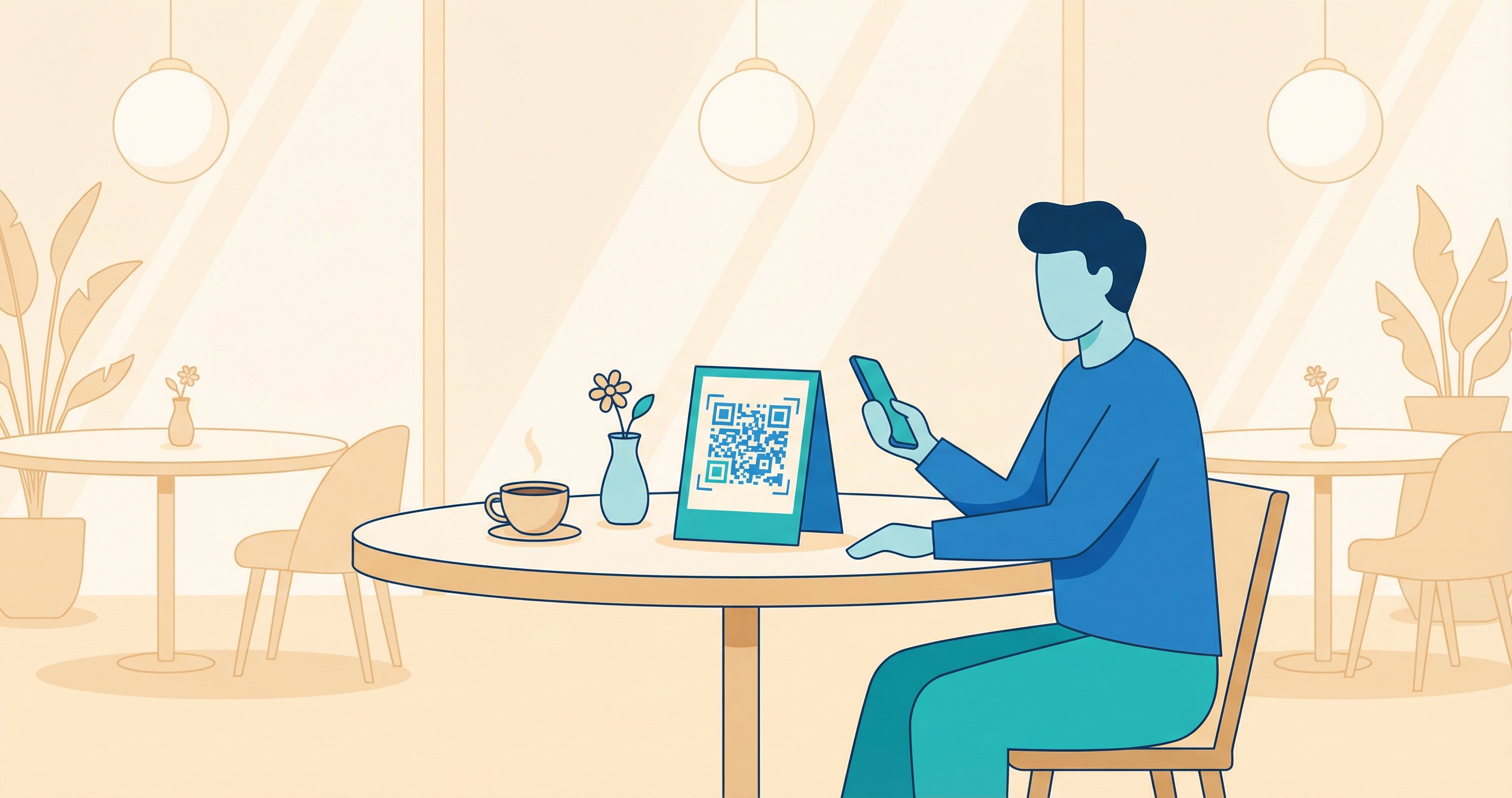
By 2026, 75% of restaurants worldwide have adopted QR codes for digital menus — and the numbers keep climbing. Whether you run a bustling café, a hotel restaurant, or a multi-location bar, a QR code for your menu is one of the fastest ways to cut operational costs, delight customers, and unlock real-time insights into what they order. In this guide, you will learn exactly how to create QR code menus with Supercode, which types work best for different venues, and the data-backed best practices that separate a great digital menu experience from a frustrating one.
QR code menus do far more than replace a laminated sheet of paper. Here are the key advantages that are driving adoption across the hospitality industry in 2026.
Guests scan a QR code with their smartphone camera — no app download required — and view your full menu instantly. Table tents, adhesive stickers, or printed cards with a QR code eliminate the need for shared printed menus, reducing the spread of germs and meeting the hygiene expectations that diners now take for granted. Learn how other restaurants use QR codes across their entire dining operation, from ordering to payment.
Reprinting menus every time prices change or a dish is removed is expensive. Independent restaurants spend an average of $3,847 per year on menu printing, according to data from EasyMenus, which tracked 10,000+ restaurants from 2020 to 2025. Switching to a dynamic QR code menu reduces that to a flat monthly subscription — with a break-even period typically between three and six months for venues that reprint two or more times a month.
With a dynamic QR code, the URL behind the code can be updated at any time without reprinting. Change a price, add a seasonal special, mark a dish as sold out, or swap breakfast for lunch menus — all from your Supercode dashboard. Restaurants using digital menus update their content 4.2 times more frequently than those using printed menus, which means customers always see accurate information and fewer complaints about unavailable items.
Digital menus allow you to include photos, ingredient stories, and upsell prompts (add a dessert, upgrade the drink) that printed menus simply cannot match at scale. Restaurants using self-serve QR code ordering report a 35% increase in sales, and studies show up to 30% higher average order values when customers order via mobile compared to table service alone. See how hospitality venues like hotels leverage digital menus for room service upsells.
Every QR code menu that replaces a disposable or laminated print avoids paper waste, ink, and plastic. For brands with sustainability commitments, the shift to digital menus pairs naturally with a broader eco-friendly strategy. Pair your menus with QR codes on food packaging to give customers a complete picture of your sourcing and ingredients.
Every scan is tracked. Supercode's analytics dashboard shows you when, where, and how often customers scan — giving you data on peak dining times, which menu placements get the most engagement, and even which tables are busiest. This turns your menu into a marketing intelligence tool. Explore the full power of QR code tracking and analytics to see what insights are available to restaurant operators in 2026.
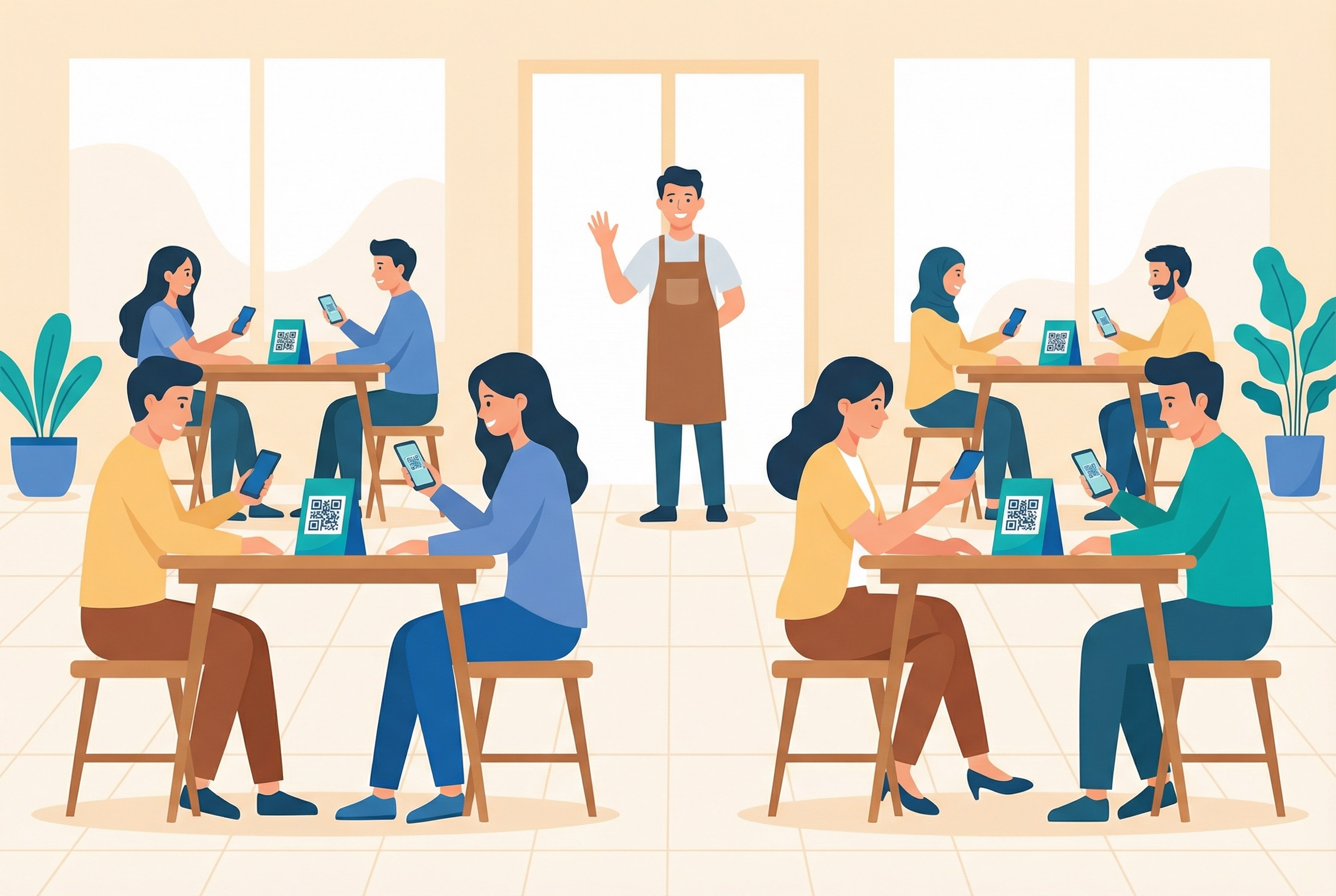
From neighbourhood bistros to international hotel chains, QR code menus are being deployed in creative and revenue-generating ways. Here are the most effective applications in 2026.
The most common use case: place a QR code on every table — on a table tent, a sticker, or printed directly on a card holder — so guests can scan and view the full menu the moment they sit down. This eliminates wait time for a server to bring menus and lets customers browse at their own pace. Pair with QR codes on displays at the entrance for a seamless experience from arrival to seating.
Hotels replace bulky in-room dining booklets with a single QR code on the room's desk or tray card. Guests scan to see the full room service menu, place orders via a linked ordering platform, and even pay digitally. The hospitality sector has embraced this approach at scale — major chains report that contactless room service options improve guest satisfaction scores. Combine with a WhatsApp QR code so international guests can order in their preferred language via a messaging app.
Post a QR code in your window or on takeaway packaging that links directly to your online ordering platform. Customers walking past after hours can scan the QR code on the door or shop window to see your full menu and place an order for collection. Include an URL QR code that routes to your delivery platform of choice — no printed flyers needed.
Dynamic QR codes make time-sensitive promotions effortless. Swap out your standard menu for a happy hour menu at 5 p.m., then revert automatically without touching the physical QR code. Bars and restaurants in tourist areas can tailor offers by day of the week, season, or local event. This works brilliantly alongside QR codes on posters promoting the specials from outside the venue.
Include a QR code on your menu that links to your loyalty app or sign-up page. Customers browsing for dessert can scan to earn points on their order, download your app, or register for exclusive deals. This strategy, used by chains like Chick-fil-A, converts passive diners into repeat customers. Read more about boosting app downloads with QR codes and how to make the app offer compelling enough to scan.
Restaurants in tourist hotspots — coastal resorts, city-centre hotels, theme parks — can use a single QR code that detects the user's phone language and serves the appropriate menu version. Alternatively, link the QR code to a landing page with a language selector. About 82% of restaurants in major tourist destinations like Paris, Barcelona, and Tokyo have adopted QR menus, partly because of this multilingual flexibility. See how tourism operators integrate QR codes into the full visitor experience.
Add a second QR code at the bottom of your menu or on the receipt that links to a feedback form or Google review page. Post-meal, customers are primed to share their experience. A feedback QR code that takes seconds to scan dramatically improves response rates compared to paper comment cards. Learn the strategies that get results in our guide to QR code customer feedback.

The shift to digital menus is backed by compelling data. Here is a summary of the key statistics shaping the QR code menu landscape in 2026:
These numbers make a clear case: QR code menus are no longer a pandemic-era stopgap — they are a proven operational and marketing tool for food service businesses of all sizes. Explore the broader picture in our QR code statistics 2026 report and see how the restaurant sector fits into the global QR adoption curve.
Creating a professional QR code menu with Supercode takes under five minutes. Here is the step-by-step process.
For most menus, a URL QR code is the best choice — it links directly to your online menu, ordering platform, or a PDF. If your menu is a static document, a PDF QR code lets customers download or view it without needing a website. For venues that want to embed food photography directly, an image QR code is a compelling option. Avoid static QR codes if you update your menu regularly — always choose a dynamic code so you can change the destination without reprinting.
Log in to your Supercode account, select the QR code type, and paste in your menu URL or upload your PDF. For restaurants with multiple menu types (breakfast, lunch, bar menu, specials), create a separate code for each and organise them into a folder using Supercode's workspace management tools. This makes it easy to update individual menus without touching the others.
A branded QR code gets scanned up to 30% more often than a plain black-and-white code. Use Supercode's design editor to add your restaurant logo to the centre of the code, apply your brand colours, and select a frame with a clear call-to-action — something like "Scan to view menu" or "Scan to order." Follow our QR code design guide for best practices on colour contrast, logo sizing, and error correction levels that ensure reliable scanning even on textured surfaces.
If you manage multiple locations, create a folder per venue in your Supercode dashboard. You can share access with your management team without granting full account permissions — ideal for multi-site restaurant groups or franchise operators. For large-scale deployments (table stickers for every seat in a dining room), use the bulk QR code generator to create and export hundreds of unique codes in one go.
Scan your code with multiple devices — Android and iOS, different lighting conditions, different distances — before committing to a print run. Check that the landing page loads quickly on mobile. A menu that takes more than three seconds to load will lose a significant portion of diners. Review our QR code printing guide for minimum size requirements (no smaller than 2 cm × 2 cm), DPI settings for professional print, and quiet zone rules.
Print your QR code on table tents, adhesive stickers, menu card holders, cups, and takeaway packaging. Place it at eye level and in logical positions — centre of the table, inside the front cover of a physical menu, on the door for after-hours browsing. For seasonal promotions or limited-time menus, place a QR code on flyers and brochures distributed at the bar or host stand.
Once live, monitor your QR code scans in the Supercode analytics dashboard. Track total scans, unique visitors, peak scan times by day and hour, and geographic distribution for venues with multiple locations. Use this data to refine your placement strategy — if the window QR code outperforms the table code, invest in better window signage. Set up a QR code marketing strategy that ties menu scan data to your broader CRM and loyalty goals.

Static QR codes encode a fixed URL that can never be changed. If your menu URL changes, your printed codes become useless. With a dynamic QR code, you can update the destination at any time — critical for restaurants that change menus seasonally, daily, or even between meal services. Dynamic codes also give you access to scan analytics, which static codes cannot provide.
Never place a bare QR code without context. A frame or label that says "Scan to view menu" dramatically increases scan rates — data shows the difference between a labelled code (73% scan rate) and an unlabelled one (34%) is nearly double. Use Supercode's frame editor to add a CTA directly to the code, so even first-time QR users know what to expect.
A QR code printed smaller than 2 cm × 2 cm will fail to scan reliably on older devices. For table tents, aim for at least 4 cm × 4 cm. Place the code at a comfortable scanning distance — typically 15–30 cm from the user's phone. For outdoor placements or window stickers, scale up to at least 10 cm × 10 cm. Full guidance on sizes and DPI is available in the QR code printing guide.
Most successful restaurants keep a small stock of printed menus (laminated, minimal cost) as a backup for guests who are uncomfortable with QR codes, or in areas with poor mobile signal. Data shows the hybrid model achieves 92% customer satisfaction — higher than QR-only (87%) or print-only (89%) approaches. Frame QR codes as a convenience feature, not a replacement for hospitality.
Scan frequency by time of day tells you when your menu is most viewed. High scan rates on Friday evenings but low order conversion? Your specials section may not be compelling. Use QR code analytics to A/B test different menu designs, seasonal offers, or QR code placements — and back every menu decision with real customer behaviour data. This is how QR menus become a genuine competitive advantage, not just a cost-saving measure.
A QR code menu is a scannable code — printed on a table tent, sticker, card, or poster — that directs customers to a digital version of your restaurant's menu when scanned with a smartphone. The menu typically opens in the customer's mobile browser with no app required. Dynamic QR code menus can be updated in real time without replacing the physical code.
To create a QR code for your menu with Supercode: (1) sign up at app.supercode.com, (2) select a URL QR code type and paste your menu link, (3) customise the design with your logo and colours, (4) download and print the code. The whole process takes under five minutes. For PDF menus, upload the file directly and Supercode generates a hosted link automatically.
No. All modern smartphones — both Android and iOS — can scan QR codes natively using the built-in camera app. Customers simply point their camera at the code and tap the notification that appears. There is no app to download and no account required. This is one of the key reasons QR code menus have achieved such broad adoption across all age groups.
Yes — if you use a dynamic QR code. Dynamic codes store a short redirect URL rather than your menu URL directly, so you can change the destination at any time through your Supercode dashboard. The physical code on your table never needs to change. This is the primary reason to choose dynamic over static — especially important for restaurants that update prices, specials, or seasonal offerings frequently.
For table tents and indoor table placements, a minimum size of 4 cm × 4 cm (1.5 inches × 1.5 inches) is recommended. Smaller codes can fail on older phones or in low light. Always maintain a quiet zone (white border) of at least four modules around the code edge. For window or door placements where scanning distance is greater, scale up to 10–15 cm. Full sizing guidance is in our QR code printing guide.
Absolutely. Hotels use QR code menus extensively for in-room dining booklets, bar menus at poolside and lobby lounges, and breakfast menus at restaurant entrances. A single QR code can link to a multilingual menu or connect directly to a room service ordering platform. Hospitality operators report that contactless menu access is now among the top amenities expected by business and leisure guests alike in 2026.
QR code menus are one of the highest-ROI tools available to restaurant and hospitality operators in 2026. They cut print costs, increase average order values, enable real-time menu management, and hand you scan analytics that paper menus will never provide. Whether you run a single café or a hotel chain, Supercode gives you everything you need to create, design, manage, and track professional QR code menus — with no technical expertise required.
Explore the full range of QR code solutions for hospitality and food service, browse our materials use case library, or check Supercode pricing to find the plan that fits your venue. Ready to go live in minutes? Create your first QR code menu free today.
Head to our FAQs section or reach out to us directly on info@supercode.com
Sign up for free