

The global hospitality industry is embracing a digital-first guest experience — and QR codes are at the center of this transformation. According to Oracle research cited by Hospitality Net, 73% of travelers are more likely to choose hotels that offer self-service technology, from contactless check-in to on-demand concierge services. In 2026, QR codes for hotels, resorts, and spas are no longer a novelty — they are a competitive necessity.
Whether you manage a boutique hotel, a global resort chain, or a day spa, QR codes give your guests instant, frictionless access to the information and services they need — from room service menus to loyalty rewards — all from their own smartphones. They eliminate paper waste, reduce staff workload, and open direct communication channels that fuel repeat visits and stronger guest loyalty. This guide covers the key benefits, practical applications, and best practices for deploying hospitality QR codes across every touchpoint of the guest journey, with a step-by-step guide to creating yours with Supercode.
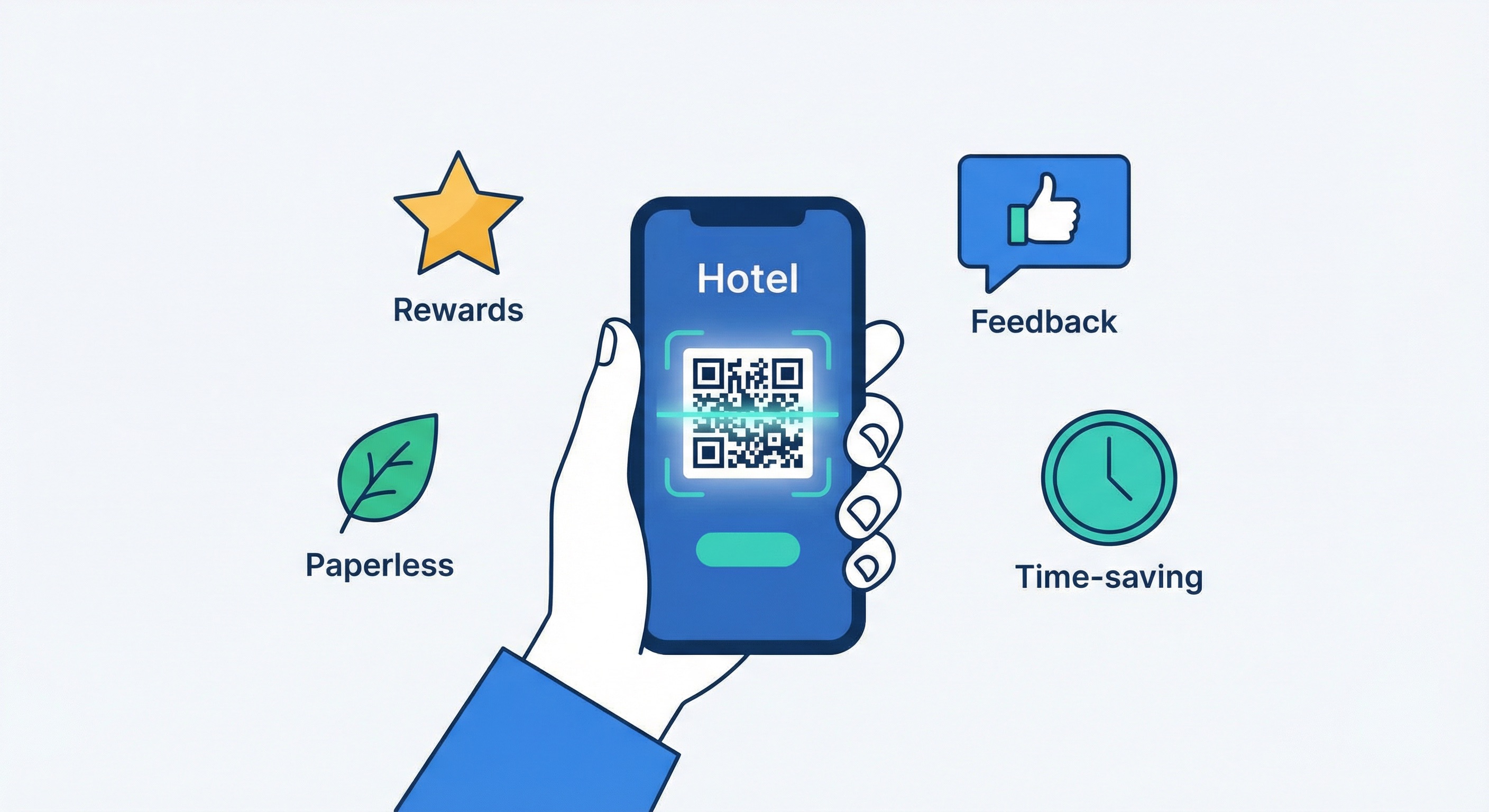
Long queues at the front desk remain one of the top guest pain points in hospitality. QR codes solve this by enabling guests to check in via a URL QR code sent to their smartphone before arrival, verifying identity, selecting room preferences, and even unlocking their door — all without interacting with staff. According to Hospitality Technology, 96% of hoteliers are now investing in contactless technology, with 62% predicting a fully contactless experience will be the most widely adopted innovation over the next three years. Speeding up arrival and departure not only delights guests but also frees your team to focus on higher-value service moments.
Place a digital menu QR code on every nightstand and dining table and guests can browse full menus with photos, place orders, add special requests, and pay — without picking up a phone or waiting for a server. Dynamic menus update instantly, so seasonal specials, allergen information, and sold-out items are always accurate. This integration with restaurant QR codes gives multi-outlet properties a consistent, cost-effective ordering experience across every venue.
QR codes on key cards, receipts, and in-room inserts make it effortless for guests to join loyalty programs, claim points, and redeem rewards — no app download required. Hotels can use URL QR codes to direct guests to personalised loyalty portals, or deploy social media QR codes to grow their follower base and keep guests engaged between stays. By collecting opt-in data at each scan, your marketing team gains the first-party insights needed to craft personalised offers that drive direct bookings and reduce OTA dependence. Learn more strategies in our guide on how QR codes improve customer experience.
Replacing printed menus, spa brochures, tourist maps, and welcome packs with PDF QR codes and image QR codes dramatically reduces paper waste across your property. Guests receive richer, more up-to-date information — with embedded videos, maps, and photo galleries — while you eliminate the cost and environmental impact of constant reprinting. This paperless approach resonates particularly strongly with eco-conscious travellers and supports sustainability certifications.
Placing feedback QR codes in rooms, at checkout, and in dining areas gives guests a frictionless channel to rate their experience the moment it happens. Real-time feedback allows your team to resolve issues during the stay — preventing negative reviews and converting a dissatisfied guest into a loyal one. Our guide on QR code customer feedback strategies walks through proven frameworks for maximising response rates in hospitality settings.
A WhatsApp QR code in every room gives guests direct access to a concierge at any hour — whether they need extra towels at midnight, a restaurant reservation, or local attraction recommendations. This conversational channel is fast, familiar, and requires no additional app installation. Guests in international markets especially appreciate the ability to communicate without voice calls or language barriers, making it a standout feature for properties targeting global travellers.
QR codes on lobby posters, key cards, and packaging direct guests to your social profiles or a custom landing page with a special offer, turning every in-property touchpoint into a marketing channel. Combine this with a targeted QR code marketing strategy to grow your follower base, promote seasonal packages, and drive direct bookings through QR-powered campaigns.

Leading hotel chains including Hilton and Marriott have rolled out mobile check-in flows where guests scan a QR code upon arrival to confirm their booking, bypass the front desk, and receive a digital key. The QR code acts as both an identity verification tool and a room access credential. Properties with multiple buildings benefit especially, as guests can head directly to their room without navigating through the lobby. Nearly 50% of hotel guests now prefer smartphone checkout, according to a 2025 State of Hotel Guest Technology survey by Hospitality Net.
A QR code on the in-room dining menu, bedside card holder, or door hanger launches a mobile-optimised menu where guests select items, specify dietary requirements, and submit their order — all without a phone call. The order routes directly to the kitchen, reducing miscommunication and speeding up delivery. For properties with multiple F&B outlets, a single digital menu QR code can surface the full dining offer and help upsell premium items through photos and descriptions.
Spa brochures, pool-area displays, and wellness programme inserts can each carry a QR code that opens a live booking calendar for treatments, fitness classes, and excursions. Guests book in seconds rather than queuing at the spa reception, while the automated system helps staff manage capacity and send confirmation messages. Linking the spa booking QR code to your loyalty programme adds points automatically, further incentivising premium service purchases.
A feedback QR code on checkout receipts, elevator display screens, and room key envelopes prompts guests to rate their stay and leave a comment while the experience is still fresh. Directing satisfied guests onward to TripAdvisor or Google Reviews from the same QR journey boosts your public review score. Dynamic QR codes let you swap the destination link to a different survey or review platform at any time without reprinting.
Printing the Wi-Fi password on a card is a security and logistics headache. A QR code on the welcome card connects guests instantly to the property network without typing. The same scan can open a welcome portal with restaurant hours, pool schedules, local attraction maps, and emergency contacts — replacing the bulky printed welcome folder with a mobile-optimised digital experience. Use a PDF QR code to deliver the full welcome guide in a single scan.
QR codes on receipts, room key cards, and restaurant menus allow guests to check into your loyalty programme, accumulate points per spend, and redeem rewards — all without carrying a physical membership card. Linking QR code scans to your CRM enables automated personalisation: a guest who always orders breakfast can receive a "complimentary upgrade" offer on their third stay, delivered via a QR-powered push notification. See how this fits a broader QR code marketing strategy built around first-party data.
Following Marriott's pioneering GoBoard concept — now deployed across hundreds of lobby locations — hotels use QR codes to deliver dynamic local guides directly to guests' phones. A single scan from a lobby display or brochure stand can surface restaurant recommendations, transport routes, event listings, and GPS-linked maps. For tourism-focused properties, this positions the hotel as a knowledgeable local partner rather than just a place to sleep.
The business case for QR codes in hospitality is backed by compelling data across guest preferences, hotelier investment, and technology adoption trends:
These figures confirm that QR codes in hospitality have crossed the mainstream threshold. Properties that have not deployed them risk losing guests to competitors who offer the frictionless digital experiences that modern travellers expect. Explore dynamic vs static QR codes to understand which type best fits each hospitality use case.
Creating professional, branded QR codes for your hotel, resort, or spa takes minutes with Supercode. Here is a step-by-step guide:
Different hospitality use cases call for different QR code types. Here are the most effective options for hotels and resorts:
Use Supercode's design tools to apply your hotel's colour palette, add your logo to the centre of the code, and select a frame with a custom call-to-action such as "Scan for Room Service" or "Join Our Loyalty Club." Branded QR codes consistently achieve 30–45% higher scan rates than plain black-and-white versions, making the investment in design worthwhile for every placement from key cards to lobby displays. Review our pricing plans to access full design customisation.
Large properties create dozens of QR codes across departments — restaurants, spa, events, rooms, and marketing. Supercode's folder system lets you organise codes by venue, floor, or campaign, and share specific folders with department managers so each team manages their own codes without accessing unrelated assets.
Always use dynamic QR codes for hospitality placements that may need updating — menus, event schedules, promotional offers, and local guides. Dynamic codes let you change the destination URL at any time without reprinting the physical code. This is critical for printed materials like keycards and brochures that have long lifespans but need to point to fresh content.
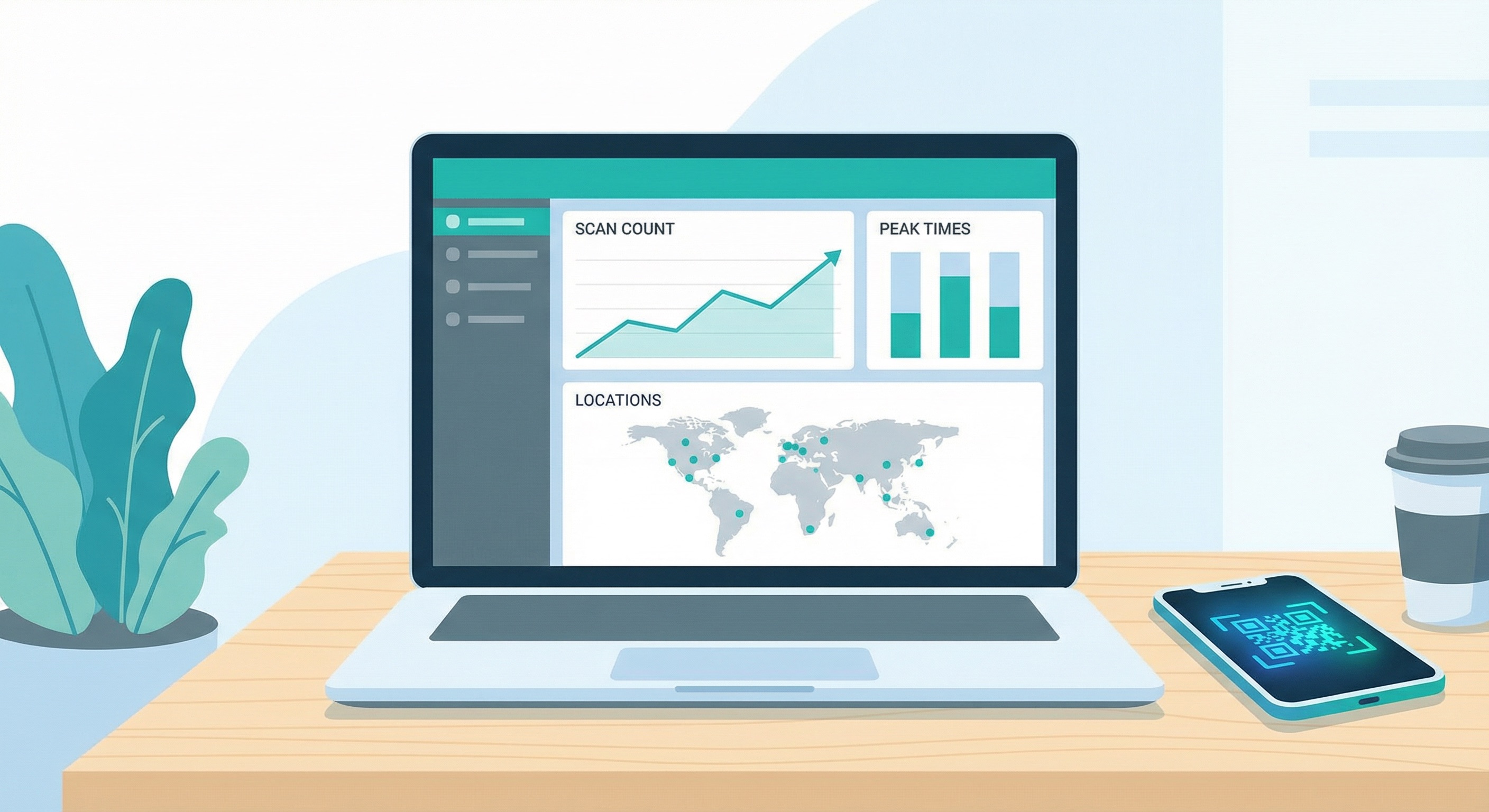
Every scan of a Supercode dynamic QR code is recorded in the analytics dashboard, showing you total scans, unique visitors, scan times, device types, and location data. Use this data to understand which touchpoints drive the most engagement — which room floor scans most for room service, which lobby placement drives the most loyalty sign-ups — and optimise your campaigns accordingly. Connect Supercode to Google Analytics via UTM parameters for full attribution inside your existing reporting tools.
The most effective hotel QR placements are where guests have an immediate need: the front desk (check-in), the nightstand (room service), the bathroom (housekeeping requests), the spa reception (treatment bookings), and the restaurant table (menu and ordering). Place QR codes on digital displays and printed brochures in the lobby to capture guests during their exploratory phase on arrival. Avoid placing codes in low-traffic areas, or behind glass where scanning angles are difficult.
Never place a QR code without a brief instruction. "Scan to order room service," "Scan for Wi-Fi access," or "Scan to rate your stay" dramatically increases scan rates by removing the uncertainty of what the code does. Use Supercode's frame and CTA text tools to embed the instruction directly into the code design, keeping the overall footprint compact enough for keycards and menus. For lobby poster placements, use a larger frame with a headline and sub-copy to contextualise the scan.
Printed materials in hospitality have long shelf lives — keycards, brochures, and welcome packs may not be reprinted for months or years. Always use dynamic QR codes so the destination can be updated as menus change, promotions expire, or services evolve. This protects your investment in printed collateral and prevents guests from scanning dead or outdated links. For single-use promotions like discount vouchers or event tickets, consider bulk-generated static codes that expire naturally.
QR codes on keycards and small room inserts must be at least 2.5 cm × 2.5 cm (1 inch × 1 inch) to scan reliably from a typical arm's length distance. Always maintain a quiet zone — a white border equal to at least 4 modules wide — around the code to ensure scanners can detect the boundary. For lobby display and poster placements, use the largest code the format allows for visibility from a distance. Consult our complete QR code printing guide for material-specific size recommendations.
Review your Supercode QR code analytics at least monthly to identify underperforming placements. A room service QR code with low scans may need a better CTA, a different placement position, or a new menu design. Update seasonal offers, add new services, and rotate promotional destinations to keep your QR ecosystem fresh. If you run multiple properties, bulk-managed campaigns let you update hundreds of codes simultaneously from a single dashboard. See how retail QR campaigns handle multi-location management for comparable best-practice inspiration.
The highest-impact hotel QR code uses in 2026 are contactless check-in, room service ordering via digital menus, Wi-Fi access, guest feedback collection, WhatsApp concierge access, spa and activity bookings, and loyalty programme check-ins. Each touchpoint benefits from a different QR code type — URL, feedback, WhatsApp, or PDF — depending on the specific guest action you want to trigger.
Yes — and adoption is accelerating. Research shows 73% of travellers are more likely to choose hotels that offer self-service technology including QR-based features, and nearly 50% now prefer smartphone checkout over traditional front desk interactions. Globally, over 90 million Americans scan QR codes monthly, and the behaviour is even higher among frequent business and leisure travellers who are the core hotel demographic.
A static QR code encodes a fixed destination that cannot be changed after printing. A dynamic QR code stores a short redirect URL that can be updated at any time from your Supercode dashboard. For hotels, almost all QR codes should be dynamic — particularly those on printed materials like keycards, brochures, and menus — so you can update menus, promotions, and links without reprinting. Static codes are only appropriate for single-use or permanent content such as emergency contact numbers.
Track ROI through Supercode's analytics dashboard, which records total scans, unique visitors, scan times, device types, and geographic location. Connect your QR codes to Google Analytics using UTM parameters to attribute digital bookings, loyalty sign-ups, and F&B orders to specific QR placements. Key metrics to watch include scan-to-booking conversion rate, average order value for room service QR codes, feedback response rate versus traditional comment cards, and loyalty programme enrolment rate from QR-triggered sign-ups. Read our full guide on QR code tracking and analytics for a complete measurement framework.
Yes. A single URL QR code can point to a landing page that links out to all hotel services — room service, spa, concierge, loyalty programme, and local guide — giving guests a central digital hub accessible from any QR code placement. This "hotel app without the download" approach is increasingly popular as it removes the friction of navigating multiple QR codes. Alternatively, strategic placement of dedicated single-purpose codes (e.g., feedback-only in the lobby, room service-only on the nightstand) typically drives higher individual scan rates because guests know exactly what to expect.
You can create, design, and deploy your first hotel QR code with Supercode in under five minutes. The platform requires no technical knowledge — choose a QR type, add your URL or content, customise the design to match your brand, and download in print-ready resolution. For large properties needing dozens of codes, the bulk QR code generator lets you create and manage hundreds of unique codes from a CSV upload, with all codes tracked individually in your analytics dashboard.
In 2026, the most competitive hospitality brands are those that remove friction at every guest touchpoint — from arrival to checkout and every moment in between. QR codes deliver exactly that: instant, branded, contactless access to room service, loyalty programmes, feedback channels, concierge services, and local information — all from the device already in your guest's pocket.
With Supercode, you get a professional QR code management platform with full design customisation, real-time analytics, dynamic code editing, and bulk generation capabilities designed for multi-property teams. Start for free and have your first hotel QR code live before your next guest checks in.
Head to our FAQs section or reach out to us directly on info@supercode.com
Sign up for free

